
Mobile App Development
Mobile apps have become an important part of how businesses connect with customers, deliver services, and build stronger digital experiences. From shopping and booking services to communication and customer support, mobile applications make it easier for people to interact with a business directly from their smartphones.
For businesses looking to strengthen their digital presence, investing in a well-designed mobile app can create new opportunities for customer engagement, better service delivery, and long-term growth.
What Is Mobile App Development?
Mobile app development is the process of designing, building, testing, and maintaining applications for smartphones and tablets.
A mobile application can be developed for different platforms, including Android and iOS. Depending on the business requirements, developers can create native applications specifically for one platform or use cross-platform technologies to build applications that work across multiple platforms.
A successful mobile app is more than just attractive screens. It should provide a smooth user experience, reliable performance, strong security, and useful features that solve real customer needs.
Why Do Businesses Need Mobile Apps?
A mobile application can give businesses a direct digital channel to their customers.
Some important advantages include:
- Better customer engagement: Apps provide a convenient way for customers to interact with a business.
- Improved accessibility: Customers can access services and information directly from their smartphones.
- Stronger brand presence: A professional app keeps your business visible on customers’ devices.
- Personalized experiences: Apps can deliver customized content, offers, and recommendations.
- Faster communication: Businesses can provide updates, notifications, and support more efficiently.
- Streamlined operations: Apps can simplify bookings, payments, orders, service requests, and other processes.
Types of Mobile Applications
Different businesses require different types of mobile applications. The right approach depends on the target audience, functionality, budget, and long-term goals.
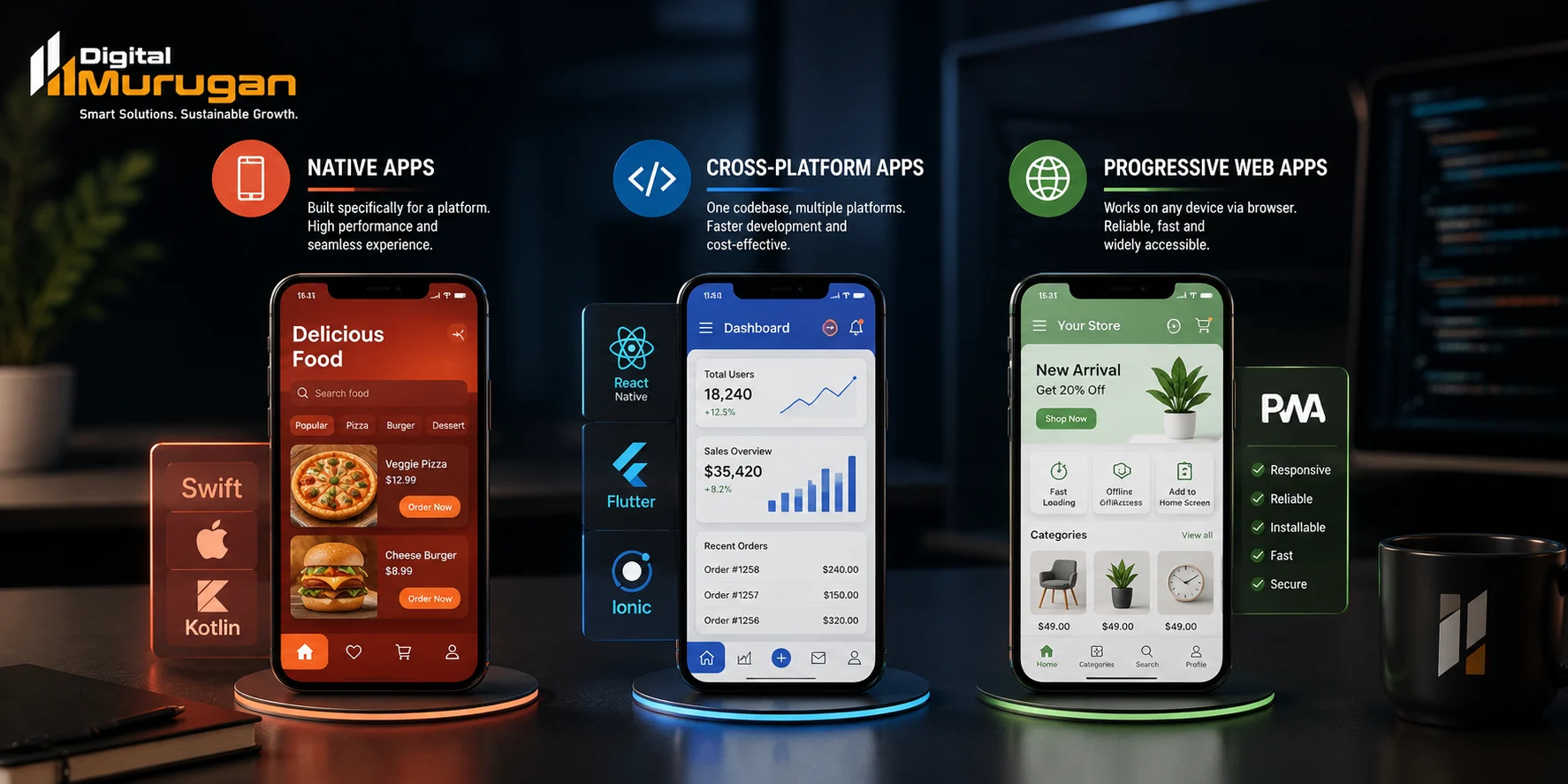
Native Apps
Native apps are developed specifically for platforms such as Android or iOS. They can take full advantage of platform-specific features and often provide excellent performance and user experience.
Cross-Platform Apps
Cross-platform development allows businesses to create applications that work across multiple operating systems using a shared development approach. This can help reduce development time while maintaining a consistent experience.
Progressive Web Apps
Progressive Web Apps combine features of websites and mobile applications. They can provide an app-like experience through a web browser and can be useful for businesses that want broader accessibility.
The Mobile App Development Process
Building a successful application requires careful planning and development.
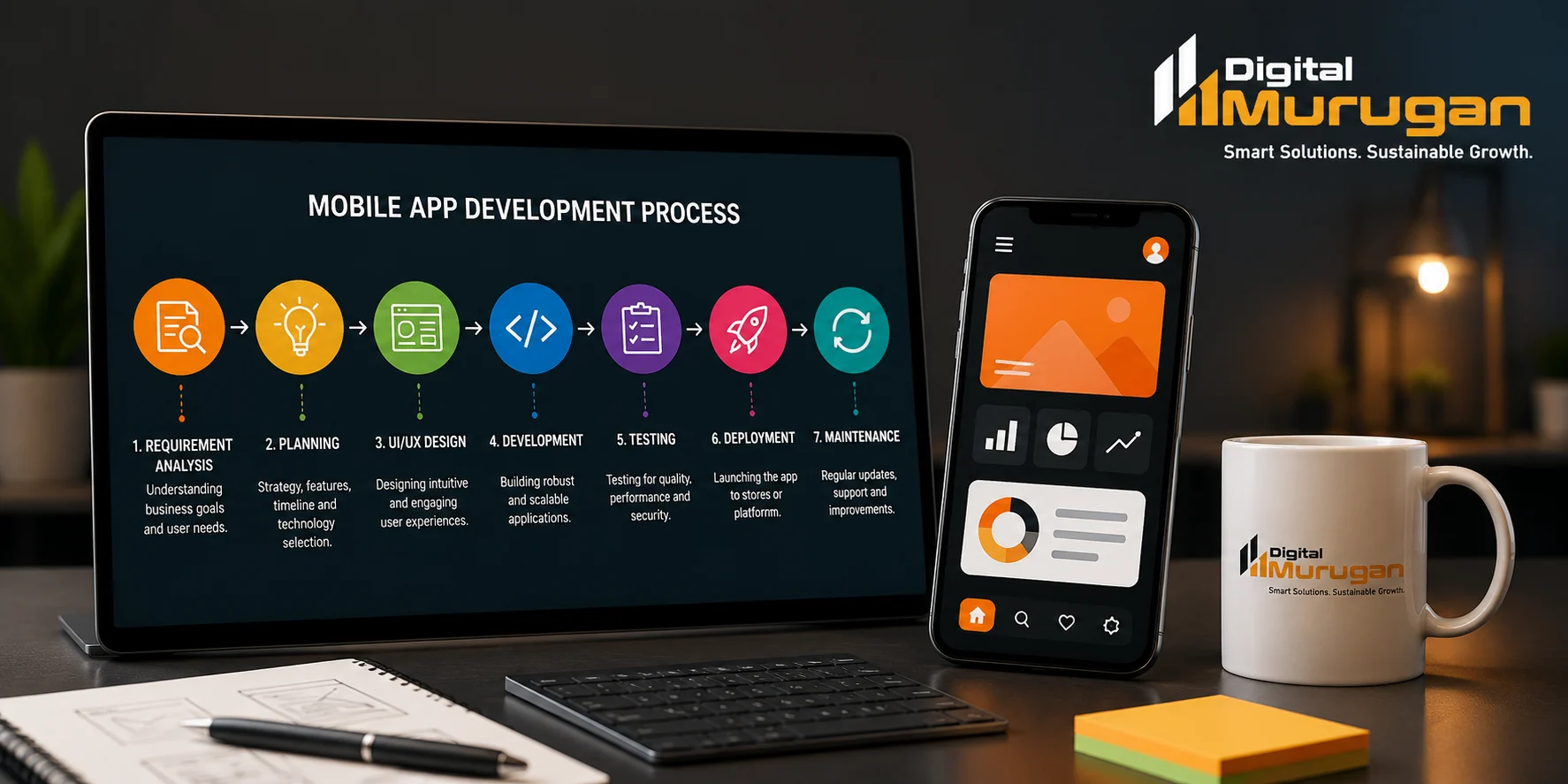
1. Understanding Business Requirements
The first step is identifying what the application needs to achieve. Developers need to understand the target audience, business objectives, required features, and expected user journey.
2. Planning and Strategy
Once the requirements are clear, the development team creates a roadmap for the project. This includes technology selection, feature planning, timelines, and overall architecture.
3. UI/UX Design
The design stage focuses on creating an intuitive and visually appealing experience. Navigation, layouts, buttons, forms, and user interactions are designed to make the application simple and convenient to use.
4. App Development
Developers then build the application according to the approved design and technical requirements. The frontend, backend, database, APIs, and other required components are integrated during this stage.
5. Testing
Before launch, the application should be thoroughly tested. Performance, functionality, compatibility, usability, and security should all be checked to identify and resolve problems.
6. Deployment
After successful testing, the application can be prepared and submitted to the relevant app stores or deployed through the appropriate distribution method.
7. Maintenance and Updates
App development does not end after launch. Regular updates can improve performance, fix issues, introduce new features, and maintain compatibility with newer operating systems and devices.
Features That Can Make an App More Useful
The features required depend on the type of business and its objectives. Common features include:
- User registration and login
- Search and filtering
- Online booking
- Product or service catalogs
- Shopping cart and checkout
- Payment integration
- Push notifications
- Customer support
- Location-based services
- User profiles
- Reviews and feedback
- Analytics and reporting
The goal should not be to add as many features as possible. Instead, businesses should focus on features that provide genuine value to their users.
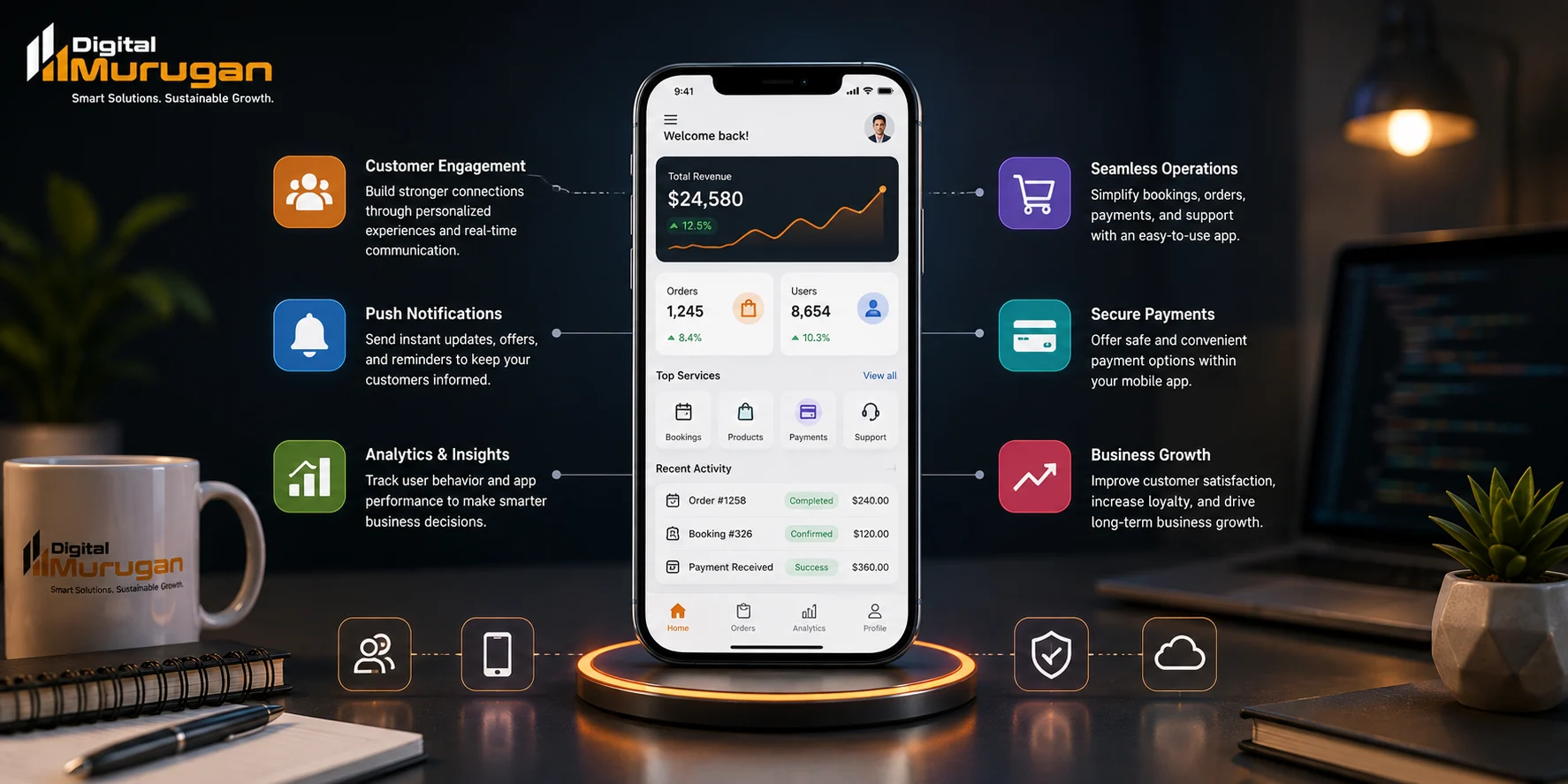
Mobile Apps Can Support Business Growth
A well-developed mobile application can become an important part of a company’s digital ecosystem.
It can help businesses simplify customer interactions, improve service accessibility, collect useful insights, and create additional opportunities for engagement.
For example, a service-based business can use an app for bookings and customer communication, while an e-commerce business can provide product discovery, ordering, payments, and delivery updates through one platform.
When an app is connected with other digital systems such as websites, CRM platforms, analytics tools, or business automation solutions, it can become even more valuable.
What Makes a Successful Mobile App?
A successful app should focus on the user first.
Important factors include:
Simple navigation: Users should be able to find what they need without unnecessary complexity.
Fast performance: Slow loading and frequent errors can negatively affect the user experience.
Responsive design: The application should work properly across different screen sizes and devices.
Security: User information and transactions should be protected using appropriate security practices.
Scalability: The application should be designed so that new features and growing user demand can be handled in the future.
Regular improvement: User feedback and performance data can help businesses continuously improve the application.
Choosing the Right Mobile App Development Partner
Choosing the right development partner is an important part of the project. Businesses should look beyond development cost and consider technical expertise, design capabilities, communication, security practices, testing processes, and post-launch support.
A good development partner should understand both the technical requirements and the business objectives behind the application.
Conclusion
Mobile app development can help businesses create more convenient, engaging, and accessible digital experiences. Whether the goal is to improve customer service, simplify operations, enable online transactions, or create a new digital product, the right mobile application can become a valuable business asset.
The key is to start with a clear objective, understand the users, select the right technology, and build an experience that solves real problems.
With the right strategy and development approach, a mobile app can become more than just another digital platform—it can become an important part of a business’s long-term digital growth.
 Previous Post
 Next Post