Proven Strategies for Building a High-Converting Website
A website is more than an online presence. It is often the first place potential customers interact with your brand, learn about your services, and decide whether they want to do business with you.
But simply having a website does not guarantee results. A successful website needs to attract the right visitors, communicate value clearly, build trust, and guide visitors toward taking action.
A high-converting website is designed around the needs of its visitors while supporting clear business goals. Whether the goal is generating enquiries, receiving calls, getting bookings, selling products, or collecting leads, the website should make the next step simple.
Here are proven strategies that can help you build a website that turns visitors into customers.

1. Start With a Clear Website Goal
Before designing pages, determine what you want visitors to do.
Your primary goal could be:
- Request a quote
- Contact your business
- Book a service
- Make a purchase
- Schedule a consultation
- Submit an enquiry
- Sign up for updates
Once the main goal is clear, your website structure, content, buttons, and page layouts can be designed around it.
A website with too many competing goals can confuse visitors. Give each important page a clear purpose and make the desired action easy to identify.
2. Create a Strong First Impression
Visitors form an impression of a website very quickly. Your homepage should immediately communicate three things:
What do you offer?
Who do you help?
Why should visitors choose you?
Your headline should be straightforward rather than complicated. Follow it with a short explanation that highlights the value you provide.
Instead of filling the first screen with large amounts of text, use a clean combination of headline, supporting message, visual elements, and a prominent call-to-action.
3. Make Navigation Simple
Good navigation helps visitors find what they need without unnecessary effort.
Keep your main menu simple and organized around the information users are most likely to need.
Common sections include:
Avoid creating complicated menu structures unless your website genuinely requires them.
The easier it is for visitors to navigate your website, the easier it becomes for them to reach important conversion points.
4. Use Clear Calls-to-Action
A call-to-action tells visitors what to do next.
Examples include:
- Get a Quote
- Contact Us
- Book a Consultation
- Request Information
- View Services
- Shop Now
- Get Started
Your CTA should be specific and relevant to the page.
For example, a service page could use “Request a Quote”, while a consultation page might use “Book a Consultation.”
Place important calls-to-action where visitors can easily see them without making the page feel overcrowded.
5. Build Trust Through Professional Design
People are more likely to interact with a website when it looks credible and professional.
Trust can be strengthened through:
- Consistent branding
- Professional photography
- Clear business information
- Customer testimonials
- Case studies
- Reviews
- Certifications
- Portfolio examples
- Secure payment options where applicable
- Easy-to-find contact information
Your website should make visitors feel confident that they are dealing with a legitimate and reliable business.
6. Write Content That Focuses on Customer Needs
Effective website content should not simply describe what your business does. It should explain how your products or services can help the visitor.
Focus on questions such as:
- What problem does the customer have?
- How can your business solve it?
- What benefits can they expect?
- What makes your solution different?
- What should they do next?
Use short paragraphs, clear headings, bullet points, and easy-to-understand language.
The goal is to help visitors quickly understand your value without forcing them to read unnecessary information.
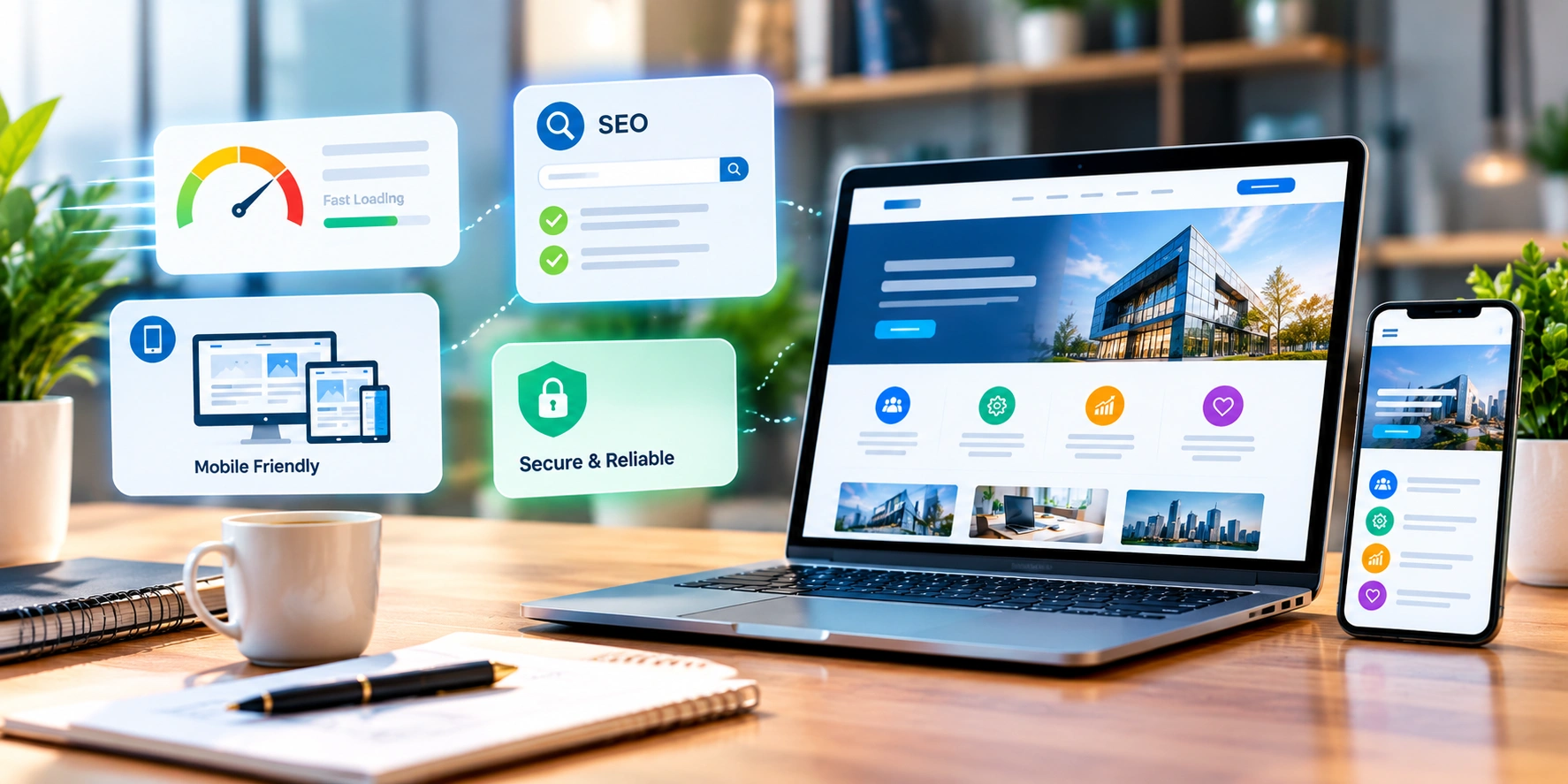
7. Improve Website Loading Speed
Website speed can have a major impact on the user experience.
Visitors may leave when pages take too long to load, particularly on mobile devices or slower connections.
To improve performance, consider:
- Compressing large images
- Using modern image formats
- Reducing unnecessary scripts
- Optimizing website code
- Using efficient hosting
- Limiting excessive animations
- Removing unnecessary plugins and elements
A fast website creates a smoother experience and allows visitors to reach important information more quickly.
8. Design for Mobile Users
A large portion of website traffic comes from smartphones. Your website therefore needs to work properly across different screen sizes.
A mobile-friendly website should have:
- Readable text
- Easy-to-tap buttons
- Simple navigation
- Properly sized images
- Comfortable spacing
- Fast loading pages
- Forms that are easy to complete
Do not simply shrink your desktop website for mobile. Think about how users interact with the website on a smaller screen and design accordingly.
9. Create Dedicated Landing Pages
Sending every visitor to your homepage is not always the best strategy.
Dedicated landing pages can be created for specific services, campaigns, products, or audiences.
For example, if you offer website development, digital marketing, and branding, each service can have its own focused page.
A strong landing page can include:
- A clear headline
- The customer’s problem
- Your solution
- Key benefits
- Supporting visuals
- Testimonials or proof
- A strong CTA
This focused structure can make it easier for visitors to understand the offer and take action.
10. Use Social Proof
Visitors often want evidence before making a decision.
Social proof helps demonstrate that other customers have trusted your business.
You can include:
- Customer reviews
- Testimonials
- Project results
- Client logos
- Case studies
- Before-and-after examples where appropriate
- Portfolio work
Keep social proof genuine and relevant. Real experiences are more valuable than exaggerated claims.
11. Make Contact Easy
If someone wants to contact your business, do not make them search for your contact information.
Provide convenient options such as:
- Contact forms
- Phone numbers
- Business location
- Booking forms
- Relevant messaging options
Your contact page should contain the information visitors need without unnecessary distractions.
For important conversion pages, consider including a contact option directly on the page instead of requiring users to return to the main navigation.
12. Optimize Your Forms
Long and complicated forms can discourage visitors from completing them.
Only ask for information that is genuinely necessary at that stage of the customer journey.
For example, an initial enquiry form may only require:
- Name
- Email or phone number
- Service required
- Message
Keep the form visually simple and provide a clear submission button.
13. Use SEO to Attract the Right Visitors
Conversion optimization begins with attracting relevant traffic.
Search engine optimization can help your website appear when potential customers search for products, services, or information related to your business.
Important areas include:
- Search intent
- Relevant keywords
- Page titles
- Meta descriptions
- Heading structure
- Helpful content
- Internal linking
- Image optimization
- Mobile usability
- Website performance
The objective should not simply be to attract more visitors. It should be to attract the right visitors.
14. Test and Improve Your Website
Even a well-designed website can be improved.
Use website analytics and other measurement tools to understand visitor behavior.
Look at metrics such as:
- Traffic sources
- Popular pages
- Engagement
- Conversion rates
- Form submissions
- Exit pages
- Device usage
You can then experiment with different headlines, CTAs, layouts, images, and page structures.
Website optimization should be an ongoing process rather than a one-time project.
15. Keep the Design Focused
A high-converting website does not need to contain every possible design trend.
Too many animations, pop-ups, colors, graphics, or competing messages can distract visitors from the main objective.
A strong website usually combines:
Clear messaging + simple navigation + professional design + useful content + strong CTAs + fast performance.
Every element on the page should have a purpose.
Final Thoughts
Building a high-converting website is not simply about making a website look attractive. It is about creating an experience that helps visitors understand your business, trust your brand, and take the next step.
From clear messaging and mobile-friendly design to strong calls-to-action, SEO, social proof, and continuous testing, each element contributes to the overall customer journey.
A website that is strategically designed can become one of your most valuable digital business assets—not just a place where people find information, but a platform that consistently supports enquiries, leads, and sales.
The goal is simple: attract the right visitors, give them the information they need, build their confidence, and make taking action easy.
 Previous Post
 Next Post