
AI Video Production Process: From Idea to Finished Video
AI has changed the way businesses create video content. What once required multiple people, expensive equipment, long production schedules, and complex editing can now be streamlined with AI-powered tools. However, creating an effective AI video is not simply about generating visuals. A successful video requires planning, creative direction, accurate messaging, and careful editing.
Understanding the AI video production process helps businesses create professional videos that communicate their message clearly while saving time and resources.
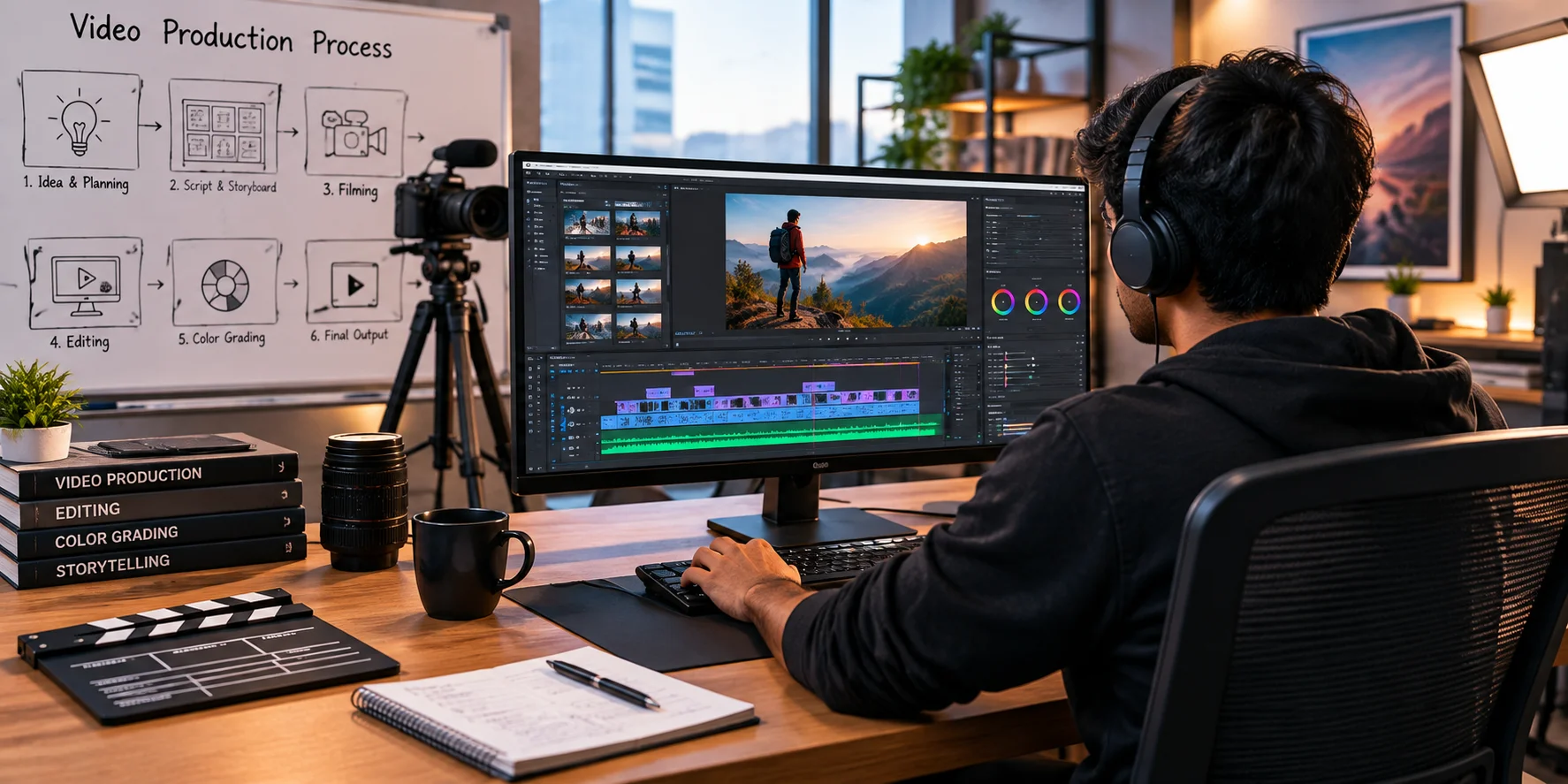
1. Define the Video Goal
Every successful video starts with a clear objective.
Before creating anything, determine what the video needs to achieve. A business may want to promote a product, explain a service, introduce its brand, educate customers, create social media content, or communicate internally with employees.
A clear goal helps determine the video’s style, length, visuals, voice, and overall message.
2. Develop the Concept and Script
Once the objective is clear, the next step is developing the video concept.
The script should explain what the audience needs to know and guide the story from beginning to end. AI can assist with brainstorming ideas, organizing information, creating draft scripts, and adapting content for different audiences.
However, the final script should always be reviewed and refined to make sure the information is accurate, relevant, and aligned with the brand’s communication style.
3. Create the Visual Plan
After the script is ready, the production team can plan how each part of the story will look.
This may include:
- Character or presenter design
- Locations and environments
- Product visuals
- Camera movements
- Lighting
- Transitions
- Animation styles
- Brand elements
AI image and video generation tools can help turn these ideas into visual assets. A detailed visual plan also helps maintain consistency throughout the video.
4. Generate AI Visuals
The next stage is producing the visual content using AI-powered tools.
Depending on the project, AI can be used to generate scenes, animated sequences, backgrounds, product concepts, characters, or other visual elements.
Detailed prompts are important at this stage. Clear instructions about composition, lighting, camera perspective, style, and subject placement can help produce more consistent results.
For corporate videos, visuals should remain professional and should support the message rather than distracting the audience.
5. Add Voiceovers and Audio
Audio plays an important role in making an AI video feel complete.
AI voice technology can be used to create voiceovers in different languages, tones, and speaking styles. Businesses can select a voice that matches the purpose and audience of the video.
Background music and sound effects can also be added where appropriate. Audio levels should be balanced carefully so that the narration remains clear.
6. Edit and Assemble the Video
Once the visual and audio assets are ready, they are brought together during the editing stage.
Editors arrange the scenes according to the script, adjust timing, add transitions, synchronize voiceovers, and remove unnecessary sections.
Text elements, captions, graphics, and other visual enhancements can also be added when they improve understanding.
Even when AI is used throughout production, human editing remains important because the final video needs to have a logical flow and a consistent visual style.
7. Apply Brand Identity
Corporate videos should reflect the company’s identity.
Brand colors, logos, typography, visual styles, and messaging can be incorporated where appropriate. Consistency helps audiences recognize the business and creates a more professional presentation.
The branding should be balanced carefully. Too many visual elements can make a video feel crowded, while too little branding may make it difficult to connect the content with the company.
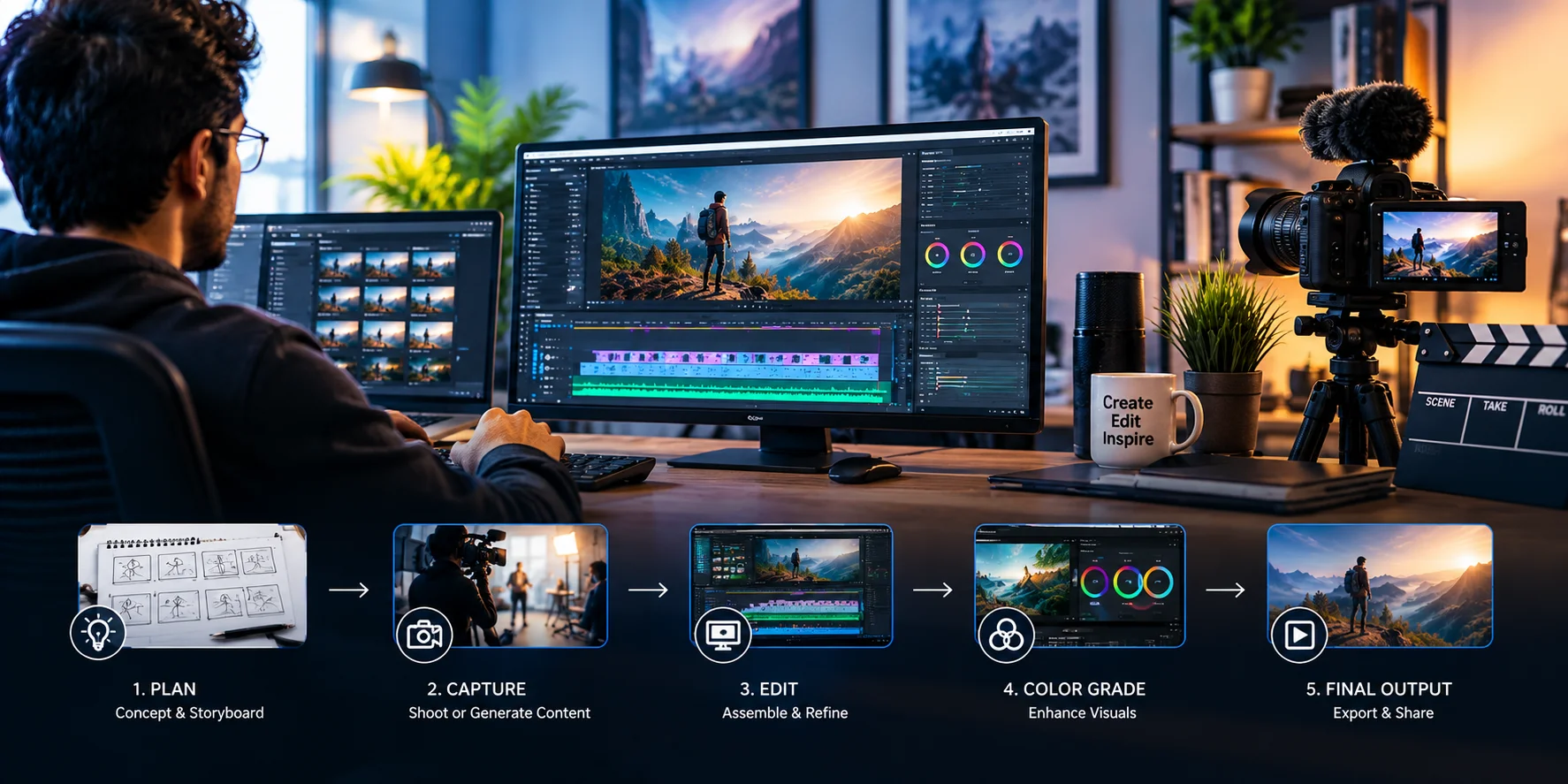
8. Review and Quality Check
Before publishing, the complete video should be reviewed carefully.
The quality-checking process can include checking:
- Spelling and grammar
- Factual accuracy
- Voiceover pronunciation
- Audio levels
- Visual consistency
- Brand elements
- Scene transitions
- Video resolution
- Timing and pacing
This stage is especially important for corporate communication because mistakes in a published video can affect how audiences perceive a business.
9. Optimize for the Target Platform
A finished video may need different versions depending on where it will be published.
For example, a company may create:
- Landscape videos for websites and YouTube
- Vertical videos for short-form social media
- Short promotional clips for advertisements
- Presentation videos for business meetings
- Training videos for employees
Optimizing the format, duration, resolution, and aspect ratio for each platform helps the content perform effectively in its intended environment.
10. Publish and Measure Performance
The final step is publishing the video and monitoring its performance.
Businesses can analyze metrics such as views, watch time, engagement, clicks, and audience retention to understand how people respond to the content.
These insights can then be used to improve future videos. AI can help businesses create content more efficiently, but performance data and audience feedback remain essential for making better creative decisions.
Why the AI Video Production Process Matters
AI can significantly streamline video production, but technology alone does not guarantee an effective video. A successful production combines AI tools with creative planning, human oversight, storytelling, and brand strategy.
By following a structured production process, businesses can create videos that are visually engaging, informative, and aligned with their communication goals.
How Digital Murugan Can Help
At Digital Murugan, AI-powered video production can help businesses transform ideas and marketing concepts into engaging visual content. From concept development and script planning to AI-generated visuals, voiceovers, editing, and final optimization, a structured production approach can make video creation more efficient.
Whether the goal is marketing, brand communication, product promotion, education, or digital content, AI video production provides businesses with new ways to communicate with their audiences.
Conclusion
The AI video production process brings together creativity, technology, and strategic planning. From defining the initial idea to developing the script, generating visuals, adding audio, editing the final video, and optimizing it for different platforms, every stage contributes to the finished result.
For businesses looking to expand their digital presence, AI video production can provide a flexible way to create professional and engaging content while streamlining the traditional production workflow.
 Previous Post