
WhatsApp Marketing Strategies to Build Stronger Customer Connections
In today’s digital landscape, customers expect businesses to communicate quickly, conveniently, and personally. WhatsApp has become an important communication channel for businesses because it allows brands to connect with customers through a platform they already use regularly.
WhatsApp marketing is more than simply sending promotional messages. When used strategically, it can help businesses share useful information, answer customer questions, showcase products and services, nurture leads, and build stronger relationships with their audience.
What Is WhatsApp Marketing?
WhatsApp marketing refers to using WhatsApp as a business communication and marketing channel to interact with customers and potential customers.
Businesses can use WhatsApp to share product updates, answer enquiries, provide customer support, send reminders, communicate offers, collect feedback, and maintain ongoing customer relationships.
The key is to provide relevant and useful communication rather than overwhelming customers with unnecessary messages.
Why WhatsApp Marketing Matters
WhatsApp provides businesses with a direct communication channel between their brand and customers. Instead of relying only on traditional advertising, businesses can use conversations to understand customer needs and provide timely assistance.
Some important benefits include:
- Direct communication: Businesses can communicate with customers through a familiar messaging platform.
- Faster customer support: Questions and enquiries can be addressed through conversations.
- Personalized communication: Messages can be tailored according to customer interests and interactions.
- Lead nurturing: Businesses can continue conversations with potential customers after an initial enquiry.
- Product and service updates: Important information can be shared directly with interested customers.
- Relationship building: Consistent and helpful communication can support long-term customer relationships.
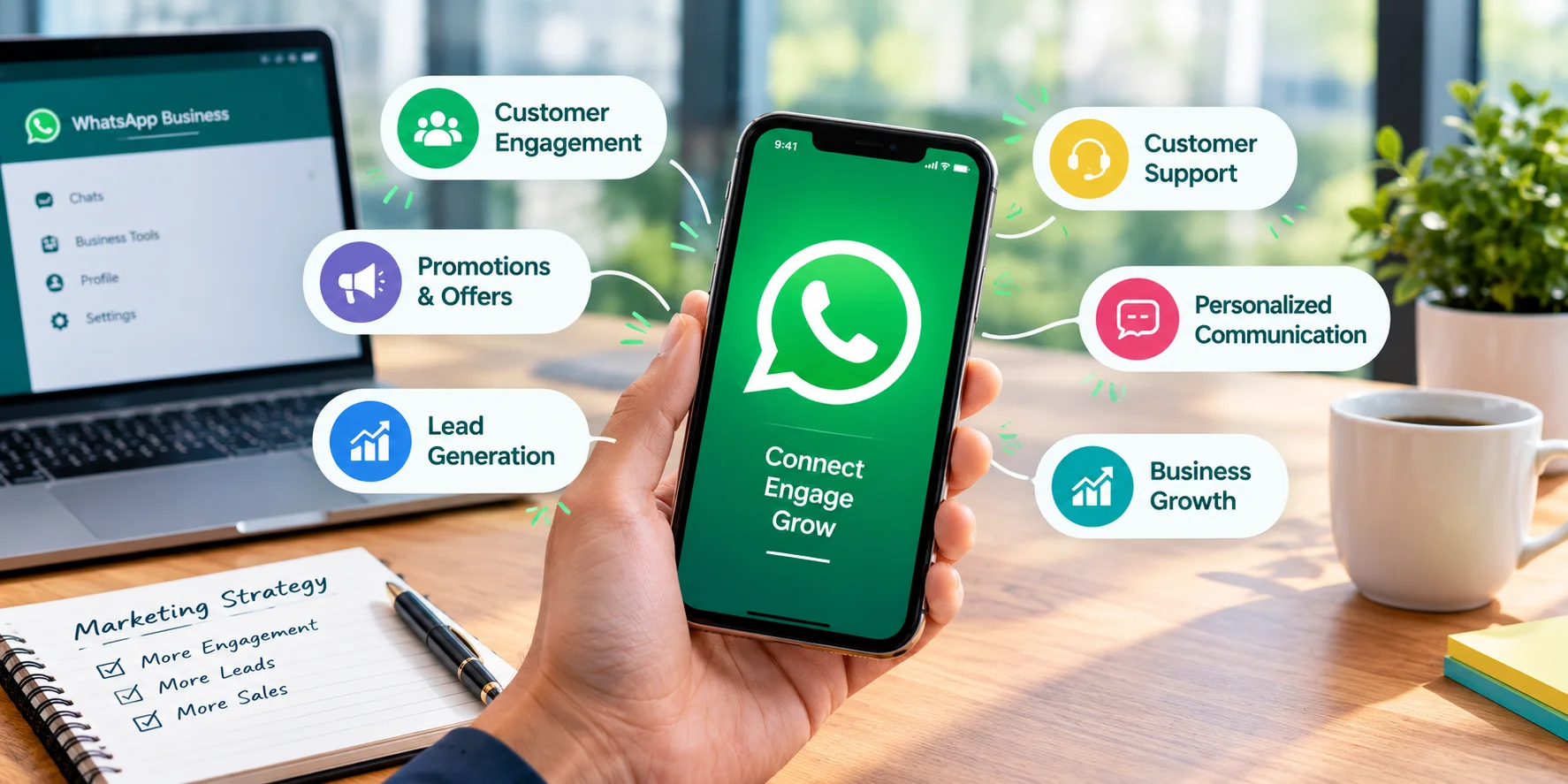
1. Create a Professional WhatsApp Business Presence
The foundation of an effective WhatsApp marketing strategy is a professional business presence.
Businesses should provide accurate information about their company, including the business name, description, contact information, website, operating hours, and relevant services or products.
A complete profile helps customers understand who they are communicating with and what the business offers.
2. Get Customer Permission Before Sending Marketing Messages
Effective marketing should respect customer preferences.
Businesses should communicate with people who have chosen to receive messages and should make it easy for customers to stop receiving promotional communication.
Instead of sending messages to large lists without permission, businesses can build an audience through website forms, enquiries, social media, QR codes, events, and other legitimate customer touchpoints.
Permission-based communication can also help create greater trust between a business and its audience.
3. Send Relevant and Valuable Content
Not every WhatsApp message should be a sales promotion.
Businesses can provide value through:
- New product announcements
- Helpful tips
- Service updates
- Educational content
- Appointment reminders
- Event information
- Special offers
- Frequently asked questions
- Customer support information
When customers consistently receive useful information, they have a stronger reason to engage with the business.
4. Personalize Customer Communication
Customers respond differently depending on their interests, previous interactions, and needs.
Businesses can organize their audiences into relevant groups or segments and create communication that matches each audience.
For example, a clothing business could communicate differently with customers interested in casual wear, formal clothing, or seasonal collections.
Personalization makes communication more relevant and can create a more customer-focused experience.
5. Use WhatsApp to Nurture Leads
Not every potential customer is ready to make a purchase immediately.
WhatsApp can help businesses continue conversations with people who have already shown interest in a product or service.
A business might answer questions, provide additional information, share relevant resources, or follow up at an appropriate time.
The goal should not be to pressure customers into purchasing. Instead, businesses can use helpful communication to guide potential customers through their decision-making process.
6. Strengthen Customer Support
WhatsApp can also become an important customer-service channel.
Customers may use messaging to ask about products, services, appointments, orders, availability, or other concerns.
Businesses can improve the customer experience by providing clear answers and responding within a reasonable timeframe.
For frequently asked questions, businesses can also use automation where appropriate while ensuring that customers can reach a human representative when necessary.
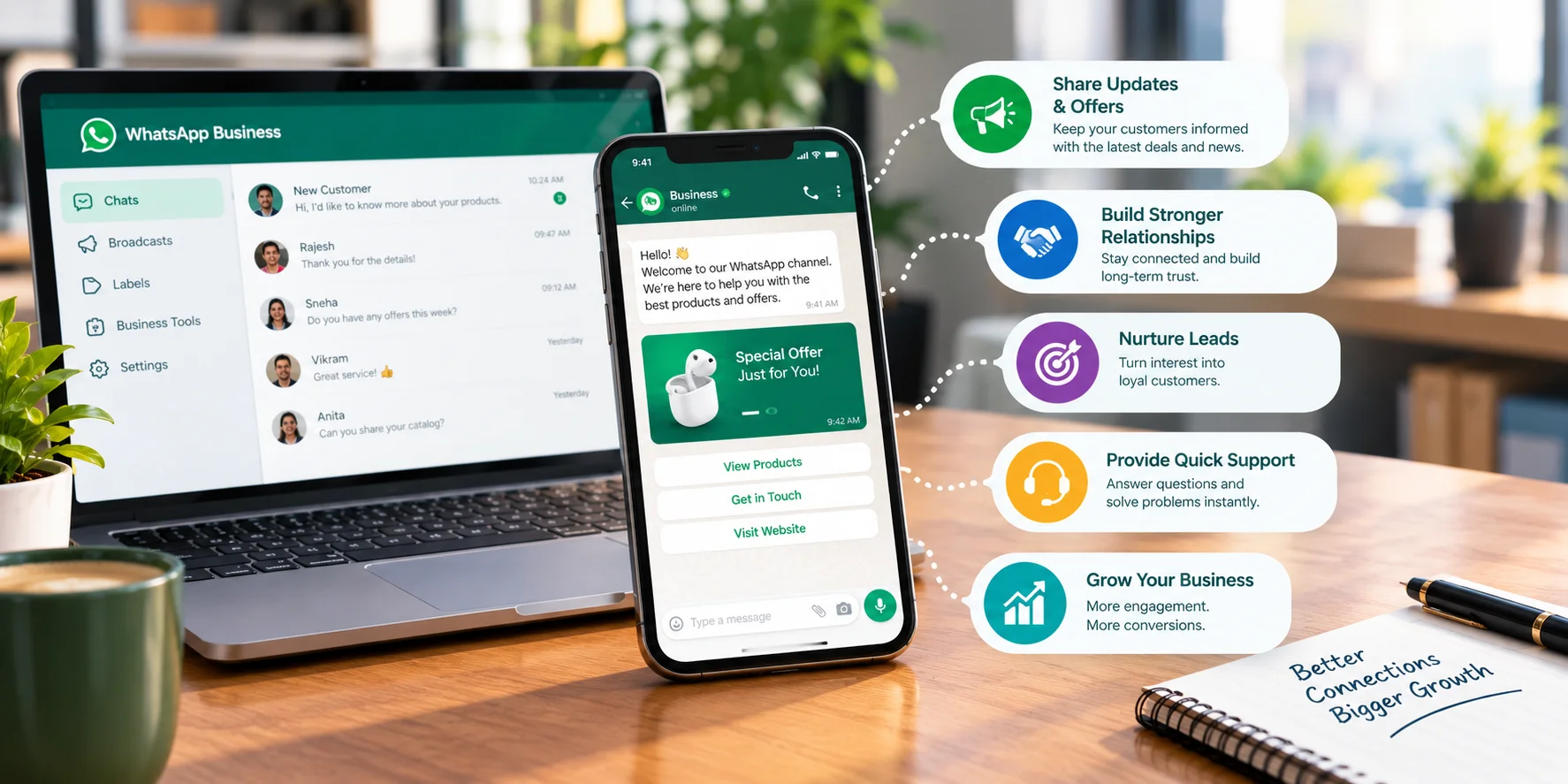
7. Share Product and Service Updates
WhatsApp can be useful for keeping interested customers informed about new products, services, events, or important business updates.
For example, a business launching a new service could use WhatsApp to notify customers who have previously expressed interest.
Visual content can also make product and service communication more engaging, provided that the content remains relevant and useful.
8. Use Automation Carefully
Automation can help businesses handle repetitive communication more efficiently.
Depending on the tools and setup available, businesses can use automated responses for common questions, greetings, business hours, or initial customer interactions.
However, automation should support communication rather than replace genuine customer service.
A good strategy combines automation for routine tasks with human assistance for more complex customer needs.
9. Use Clear Calls to Action
Every marketing message should have a clear purpose.
Instead of sending a message without direction, businesses can tell customers what action they can take next.
Examples include:
- Learn more about a service
- Contact the business
- Request more information
- Visit the website
- Book an appointment
- Explore a product
- Ask a question
A clear call to action makes the communication easier for customers to understand.
10. Measure and Improve Your Strategy
WhatsApp marketing should not be based entirely on assumptions.
Businesses should monitor relevant performance indicators such as customer responses, enquiries, conversions, feedback, and engagement with different types of communication.
By reviewing these results, businesses can understand which messages are useful to their audience and improve future campaigns.
The objective is continuous improvement rather than simply sending more messages.
Common WhatsApp Marketing Mistakes to Avoid
Even a well-planned strategy can become ineffective if businesses use WhatsApp incorrectly.
Some common mistakes include:
- Sending excessive promotional messages
- Contacting people without appropriate permission
- Sharing irrelevant content
- Using unclear calls to action
- Ignoring customer questions
- Relying completely on automated responses
- Failing to respect customer communication preferences
- Sending messages without considering the customer’s needs
A customer-focused approach can help businesses avoid these problems.
Building Long-Term Customer Relationships Through WhatsApp
The biggest opportunity with WhatsApp marketing is not simply generating immediate sales. It is creating an ongoing communication channel between a business and its customers.
Businesses can use WhatsApp to answer questions, provide useful information, understand customer needs, share relevant updates, and offer timely support.
When communication is helpful, respectful, and consistent, WhatsApp can become part of a broader customer relationship strategy.
Conclusion
WhatsApp marketing gives businesses an opportunity to communicate with customers in a direct and convenient way. However, successful marketing is not about sending the largest number of messages. It is about delivering the right message to the right audience at the right time.
By creating a professional business presence, obtaining customer permission, providing valuable content, personalizing communication, nurturing leads, improving customer support, using automation carefully, and measuring results, businesses can develop a more effective WhatsApp marketing strategy.
For businesses looking to strengthen their digital presence, WhatsApp can be an important part of a broader marketing strategy focused on meaningful customer connections and long-term growth.
 Previous Post