
7 Practical Ways Small Businesses Can Grow in 2026
Growing a small business is not always about doing more.
Sometimes, growth comes from understanding your customers better, improving the way your business operates, strengthening your digital presence, and making better decisions with the information you already have.
In 2026, small businesses have access to more digital tools and opportunities than ever before. But having access to these tools does not automatically create growth.
The real challenge is knowing where to focus your time, money, and effort.
Here are 7 practical small business growth strategies that can help businesses build a stronger foundation for sustainable growth.
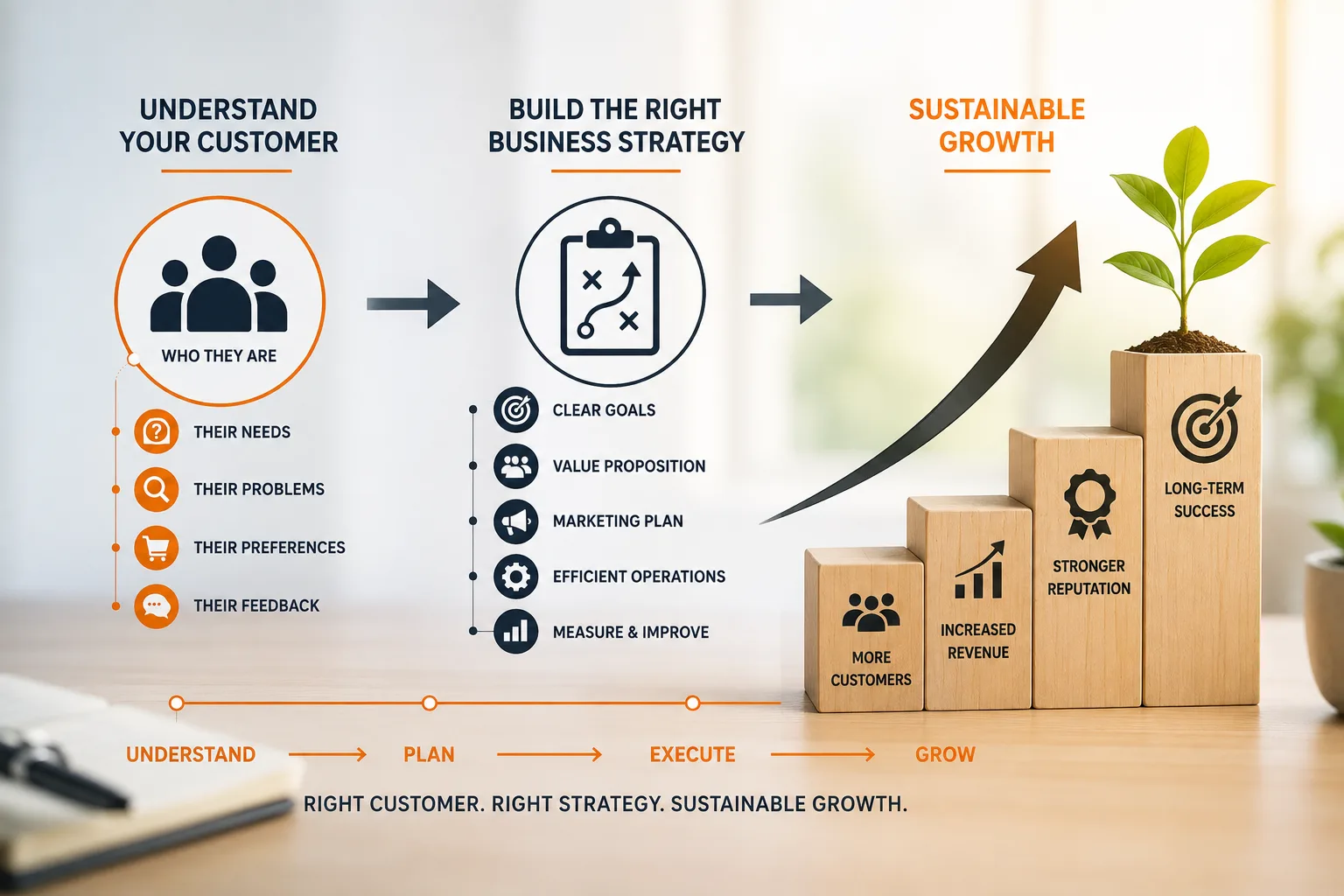
1. Know Your Ideal Customer
One of the most important foundations of business growth is understanding exactly who you are trying to serve.
A business that tries to appeal to everyone can often end up communicating with no one clearly.
Start by understanding your ideal customer.
Consider:
- What problem are they trying to solve?
- What products or services do they need?
- What factors influence their buying decisions?
- Where do they search for information?
- What concerns might prevent them from making a decision?
- What makes them choose one business over another?
The more clearly you understand your audience, the easier it becomes to create relevant products, services, content, and marketing campaigns.
Create Customer Profiles
2. Build a Strong Digital Presence
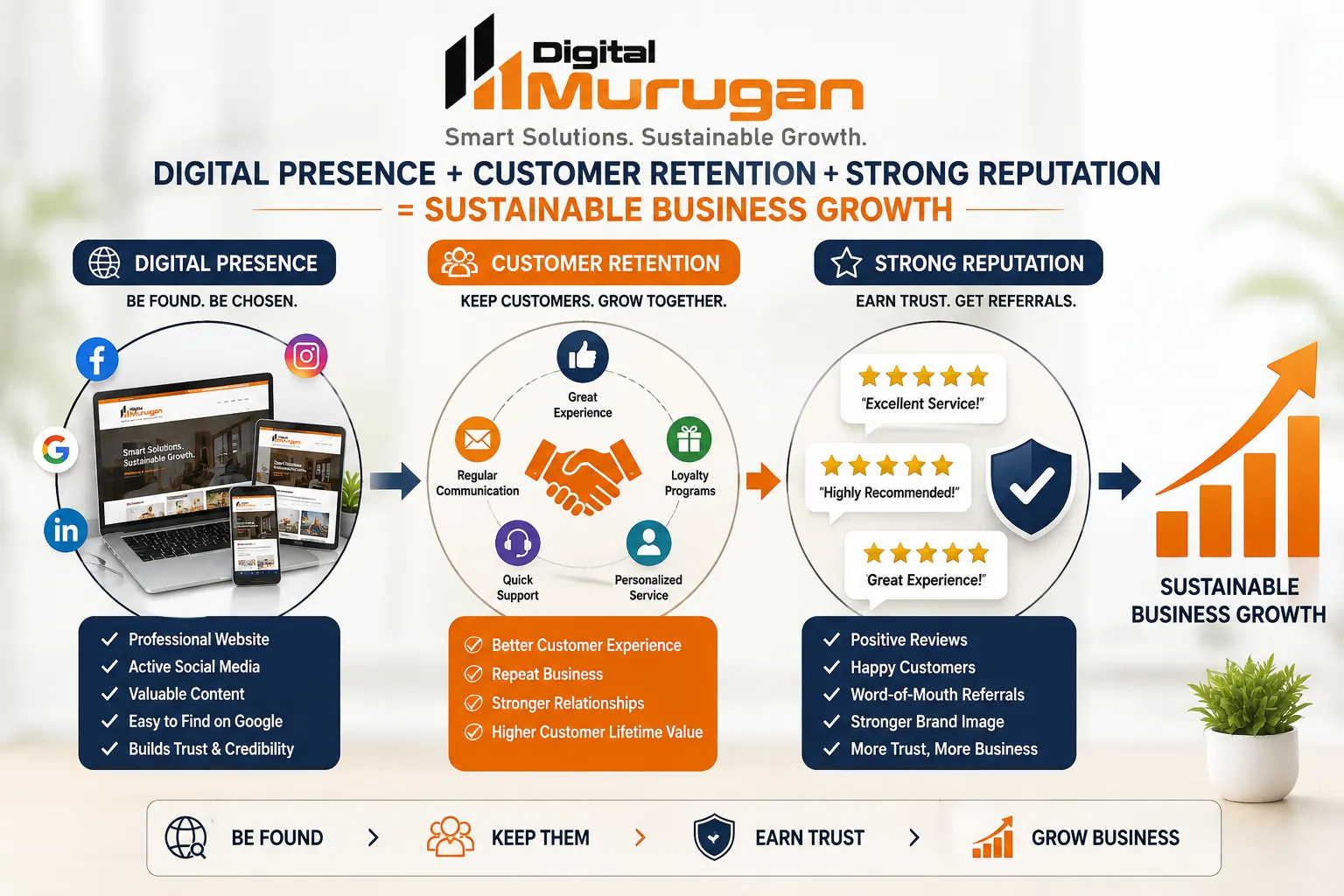
Today, customers often research a business online before contacting or purchasing from it.
Your digital presence may include:
- Business website
- Google Business Profile
- Social media
- Search engine visibility
- Online reviews
- Business listings
- Helpful content
- Email communication
These elements should work together rather than exist as disconnected channels.
Start With the Basics
Make sure your business information is accurate and consistent.
Your website should clearly communicate:
- Who you are
- What you offer
- Who you serve
- Why customers should consider you
- How people can learn more
Your social media presence should reinforce the same brand identity.
Your search presence should help potential customers discover you when they are looking for relevant products or services.
A strong digital presence doesn’t mean being active everywhere.
It means being visible in the places that matter to your customers.
3. Turn Existing Customers Into Repeat Business
Acquiring a new customer can require significant time and marketing effort.
That makes existing customers an important part of sustainable growth.
If someone has already purchased from your business and had a positive experience, they may be more likely to return when they have another need.
Ways to Encourage Repeat Business
Depending on your business model, you could:
- Provide excellent customer service
- Follow up after a purchase
- Share useful information
- Offer relevant updates
- Introduce new products or services
- Make repeat purchases convenient
- Remember customer preferences where appropriate
- Ask for feedback
The goal isn’t to constantly sell to existing customers.
It’s to give them a good reason to continue choosing your business.
Don’t Forget Customer Experience
A customer may remember more than the product itself.
They may remember:
- How quickly you responded
- How easy the process was
- How clearly you communicated
- How you handled a problem
- Whether you delivered what you promised
A consistent customer experience can become an important competitive advantage.
4. Improve Your Online Reputation
People naturally look for signals that help them decide whether a business is trustworthy.
Online reviews, testimonials, portfolio examples, customer feedback, and professional business information can all contribute to that perception.
Build Trust Through Evidence
Instead of simply telling potential customers that your business is good, show them.
You can demonstrate credibility through:
- Customer reviews
- Testimonials
- Case studies
- Project examples
- Portfolio work
- Certifications where relevant
- Industry experience
- Useful educational content
Respond to Feedback Professionally
Not every customer experience will be perfect.
When you receive negative feedback, avoid reacting emotionally.
Instead:
- Understand the problem.
- Respond professionally.
- Acknowledge the customer’s concern where appropriate.
- Look for a practical solution.
- Learn from recurring issues.
Your online reputation isn’t built from one review.
It develops through the overall pattern of customer experiences and how your business responds to them.
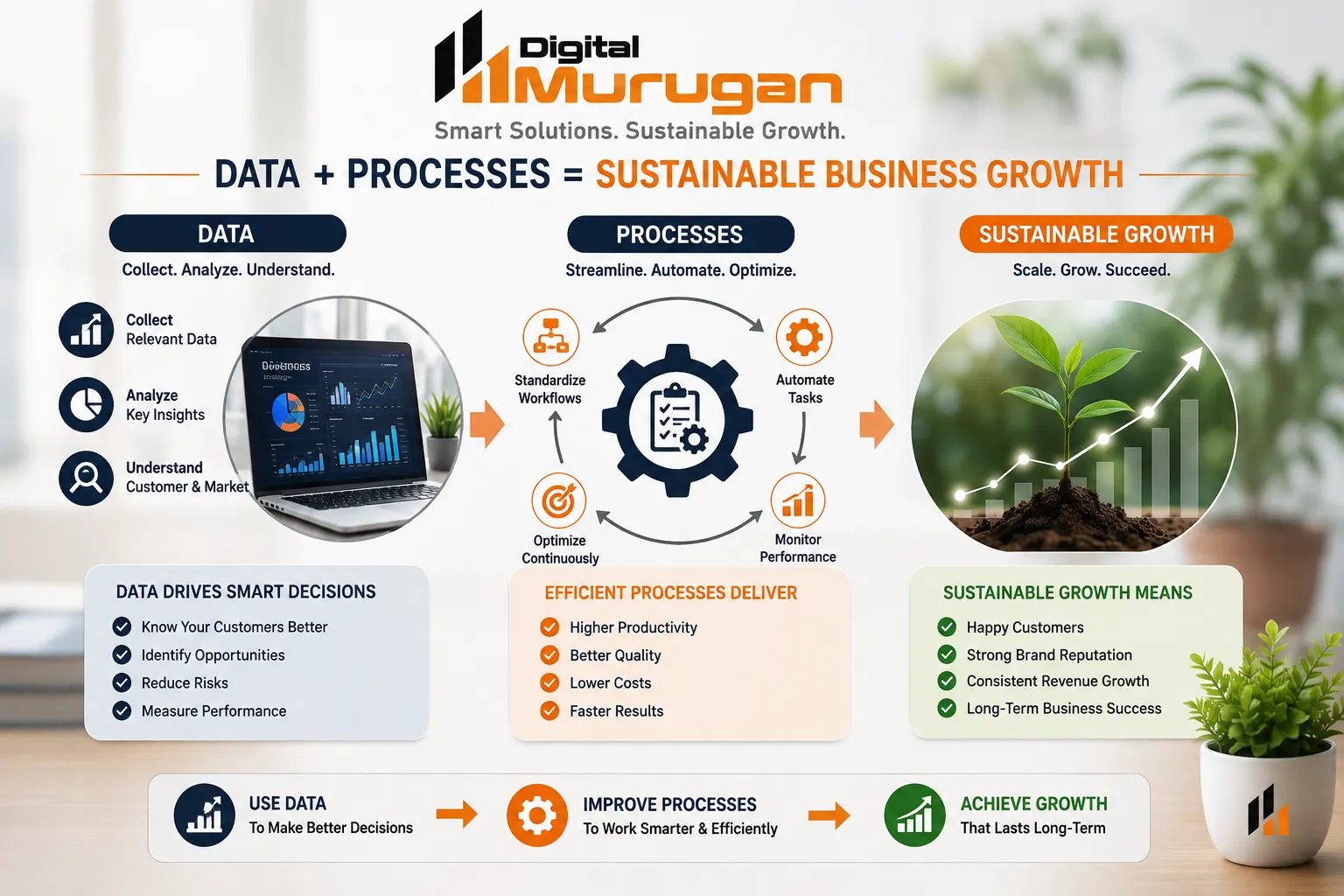
5. Use Data to Make Better Business Decisions
Business decisions are often influenced by experience and intuition.
That’s valuable.
But data can help you understand whether your assumptions are actually correct.
Even a small business can track useful information such as:
- Website visitors
- Enquiries
- Conversion rates
- Customer acquisition sources
- Repeat customers
- Sales by product or service
- Marketing campaign performance
- Customer feedback
- Operating costs
You don’t need a complicated analytics department to get started.
Ask Better Questions
Instead of asking:
“Are we getting more website visitors?”
ask:
“Are those visitors generating more enquiries?”
Instead of asking:
“Which social media post got the most likes?”
ask:
“Which content generated meaningful engagement or enquiries?”
Instead of simply tracking revenue, look at the factors contributing to it.
Good data helps turn assumptions into informed decisions.
6. Build Efficient Business Processes
Growth can create problems if your internal processes aren’t ready to handle it.
Imagine receiving twice as many enquiries but still handling everything manually.
Or getting more orders while using the same inefficient workflow.
Growth should not simply mean more work.
It should ideally mean better systems supporting more work.
Look for Repetitive Tasks
Identify activities that happen repeatedly, such as:
- Sending routine emails
- Following up with enquiries
- Creating reports
- Scheduling social media posts
- Managing customer information
- Organizing files
- Sending reminders
- Updating spreadsheets
Some of these tasks may be simplified, standardized, or automated.
Document Important Processes
Create simple procedures for recurring activities.
For example:
New enquiry → Response → Qualification → Proposal → Follow-up → Decision
A documented process makes it easier to maintain consistency and train team members as the business grows.
7. Focus on Sustainable Growth
Fast growth can look attractive, but uncontrolled growth can create new problems.
A business may increase sales while simultaneously experiencing:
- Higher operating costs
- Poor customer service
- Team overload
- Cash-flow pressure
- Quality problems
- Operational inefficiencies
Sustainable growth means building the capacity to support your progress.
Think Long Term
Instead of asking only:
“How can we grow faster?”
also ask:
“Can our business handle that growth?”
Consider:
- Financial stability
- Customer satisfaction
- Team capacity
- Operational processes
- Technology
- Quality control
- Supplier relationships
- Business reputation
The strongest growth is not necessarily the fastest.
It is growth that your business can support, measure, and maintain.
A Simple Small Business Growth Framework
These seven strategies become more powerful when they work together.
Think of your business growth system like this:
Understand Your Customer
↓
Build Your Digital Presence
↓
Attract & Serve Customers
↓
Create a Great Customer Experience
↓
Build Trust & Reputation
↓
Measure Results
↓
Improve Your Processes
↓
Grow Sustainably
This creates a continuous cycle.
You learn from your customers.
You improve your business.
You measure the results.
Then you use those insights to make better decisions.
Don’t Try to Improve Everything at Once
Small businesses often have limited time, people, and budgets.
Trying to change everything simultaneously can create unnecessary pressure.
Instead, identify the areas that can have the greatest impact.
For example:
If you’re struggling to attract customers:
Focus on your digital presence and visibility.
If you’re getting enquiries but few sales:
Review your customer journey and communication.
If customers don’t return:
Focus on customer experience and retention.
If the business is growing but becoming difficult to manage:
Improve processes and automation.
If you’re spending money without knowing what works:
Start measuring marketing and business performance.
Growth becomes more manageable when you solve the right problem first.
Final Thoughts
Small business growth doesn’t always require a massive investment or a complicated strategy.
Often, it starts with getting the fundamentals right.
Understand your customers.
Build a strong digital presence.
Create a better customer experience.
Build trust.
Measure what matters.
Improve your processes.
Grow at a pace your business can support.
The businesses that build sustainable growth are not necessarily the ones that do everything.
They are often the ones that understand what matters most and execute it consistently.
In 2026, technology can make many aspects of running a business easier—but technology works best when it supports a clear business strategy.
Growth is not just about becoming bigger.
It’s about becoming stronger, more efficient, and more valuable to the customers you serve.
 Next Post