
Why a Beautiful Website Isn’t Enough to Win Customers
A beautiful website can make a strong first impression. Modern visuals, attractive colors, smooth animations, and professional layouts can immediately make a brand look credible.
But there is a problem: looking good does not automatically mean performing well.
A website can be visually impressive and still fail to generate enquiries, sales, bookings, or long-term customers.
The reason is simple: customers don’t visit a website just to admire its design. They visit because they want to find information, solve a problem, compare options, or take action.
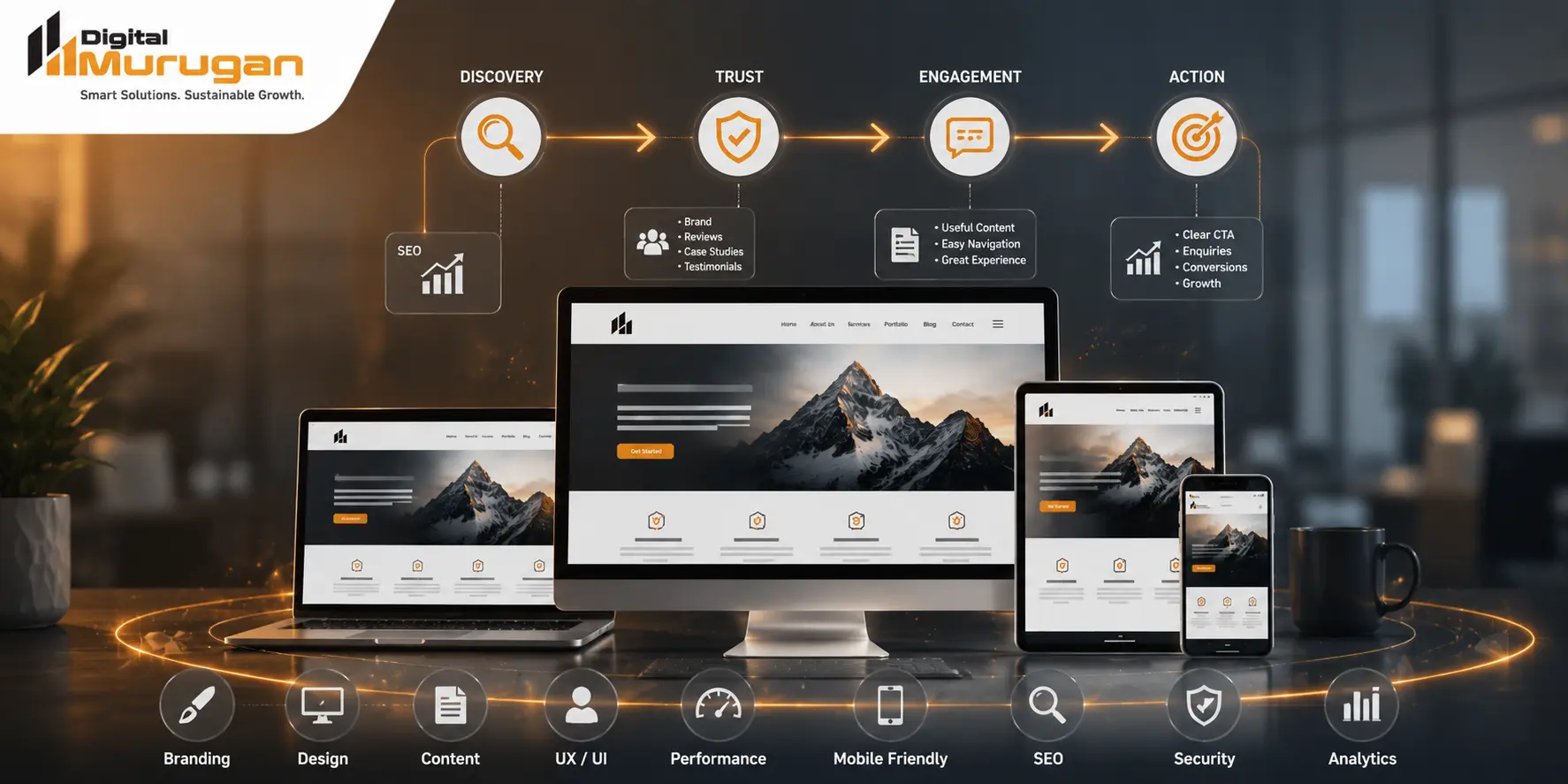
That is why an effective website needs more than great design. It needs a combination of branding, user experience, useful content, performance, trust, and a clear customer journey.
A Website Should Do More Than Look Good
Imagine visiting a website with beautiful graphics, impressive animations, and a premium-looking interface.
But you cannot quickly find the services.
The contact button is difficult to locate.
The pages take too long to load.
The content doesn’t explain what the company actually does.
You are unsure what to do next.
Would you stay?
Probably not.
This is where many businesses make a common mistake: they focus heavily on how their website looks without thinking enough about how their customers experience it.
A successful website should answer three important questions quickly:
- What does this business offer?
- Why should I trust this business?
- What should I do next?
If a website cannot answer those questions clearly, great design alone cannot save it.
1. First Impressions Matter — But They Are Only the Beginning
Design plays an important role in establishing credibility.
Your colors, typography, photography, spacing, layout, and visual identity all contribute to how visitors perceive your brand.
But the first impression only gets visitors interested.
The experience determines whether they stay.
Think of your website like a physical store.
A beautifully designed storefront may encourage someone to walk inside. But if the products are difficult to find, the staff are unavailable, the information is confusing, and there is no clear way to make a purchase, the attractive storefront doesn’t matter much.
Your website works in the same way.
Design gets attention. Experience earns action.
2. User Experience Can Make or Break a Website
User experience, commonly called UX, is about how easily people can navigate and interact with your website.
Good UX removes unnecessary friction.
Visitors should be able to move from one page to another naturally without constantly asking:
“Where do I go now?”
A strong user experience usually includes:
- Simple navigation
- Clear page structure
- Readable content
- Mobile-friendly layouts
- Fast-loading pages
- Clearly visible buttons
- Logical information hierarchy
- Easy access to contact information
The goal isn’t to make the visitor think about your website.
The goal is to make the website work naturally for the visitor.
3. Your Content Has to Answer Customer Questions
A visually impressive homepage cannot compensate for weak or unclear content.
Customers want answers.
They may want to know:
- What services do you provide?
- Who are your services for?
- What makes your company different?
- How does your process work?
- What results can customers expect?
- How can they contact you?
Your website content should provide those answers clearly.
Instead of filling every section with complicated marketing language, focus on communicating your value in a way your audience can understand.
Clear communication builds confidence.

9. SEO Brings People to Your Website — Experience Keeps Them There
Having a beautiful website doesn’t automatically mean people will find it.
Search engine optimization helps businesses improve their visibility when potential customers search for relevant information, products, or services.
But getting visitors is only one part of the process.
Imagine spending time and resources attracting people through search engines, social media, advertising, or other channels — only to lose them because the website is confusing.
That’s why SEO, content, design, UX, and conversion strategy should work together.
Traffic brings people to the door.
The website experience gives them a reason to stay.
10. A Great Website Connects Design With Business Goals
Ultimately, your website isn’t just a digital brochure.
It is part of your business infrastructure.
A strong website should support real business objectives.
For example:
Branding → Builds recognition
Content → Educates visitors
SEO → Attracts relevant traffic
UX → Makes navigation easier
Trust elements → Builds confidence
Calls-to-action → Encourage action
Analytics → Helps identify opportunities for improvement
When these elements work together, the website becomes more than something that looks professional.
It becomes a business tool.
The Real Question Isn’t “Does My Website Look Good?”
A better question is:
“Does my website make it easy for the right customer to understand, trust, and choose my business?”
That’s the difference between a website that simply looks good and one that actually contributes to business growth.
A beautiful design can capture attention.
Useful content can create understanding.
A smooth user experience can reduce friction.
Trust can build confidence.
And a clear customer journey can encourage action.
When all of these elements work together, your website becomes much more powerful.
Final Thoughts
Your website is often one of the first places people interact with your brand.
So yes, it should look professional.
But beautiful design should be the beginning, not the destination.
The strongest websites combine visual identity with strategy, usability, content, performance, trust, and a clear customer journey.
Because customers don’t choose a business simply because its website looks beautiful.
They choose businesses that make them feel confident, understood, and ready to take the next step.
A beautiful website gets attention. A great digital experience earns the customer.
For a brand like Digital Murugan, that distinction is exactly where design, technology, branding, and digital strategy come together.
 Previous Post
 Next Post