
How Small Businesses Can Use Social Media to Grow
Independence is about having the freedom to shape your own future. For today’s small businesses, social media offers a different kind of independence—the ability to build an audience, share a story, create relationships, and grow without relying entirely on traditional marketing channels.
But social media isn’t simply a place to publish posts.
For a small business, it can become a powerful tool for building visibility, demonstrating expertise, understanding customers, and creating long-term business opportunities.
The key is not to be present on every platform.
The key is to use social media with a clear business purpose.
Here are seven practical ways small businesses can use social media to support sustainable growth.
1. Build Your Own Digital Identity
Every business has a story.
Your social media presence gives you an opportunity to communicate that story directly to the people you want to reach.
Instead of relying entirely on advertisements or third-party platforms, your business can use social media to establish its own identity through:
- Helpful content
- Business updates
- Product or service information
- Behind-the-scenes content
- Customer experiences
- Educational posts
- Industry insights
Over time, these interactions can help people understand what your business does and what it stands for.
Keep Your Brand Consistent
Your social media profiles should feel like an extension of your business rather than a completely separate identity.
Keep important elements consistent, including:
- Logo
- Colours
- Typography
- Photography style
- Tone of communication
- Brand messaging
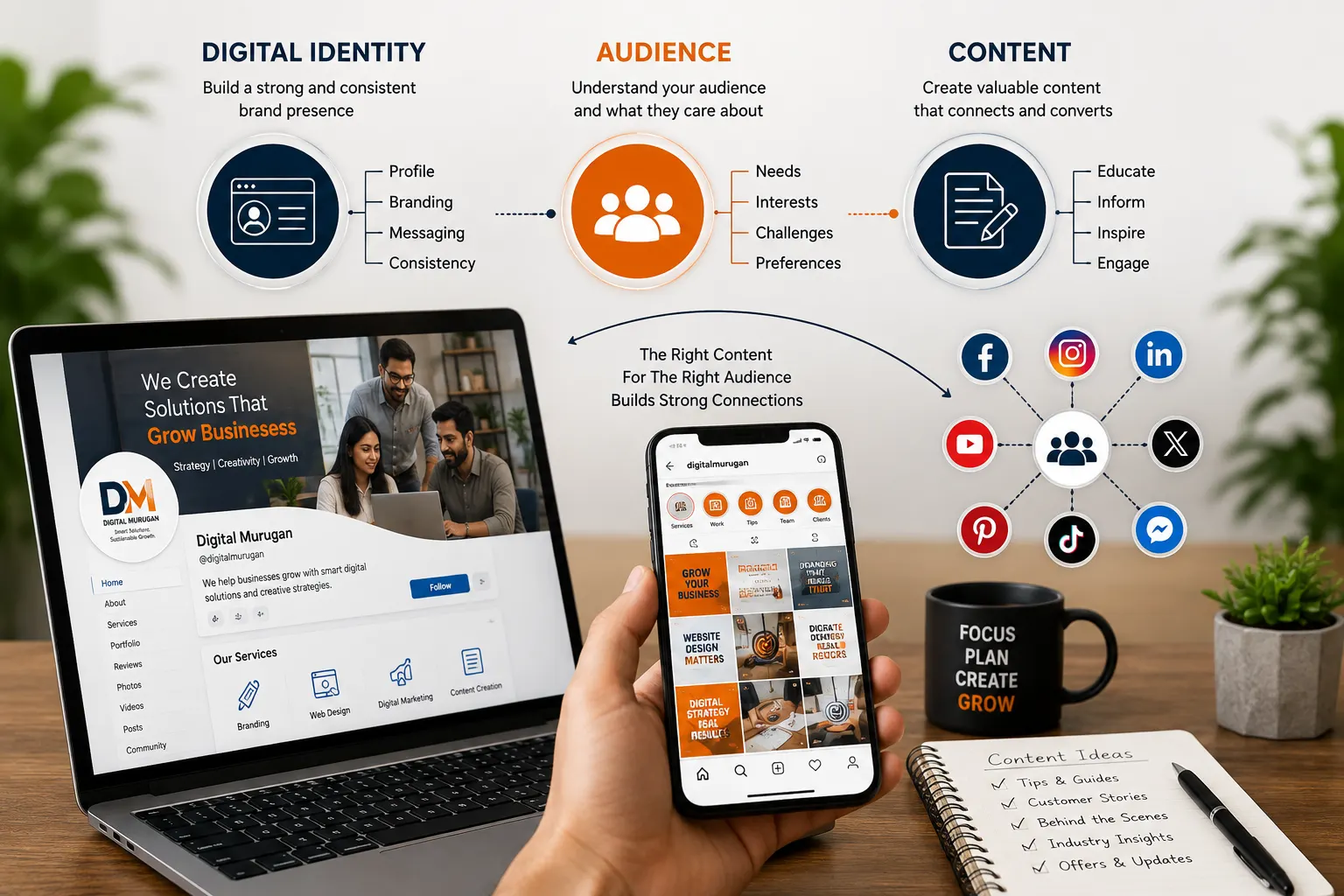
Consistency makes it easier for people to recognize your business when they encounter it across different channels.
2. Use Social Media to Reach the Right Audience
Having thousands of followers doesn’t automatically mean having a successful business.
A smaller audience that genuinely needs your products or services can be much more valuable than a large audience with little interest in what you offer.
Start by understanding your ideal customer.
Ask:
- What problems do they have?
- What information are they looking for?
- Which platforms do they use?
- What type of content do they find useful?
- What questions do they frequently ask?
- What factors influence their decisions?
Once you understand your audience, your content becomes much easier to plan.
Don’t Chase Everyone
Trying to appeal to everyone can make your messaging unclear.
Instead, create content for the people who are most likely to benefit from your products or services.
The right audience matters more than the biggest audience.
3. Turn Content Into Business Visibility
Social media gives small businesses an opportunity to demonstrate their knowledge before a customer ever makes an enquiry.
For example, a website development company could share:
- Website tips
- Common website mistakes
- UX recommendations
- Website performance advice
- SEO guidance
A branding business could share:
- Branding principles
- Design examples
- Colour psychology
- Logo design insights
- Brand consistency tips
A professional services company could explain common customer questions and industry challenges.
The objective is not to reveal everything you know in one post.
It is to consistently demonstrate that you understand the problems your audience is trying to solve.
Create Content Around Questions
One of the simplest ways to build a content strategy is to listen to customer questions.
Every question can potentially become:
A social post → a short video → a blog article → an infographic → a discussion
One useful idea can therefore become multiple pieces of content.
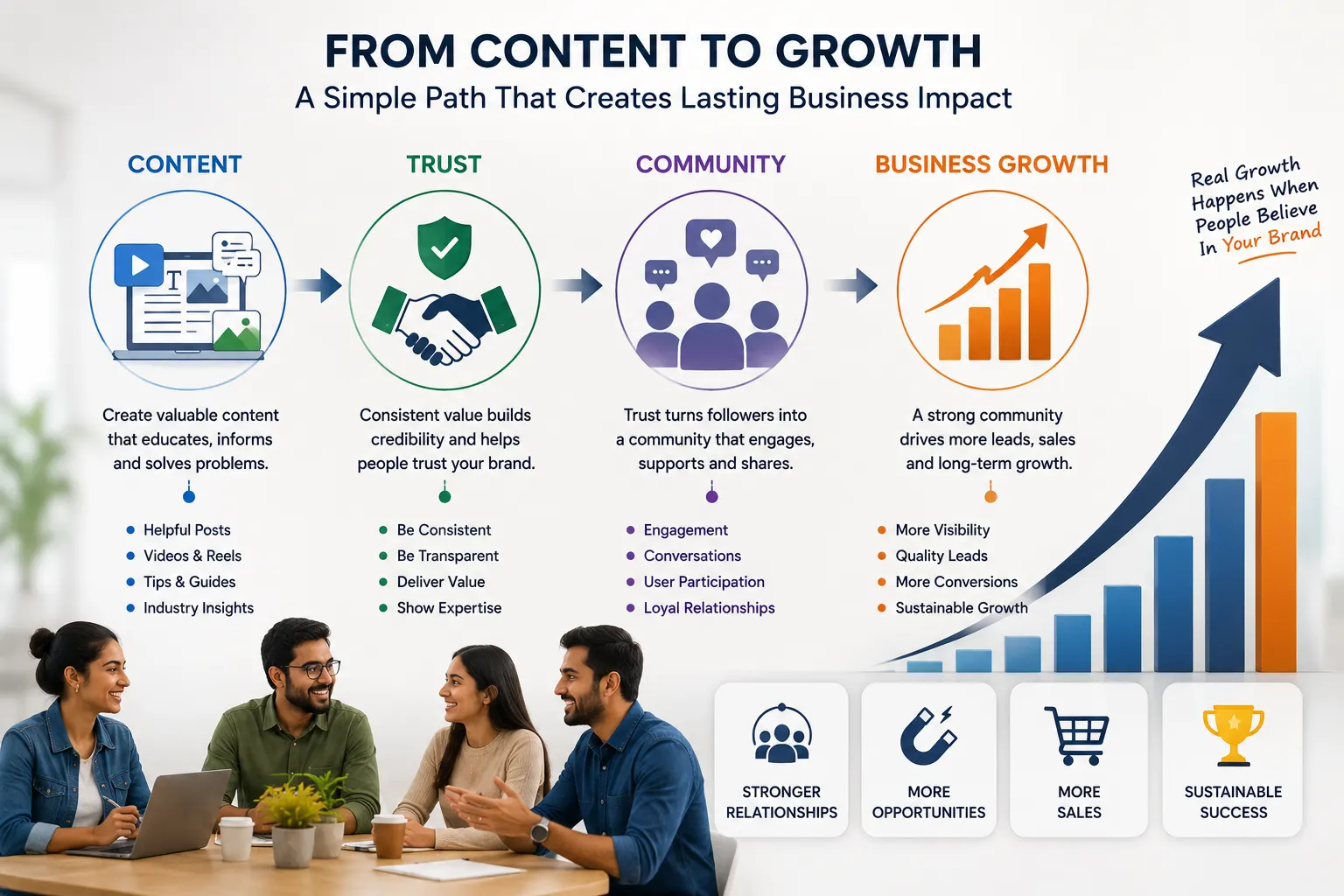
4. Build Trust Before Asking for a Sale
People rarely become customers simply because they saw one promotional post.
They often need time to understand the business and develop confidence.
Social media can help create that familiarity.
Instead of constantly posting:
“Buy now.”
you can share:
- Useful information
- Practical advice
- Customer stories
- Project examples
- Industry knowledge
- Behind-the-scenes content
- Answers to common questions
This gives potential customers opportunities to understand your expertise before they ever contact you.
Think Long Term
Not every social media post needs to generate an immediate enquiry.
Some posts may simply help someone remember your business.
That person may not need your service today.
But several months later, when the need appears, your business may already be familiar to them.
Trust takes time, and social media can help build that familiarity consistently.
5. Use Local Content When It Makes Sense
Even though social media can reach a global audience, many small businesses still depend heavily on customers in their local area.
Restaurants, retailers, professional services, healthcare businesses, local contractors, educational businesses, and many other companies can benefit from creating content that connects with their local community.
Depending on the business, this could include:
- Local events
- Community activities
- Local customer stories
- Area-specific services
- Local business partnerships
- Regional trends
- Behind-the-scenes activities
Local content can make a business feel more relevant and connected to the people around it.
But Don’t Limit Yourself
A business can have a local presence while still building a wider digital audience.
The important thing is to understand where your customers come from and create content accordingly.
6. Turn Followers Into a Business Community
Social media works best when communication goes both ways.
Instead of treating your audience as numbers, create opportunities for people to participate.
You can:
- Ask questions
- Run polls
- Respond to comments
- Invite opinions
- Answer questions
- Encourage discussions
- Share customer experiences
- Highlight useful community contributions
This can turn a passive audience into an active community.
Engagement Is More Than Likes
Likes and follower counts can be useful indicators, but they don’t tell the whole story.
Pay attention to meaningful actions such as:
- Comments
- Shares
- Saves
- Direct messages
- Website visits
- Enquiries
- Repeat interactions
A smaller community that regularly interacts with your business can be more valuable than a large audience that never engages.
7. Measure What Actually Supports Growth
One of the biggest mistakes businesses make with social media is focusing only on vanity metrics.
A post receiving thousands of views may look impressive.
But what did those views actually contribute to the business?
Depending on your objectives, useful measurements might include:
- Website traffic
- Qualified enquiries
- Direct messages
- Content saves
- Shares
- Leads
- Conversion rates
- Returning visitors
- Customer acquisition sources
Ask the Right Question
Instead of asking:
“Which post got the most likes?”
also ask:
“Which content helped us achieve our business objective?”
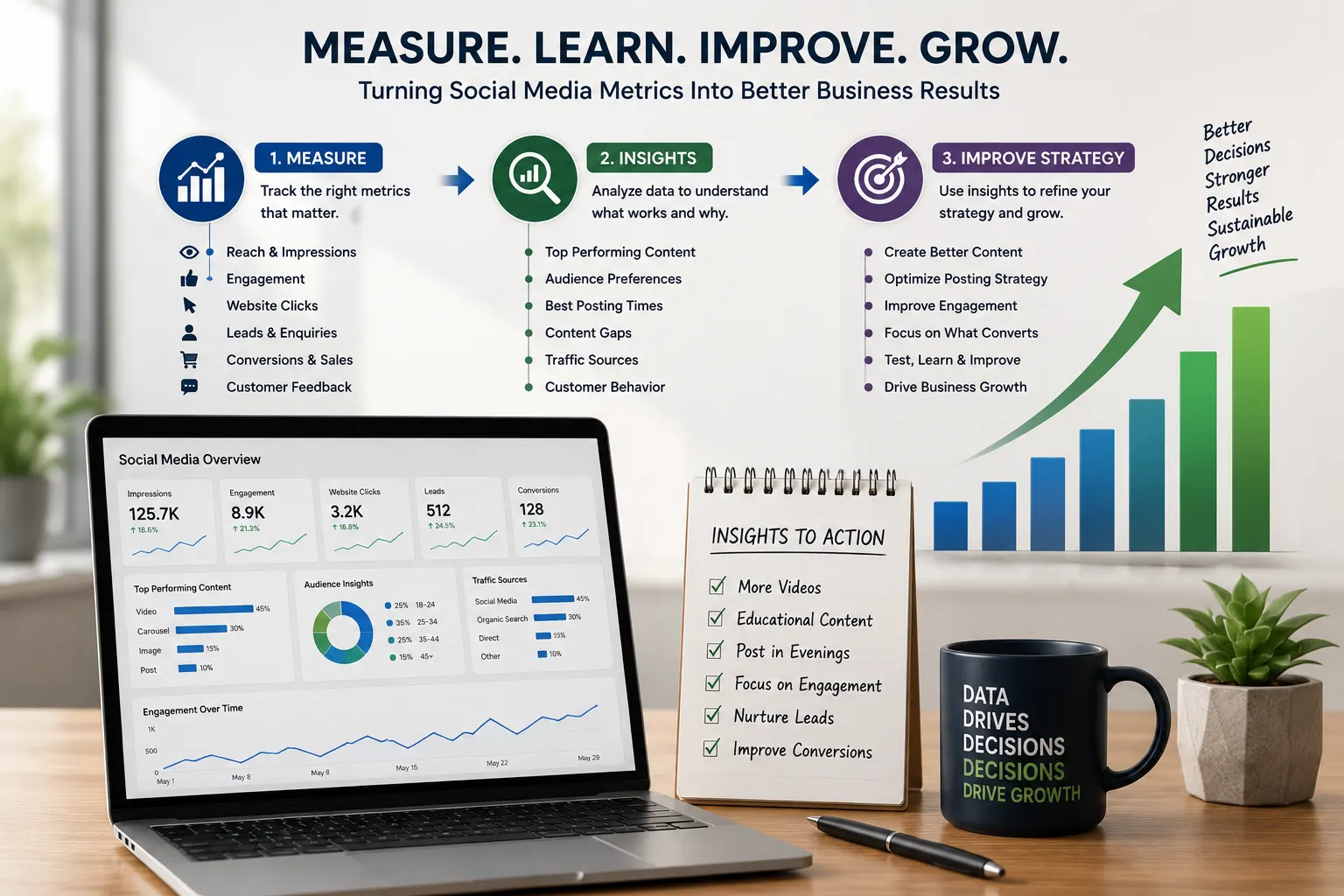
This distinction can completely change your social media strategy.
A post with fewer views may generate more meaningful business results than a viral post that reaches people who have no interest in your product or service.
A Simple Social Media Growth Framework
Small businesses don’t need a complicated social media system.
Start with a simple cycle:
Understand Your Audience
↓
Create Useful Content
↓
Build Visibility
↓
Start Conversations
↓
Build Trust
↓
Measure Results
↓
Improve Your Strategy
↓
Repeat
This creates a sustainable approach rather than relying on random posts or occasional promotional campaigns.
Don’t Try to Be Everywhere
One of the most common mistakes small businesses make is creating accounts on every major social platform.
They start with:
- YouTube
- X
- TikTok
Then they discover they don’t have enough time or resources to maintain all of them properly.
You don’t need to be everywhere.
Choose the platforms that make the most sense for your audience and business model.
It is usually better to maintain two platforms consistently than to have six inactive profiles.
Quality and Consistency Matter
A simple content schedule can be enough to get started.
For example:
1–2 educational posts
1 practical tip
1 customer-focused post
1 business or project update
The exact frequency isn’t as important as creating useful content consistently.
Social Media Should Support the Whole Business
Social media should not operate in isolation.
It can work together with your:
Website
→ Provides detailed information
Blog
→ Provides deeper educational content
SEO
→ Helps people discover your business through search
→ Builds direct communication
Customer Service
→ Helps answer questions and maintain relationships
Sales
→ Turns qualified interest into business opportunities
When these channels work together, social media becomes part of a broader digital ecosystem rather than a collection of disconnected posts.
Final Thoughts
Social media can give small businesses something that traditional marketing often makes difficult to achieve: the ability to communicate directly with an audience and build relationships over time.
But growth doesn’t come from simply posting more frequently.
It comes from understanding your audience, creating useful content, building trust, encouraging meaningful conversations, and measuring what actually matters.
You don’t need millions of followers.
You don’t need to be active on every platform.
You don’t need to make every post promotional.
You need a clear purpose and the discipline to keep improving.
Build visibility.
Create value.
Earn trust.
Build relationships.
Measure what matters.
That’s how social media can become a genuine growth tool for a small business.
 Previous Post
 Next Post