
How Search Engine Optimization Helps Businesses Grow Online
How Search Engine Optimization Helps Businesses Grow Online
For many businesses, having a website is only the beginning of building an online presence. The bigger challenge is helping potential customers discover that website when they search for products, services, or information related to the business.
This is where Search Engine Optimization, commonly known as SEO, becomes important.
SEO helps businesses improve their visibility in search engine results and attract people who are already looking for relevant information, products, or services. When approached as a long-term strategy, SEO can support brand visibility, website traffic, customer discovery, and sustainable business growth.
But how exactly does SEO contribute to business growth?
What Is Search Engine Optimization?
Search Engine Optimization is the process of improving a website and its content so that search engines can better understand, index, and present it to people searching for relevant information.
SEO can involve several areas, including:
- Keyword research
- Website structure
- Page titles and headings
- Useful and relevant content
- Internal linking
- Technical website performance
- Mobile usability
- Image optimization
- Local SEO
- Authority and reputation signals
The goal is not simply to attract more visitors. The goal is to attract the right visitors—people who are more likely to be interested in what a business offers.
Why Is SEO Important for Business Growth?
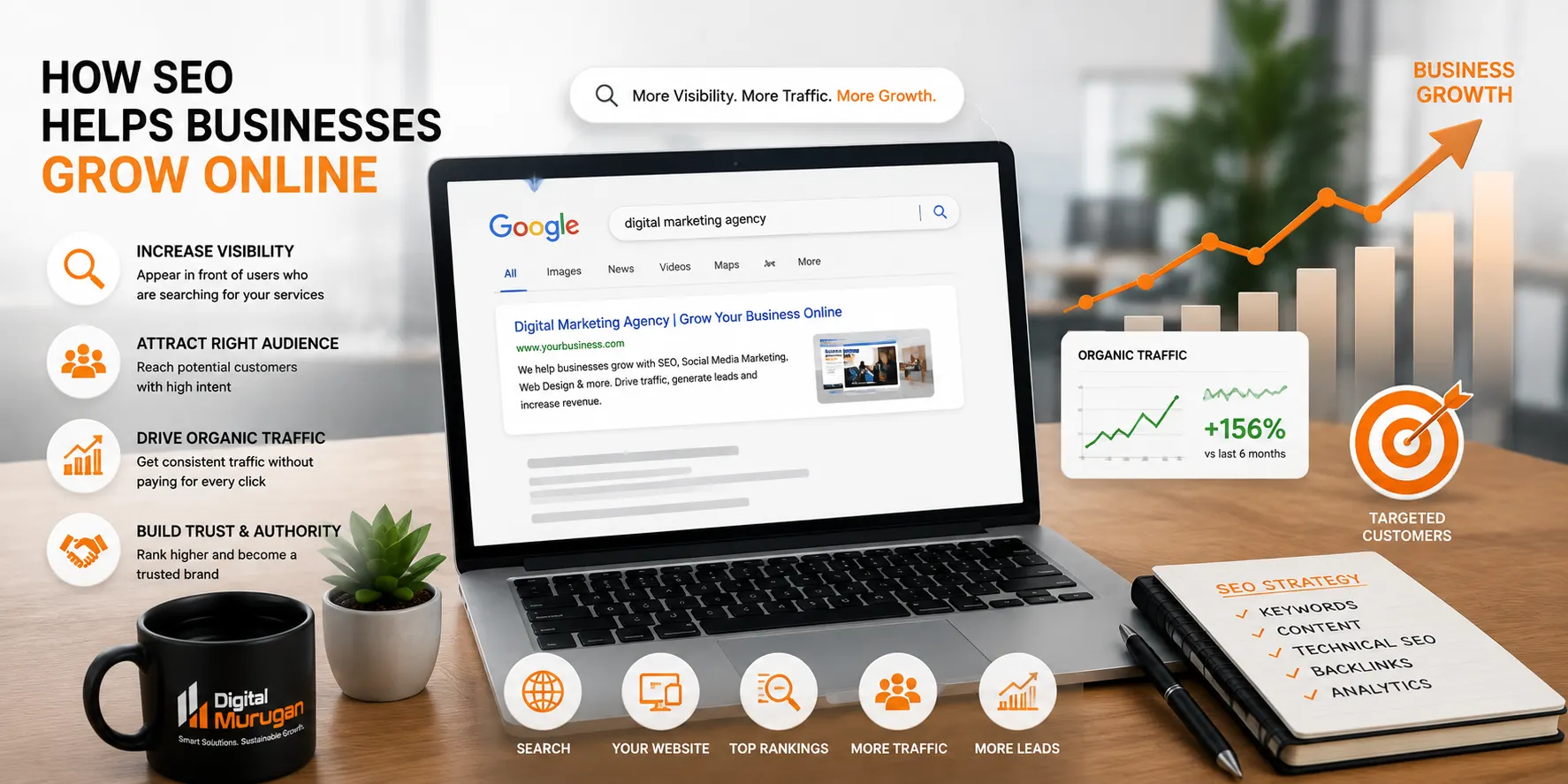
1. SEO Helps Customers Discover Your Business
People frequently use search engines when they need information or are looking for a solution to a problem.
For example, someone might search for:
- Website design services
- Digital marketing for small businesses
- Logo design company
- Packaging solutions
- SEO services for local businesses
If a business has useful pages targeting relevant search queries, those pages have an opportunity to appear when potential customers are searching.
This creates a valuable connection between the customer’s need and the business that can help solve it.
2. SEO Can Bring Consistent Website Traffic
Paid advertising can generate traffic while a campaign is running. SEO works differently.
A well-optimized page can continue attracting visitors from search engines over an extended period, although rankings and traffic can change over time.
This makes SEO particularly useful as part of a long-term digital marketing strategy.
Instead of relying entirely on continuously paying for every visitor, businesses can invest in creating useful content and improving their website so that it can earn organic visibility.
3. SEO Helps Attract High-Intent Visitors
Not every website visitor has the same level of interest.
Someone searching for “what is digital marketing” may simply be researching a topic. Someone searching for “digital marketing agency for small business” may have a much stronger commercial intent.
Understanding search intent helps businesses create content that matches what users actually want.
By targeting relevant search terms and creating pages that satisfy those searches, businesses can attract visitors who are more closely connected to their products or services.
4. SEO Builds Brand Visibility
Even when people do not immediately contact a business, appearing in relevant search results can increase brand exposure.
When potential customers repeatedly encounter a business while researching topics related to their needs, the brand can become more familiar to them.
Over time, this visibility can contribute to brand recognition and credibility.
SEO therefore has value beyond simply generating website clicks.
5. Useful Content Can Build Trust
Modern SEO is closely connected with creating useful content for people.
Businesses can publish articles, guides, FAQs, tutorials, case studies, and other resources that answer common customer questions.
For example, a web design company could publish an article explaining how businesses can improve website usability. A branding company could explain how to create a consistent brand identity.
This type of content demonstrates knowledge and gives potential customers useful information before they ever make an enquiry.
6. SEO Can Support Local Business Growth
For businesses serving a specific city, region, or local market, local SEO can be particularly valuable.
Potential customers often search for businesses using location-based queries such as:
- Web designer near me
- Digital marketing agency in Mumbai
- Logo designer in Delhi
- Printing services near me
A business can improve its local search presence by maintaining accurate business information, creating relevant local content, and building a consistent online presence.
Local SEO can help connect businesses with customers who are searching for services in their area.
7. SEO Improves the Overall Website Experience
SEO is not only about keywords.
A successful SEO strategy can encourage businesses to improve areas such as:
- Website navigation
- Page structure
- Mobile usability
- Loading performance
- Content organization
- Internal links
- Image optimization
These improvements can also make a website easier for visitors to use.
A website that is easier to understand and navigate can provide a better experience for both search engines and customers.
8. SEO Can Provide Long-Term Marketing Value
One of the biggest advantages of SEO is its long-term potential.
A useful article or service page can continue attracting organic visitors after it has been published. However, this does not mean SEO is a one-time activity.
Search trends change, competitors publish new content, websites evolve, and search engines continuously improve how they evaluate results.
Businesses therefore need to review and improve their SEO strategy over time.
The important point is that SEO can build a foundation of organic visibility rather than depending entirely on short-term campaigns.
SEO Is More Than Adding Keywords
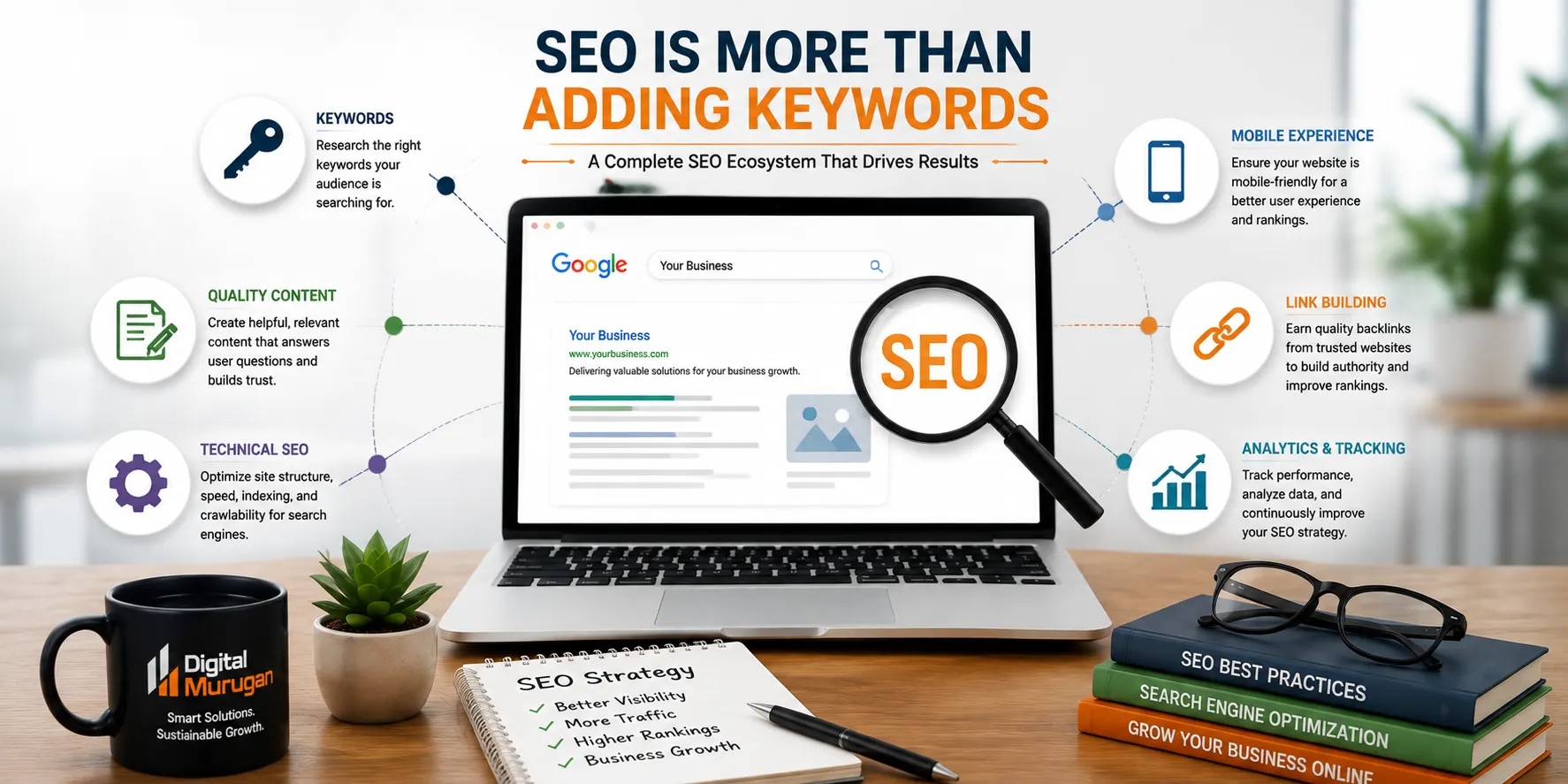
One common misconception is that SEO simply means adding keywords to a webpage.
In reality, effective SEO involves much more.
A page should provide useful information, clearly communicate its purpose, use appropriate headings, offer a good user experience, and make it easy for search engines to understand the content.
Repeating the same keyword unnecessarily can make content difficult to read and does not create genuine value for users.
The better approach is to understand what people are searching for and create the best possible resource for that need.
How Businesses Can Start With SEO
Businesses that are new to SEO do not necessarily need to change everything at once.
A practical starting point can include:
Understand Your Target Audience
Identify who your customers are, what problems they have, and what information they search for online.
Research Relevant Keywords
Find search terms that are relevant to your products, services, and audience.
Focus on relevance and search intent rather than simply choosing keywords with high search volume.
Improve Important Website Pages
Review your homepage, service pages, product pages, and other important landing pages.
Make sure each page has a clear purpose and provides useful information.
Create Helpful Content
Publish articles and resources that answer genuine questions from your target audience.
Strengthen Internal Linking
Connect related pages so visitors and search engines can discover more relevant information across the website.
Monitor and Improve
SEO requires ongoing attention. Review website performance, identify opportunities, update outdated content, and continue improving important pages.
How Long Does SEO Take to Work?
SEO is generally a long-term strategy rather than an instant marketing solution.
The time required to see meaningful results can vary depending on factors such as:
- Website history
- Competition
- Industry
- Content quality
- Technical condition of the website
- Search demand
- Existing online authority
- SEO implementation
Some improvements may become visible relatively quickly, while competitive search terms can take considerably longer.
Businesses should therefore evaluate SEO using longer-term performance rather than expecting immediate results.
SEO and Business Growth: The Bigger Picture
SEO should not be treated as an isolated marketing activity.
It works best when it supports broader business objectives.
For example:
SEO → Search Visibility → Relevant Visitors → Useful Experience → Enquiries or Conversions → Business Growth
The exact customer journey will vary from business to business, but the principle remains the same: SEO should ultimately help connect a business with people who need what it offers.
Final Thoughts
Search Engine Optimization can be a powerful part of a business growth strategy because it helps potential customers discover a business at the moment they are searching for relevant information, products, or services.
From improving website visibility and attracting relevant traffic to building brand awareness and creating useful resources, SEO can contribute to several stages of the customer journey.
However, successful SEO is not about chasing rankings alone. It is about understanding customers, creating valuable content, building a better website, and consistently improving the online experience.
For businesses willing to invest in the process over time, SEO can become a sustainable source of visibility and an important foundation for long-term digital growth.
 Previous Post
 Next Post