
Email Marketing That Works: Strategies to Build Engagement, Loyalty and Growth
In a world filled with social media posts, paid advertisements and constantly changing digital platforms, one communication channel continues to give businesses a direct way to stay connected with their audience: email.
But effective email marketing is about much more than sending promotional messages.
A successful email strategy helps a business deliver useful information, nurture relationships, encourage repeat engagement and guide people toward meaningful actions.
When done well, email can become an important part of a broader business growth strategy.
The key is to stop thinking of email as simply a way to “send promotions” and start treating it as a channel for building trust, relevance and long-term relationships.
What Is Email Marketing?
Email marketing is the use of email to communicate with customers, prospects, subscribers or other audiences for purposes such as education, relationship building, product updates, promotions and customer retention.
A business might use email to:
- Welcome a new subscriber
- Share useful educational content
- Announce a new product or service
- Send a special offer
- Follow up after a purchase
- Re-engage inactive subscribers
- Invite people to an event
- Share company news
- Drive traffic to valuable website content
The strongest email strategies don’t make every message a sales pitch.
Instead, they create a consistent reason for people to keep opening and reading.
Why Email Marketing Still Matters
Digital marketing channels are constantly evolving.
Algorithms change. Advertising costs change. Social platforms introduce new features. Search behaviour changes.
Your email list gives you a direct communication channel with people who have chosen to hear from your business.
That doesn’t mean every subscriber will become a customer.
It means you have an opportunity to build an ongoing relationship rather than relying entirely on one-time interactions.
For businesses focused on sustainable growth, this can make email an important part of customer communication and retention.
How Email Marketing Supports Business Growth
Email can contribute to several stages of the customer journey.
Building Awareness
A newsletter or educational email can introduce people to your brand and demonstrate your expertise.
Nurturing Interest
Not everyone is ready to buy the first time they discover a business.
Useful emails can keep your brand relevant while a potential customer evaluates their options.
Encouraging Action
When the timing is right, a relevant offer, product announcement or call to action can encourage a subscriber to take the next step.
Strengthening Customer Relationships
After someone becomes a customer, email can help you stay connected through useful updates, support information, recommendations and relevant content.
Supporting Retention
A thoughtful email strategy can encourage existing customers to return, explore additional products or services, and remain engaged with the brand.
The important point is that email can support the entire customer journey, not just the final sale.
Building an Email List the Right Way
The quality of your email list matters more than simply having a large number of subscribers.
A list of genuinely interested people is generally more valuable than a much larger list filled with inactive or unwilling recipients.
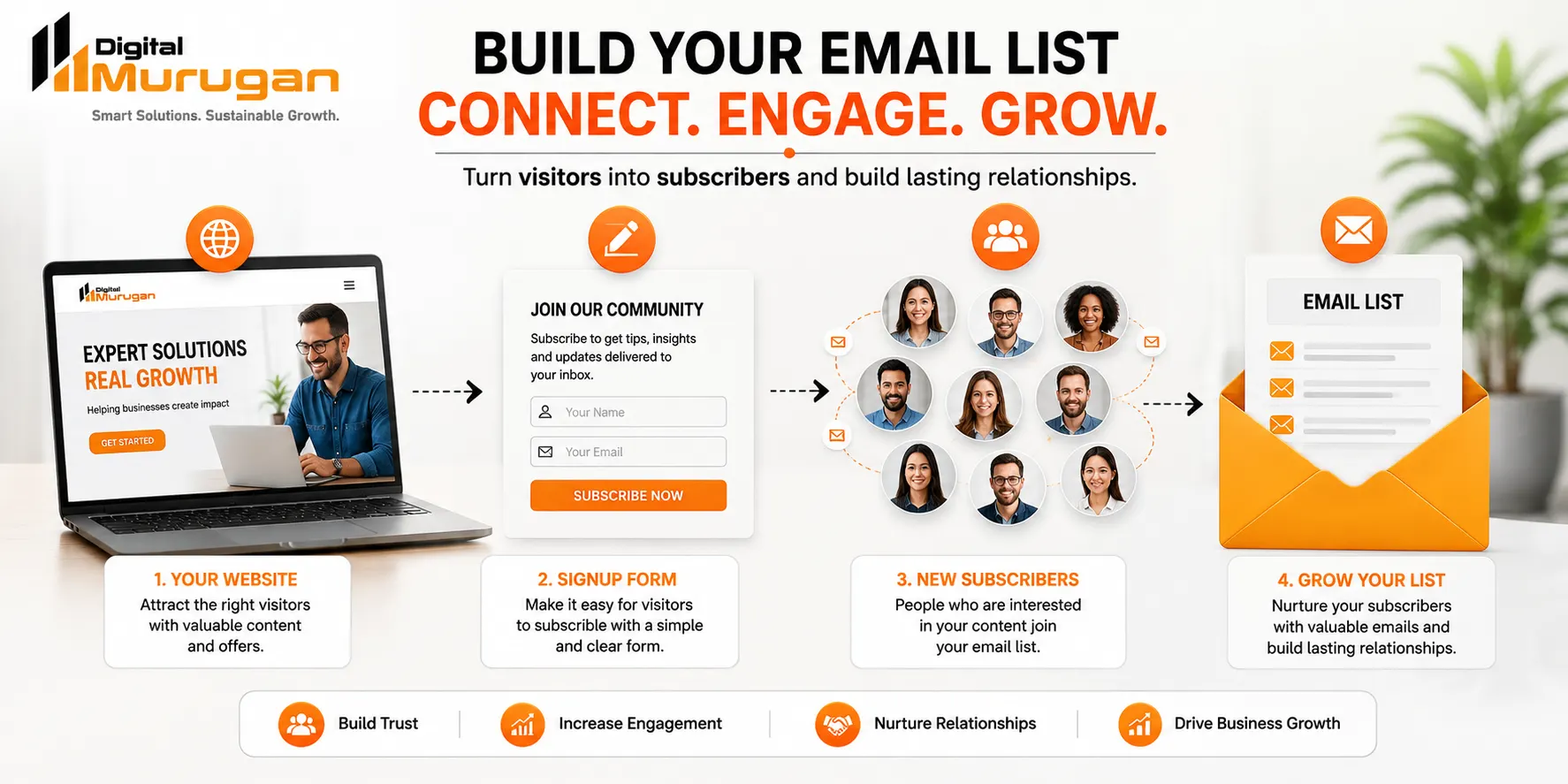
Good ways to build an audience can include:
- Website newsletter forms
- Valuable downloadable resources
- Product or service updates
- Event registrations
- Account registrations
- Content subscriptions
- Relevant offers
- Customer communications
Make it clear what people are signing up for.
For audiences covered by privacy and electronic-marketing rules, consent requirements can vary by jurisdiction. For example, UK guidance generally requires specific consent for unsolicited electronic marketing to individuals, subject to limited exceptions.
The safest long-term approach is simple:
Build your list with transparency, relevance and permission.
Why Buying Email Lists Is a Poor Strategy
Buying a large database may appear to be a shortcut to growth, but it can create serious problems.
Purchased lists can contain:
- Outdated addresses
- Irrelevant contacts
- Spam traps
- People who never asked to hear from you
- Addresses collected without appropriate permission
Even where a particular law may not require prior consent in every commercial-email scenario, purchased lists can still create legal, reputation and deliverability risks. The U.S. FTC specifically warns that buying lists can be risky, including because addresses may have been collected improperly or may include people who have already opted out.
A smaller audience that actually wants your content is usually a much better foundation for long-term email marketing.
What Types of Emails Should You Send?
A healthy email strategy usually includes different types of messages.
Welcome Emails
A welcome email introduces your brand and sets expectations for what subscribers will receive.
It can be a simple opportunity to say:
“Here’s what you can expect from us.”
Educational Emails
Share useful information that helps your audience solve problems or understand your industry.
Educational content can build credibility without constantly asking people to buy something.
Promotional Emails
Promotional emails can communicate:
- New products
- Special offers
- Seasonal campaigns
- Limited-time opportunities
- Service announcements
The key is relevance.
If every email is promotional, subscribers may quickly lose interest.
Product or Service Updates
Keep customers informed about new features, improvements, launches or important changes.
Customer Follow-Ups
Follow-up messages can help maintain the relationship after a purchase, enquiry, registration or other interaction.
Re-Engagement Emails
Some subscribers will become inactive.
A re-engagement campaign can remind them why they originally subscribed and give them an opportunity to reconnect—or opt out if they are no longer interested.
Create Emails People Actually Want to Read
Getting someone to subscribe is only the beginning.
You also need to earn their attention.
A useful email generally has three important qualities:
Relevant → Useful → Easy to Understand
Before sending an email, ask:
Why would the recipient care about this message?
If the answer is unclear, the email probably needs more work.
Start With the Subject Line
The subject line is one of the first things people see.
It should communicate what the email is actually about rather than relying on misleading curiosity.
For example:
Weak:
“Don’t Miss This!!!”
Better:
“5 Ways to Improve Your Website Conversion Rate”
The second version tells the reader what they can expect.
For commercial email, deceptive subject lines and misleading header information can also violate applicable regulations such as the U.S. CAN-SPAM requirements.
Keep the Message Focused
One email doesn’t need to communicate everything your business does.
Choose a clear purpose.
For example:
Educate → Explain → Invite Action
That is often more effective than filling an email with multiple unrelated promotions.
Make the Call to Action Clear
If you want someone to read an article, say so.
If you want them to register for an event, make registration obvious.
If you want them to explore a product, provide a clear path.
A good email doesn’t make the reader guess what to do next.
Personalization: More Than Just Using a First Name
Personalization is often associated with inserting someone’s name into an email.
But meaningful personalization goes much further.
A business can consider:
- Customer interests
- Previous interactions
- Purchase history
- Location where appropriate
- Content preferences
- Engagement behaviour
- Stage in the customer journey
For example, someone who has repeatedly read articles about website design may be more interested in website-related content than someone who has only engaged with social media topics.
The goal isn’t to make the email feel artificially personalized.
The goal is to make it more relevant.
Segmentation Makes Email More Relevant
Instead of sending exactly the same message to everyone, businesses can divide subscribers into meaningful groups.
For example:
New Subscribers
→ Welcome and educational content
Existing Customers
→ Updates, support and relevant offers
Highly Engaged Subscribers
→ Advanced content and selected promotions
Inactive Subscribers
→ Re-engagement campaigns
Segmentation can help reduce irrelevant messaging and create a better experience for subscribers.
How Often Should You Send Emails?
There is no universal number that works for every business.
Sending too rarely can make people forget why they subscribed.
Sending too frequently can become annoying.
The right frequency depends on:
- Audience expectations
- Industry
- Type of content
- Customer journey
- Campaign objectives
- Engagement levels
Instead of asking:
“How many emails should we send every week?”
ask:
“How often can we consistently provide something valuable?”
Consistency is more important than an arbitrary number.
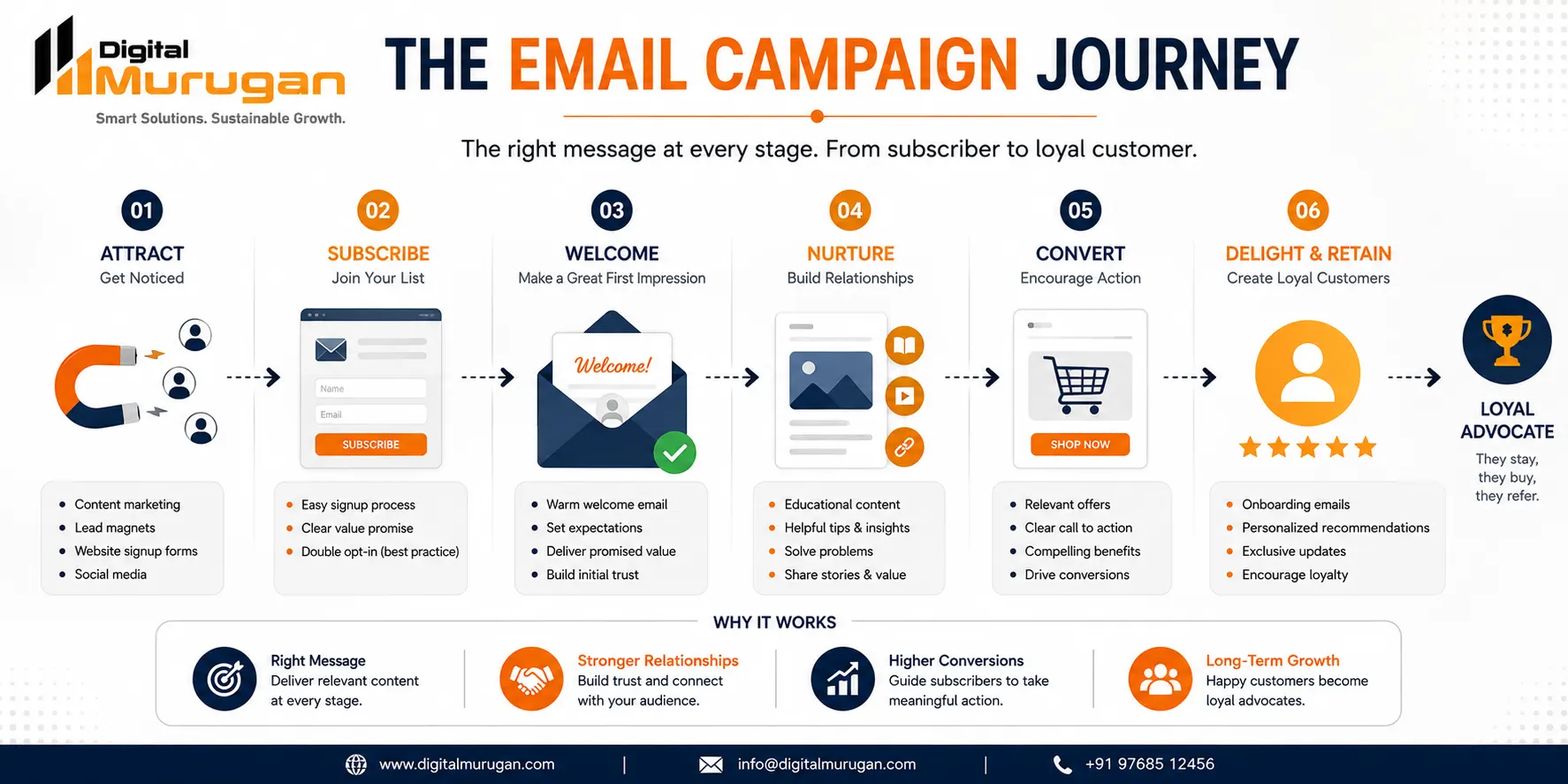
Email Automation Can Save Time
Automation allows businesses to send relevant messages based on specific actions or events.
Examples include:
- Welcome sequences
- Abandoned-cart reminders
- Post-purchase follow-ups
- Lead-nurturing sequences
- Birthday or anniversary messages
- Re-engagement campaigns
- Educational email series
Automation doesn’t mean removing the human element.
Used properly, it allows businesses to deliver the right message at the right stage without manually sending every email.
Important Email Marketing Metrics to Track
Sending emails without measuring performance makes it difficult to improve.
Some useful metrics include:
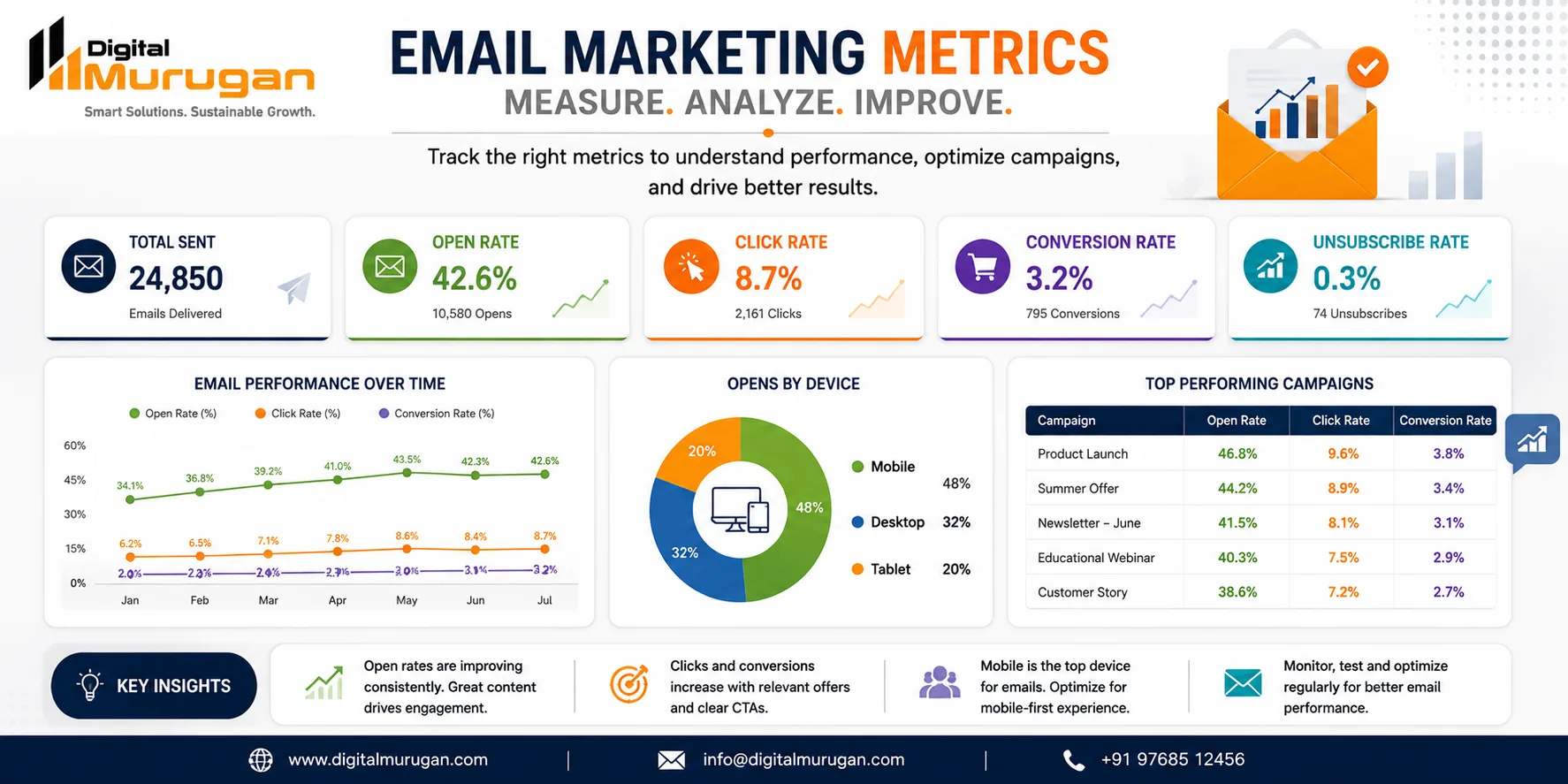
Delivery Rate
How many emails successfully reached recipients’ mail systems.
Open Rate
The percentage of delivered messages reported as opened by recipients.
Open-rate data can be affected by technical factors and privacy features, so it should not be treated as the only indicator of success.
Click-Through Rate
The percentage of recipients who clicked a link within the email.
Conversion Rate
The percentage of recipients who completed the desired action.
Unsubscribe Rate
The percentage of recipients who unsubscribed after receiving a message.
Revenue or Conversion Value
For campaigns designed to generate sales, tracking revenue or meaningful conversion value can provide a much clearer picture of business impact.
The most useful metric depends on the purpose of the campaign.
A newsletter designed to educate doesn’t necessarily have the same success criteria as an ecommerce promotion.
Common Email Marketing Mistakes to Avoid
Sending Without a Clear Purpose
Every campaign should have a reason.
Buying Email Lists
A large database doesn’t automatically create a valuable audience.
Sending Too Many Promotions
People don’t want every email to feel like an advertisement.
Ignoring Mobile Readers
Many people read emails on mobile devices, so messages should be easy to scan and interact with on smaller screens.
Using Misleading Subject Lines
Short-term curiosity isn’t worth damaging trust.
Making Unsubscribing Difficult
People should be able to stop receiving marketing emails easily.
For example, UK guidance says recipients should have a clear and simple way to opt out, and that businesses should respect withdrawal of consent.
In the U.S., CAN-SPAM also requires commercial emails to provide a clear opt-out mechanism and requires senders to honor opt-out requests promptly.
Ignoring Inactive Subscribers
An email list isn’t healthy simply because it contains thousands of contacts.
Engagement matters.
Measuring Only Opens
A high open rate doesn’t necessarily mean the campaign generated business results.
Look at the complete journey.
Email Marketing vs Social Media Marketing
Email and social media serve different roles.
Email Marketing
- Direct communication
- Subscriber-based audience
- Strong for nurturing relationships
- Useful for retention
- Supports automated customer journeys
Social Media
- Public discovery
- Strong for reach and awareness
- Useful for community building
- Encourages sharing and conversation
- Helps brands reach new audiences
Rather than treating them as competitors, businesses can use them together.
For example:
Social Media → Discover Your Brand
Website → Learn More
Email → Build the Relationship
Offer/Product → Take Action
This creates a connected digital marketing journey.
A Simple Email Marketing Strategy
If you’re building an email marketing system from scratch, keep the first version simple.
Step 1: Define Your Objective
Decide what the campaign needs to accomplish.
Is the goal:
- Awareness?
- Engagement?
- Leads?
- Sales?
- Retention?
- Customer education?
Step 2: Identify Your Audience
Understand who you’re communicating with and what they actually need.
Step 3: Build a Quality List
Use transparent signup methods and clearly explain what subscribers will receive.
Step 4: Create Useful Content
Develop content that educates, informs, entertains or provides a relevant offer.
Step 5: Segment When It Makes Sense
Don’t overcomplicate segmentation at the beginning.
Start with meaningful differences in audience needs.
Step 6: Automate Repetitive Journeys
Build automated sequences where they genuinely improve the customer experience.
Step 7: Measure the Results
Track engagement, clicks, conversions and other metrics relevant to your objective.
Step 8: Improve Continuously
Test different subject lines, content formats, offers, calls to action and sending approaches.
Use the results to make better decisions.
The Future of Email Marketing Is Relevance
Email marketing is becoming less about sending more messages and more about sending better messages.
People don’t need another crowded inbox.
They need useful information, relevant offers and communication that respects their time.
That is why the strongest email strategies focus on:
Relevance + Value + Timing + Trust
When these elements work together, email becomes more than a promotional channel.
It becomes part of the relationship between a brand and its audience.
Final Thoughts
Email marketing remains a powerful tool for businesses that want to build meaningful relationships and support long-term growth.
But success isn’t measured by the size of an email list alone.
A valuable email strategy is built around people—not just numbers.
Build your audience responsibly. Give subscribers a clear reason to stay. Share useful content. Personalize where it adds value. Automate thoughtfully. Measure meaningful outcomes. And always make it easy for people to control whether they continue receiving marketing communication.
The goal isn’t to send more emails.
The goal is to make every email worth opening.
Frequently Asked Questions
Is email marketing still effective?
Yes. Email can remain an effective channel for communication, relationship building, retention and conversions when the content is relevant and the audience has a genuine reason to engage.
How often should a business send marketing emails?
There is no universal frequency. The best schedule depends on your audience, industry, content and campaign objectives. Focus on providing consistent value rather than sending emails simply to maintain a particular frequency.
Is buying an email list a good idea?
Generally, building an audience through transparent and permission-based methods is a stronger long-term approach. Purchased lists can create relevance, deliverability, privacy and compliance problems.
What should a marketing email contain?
A strong marketing email normally has a clear purpose, relevant subject line, useful content and an obvious next action. The exact format depends on the campaign objective.
What is email segmentation?
Email segmentation is the practice of dividing an audience into meaningful groups so that communications can be more relevant to each group.
Can email marketing be automated?
Yes. Businesses can automate journeys such as welcome emails, lead nurturing, post-purchase communication and re-engagement campaigns.
What is the most important email marketing metric?
There isn’t one universal metric. The most important measurement depends on the campaign objective. For a sales campaign, conversions and revenue may matter more than opens. For an educational newsletter, engagement and clicks may be more useful.
Is email marketing better than social media marketing?
They serve different purposes. Social media can help businesses reach new audiences and build public awareness, while email is particularly useful for direct communication, nurturing and retention. Using both channels together can create a stronger marketing ecosystem.
 Previous Post
 Next Post