
AI Video Production: How Artificial Intelligence Is Changing the Way Businesses Create Videos
Video has become one of the most powerful ways for businesses to communicate with their audience. From promotional videos and social media content to product demonstrations and educational videos, visual content plays an important role in building attention and trust.
However, traditional video production can require significant time, planning, equipment, editing skills, and resources.
AI video production is changing that process.
With artificial intelligence, businesses can transform ideas, scripts, images, and information into engaging video content much faster. AI can assist with everything from script development and visual generation to voiceovers, animation, editing, subtitles, and content optimization.
For businesses looking to improve their digital presence, AI video production can provide a more efficient way to turn ideas into professional visual content.
What Is AI Video Production?
AI video production is the use of artificial intelligence technologies to help create, edit, enhance, and optimize video content.
Instead of relying entirely on traditional production methods, AI-powered tools can automate or assist with different stages of the video creation process.
For example, AI can help:
- Generate video concepts
- Create scripts
- Produce visual scenes
- Generate voiceovers
- Add subtitles
- Create animations
- Edit video sequences
- Improve audio
- Resize videos for different platforms
- Generate multiple versions of the same content
This does not necessarily mean that AI replaces the creative process. Instead, it can work as a powerful production assistant that helps creators and businesses bring ideas to life more efficiently.
Why AI Video Production Is Becoming Important
The demand for video content continues to grow across websites, social media platforms, advertisements, presentations, and digital campaigns.
Businesses need to produce content consistently while maintaining quality and brand identity.
Traditional video production can involve multiple stages:
Idea → Script → Planning → Shooting → Editing → Voiceover → Graphics → Review → Publishing
AI can simplify several of these stages.
A business can begin with a simple idea and use AI-assisted production to develop that idea into a complete visual story.
This makes video production more accessible to businesses that may not have large production teams or extensive resources.
How AI Video Production Works
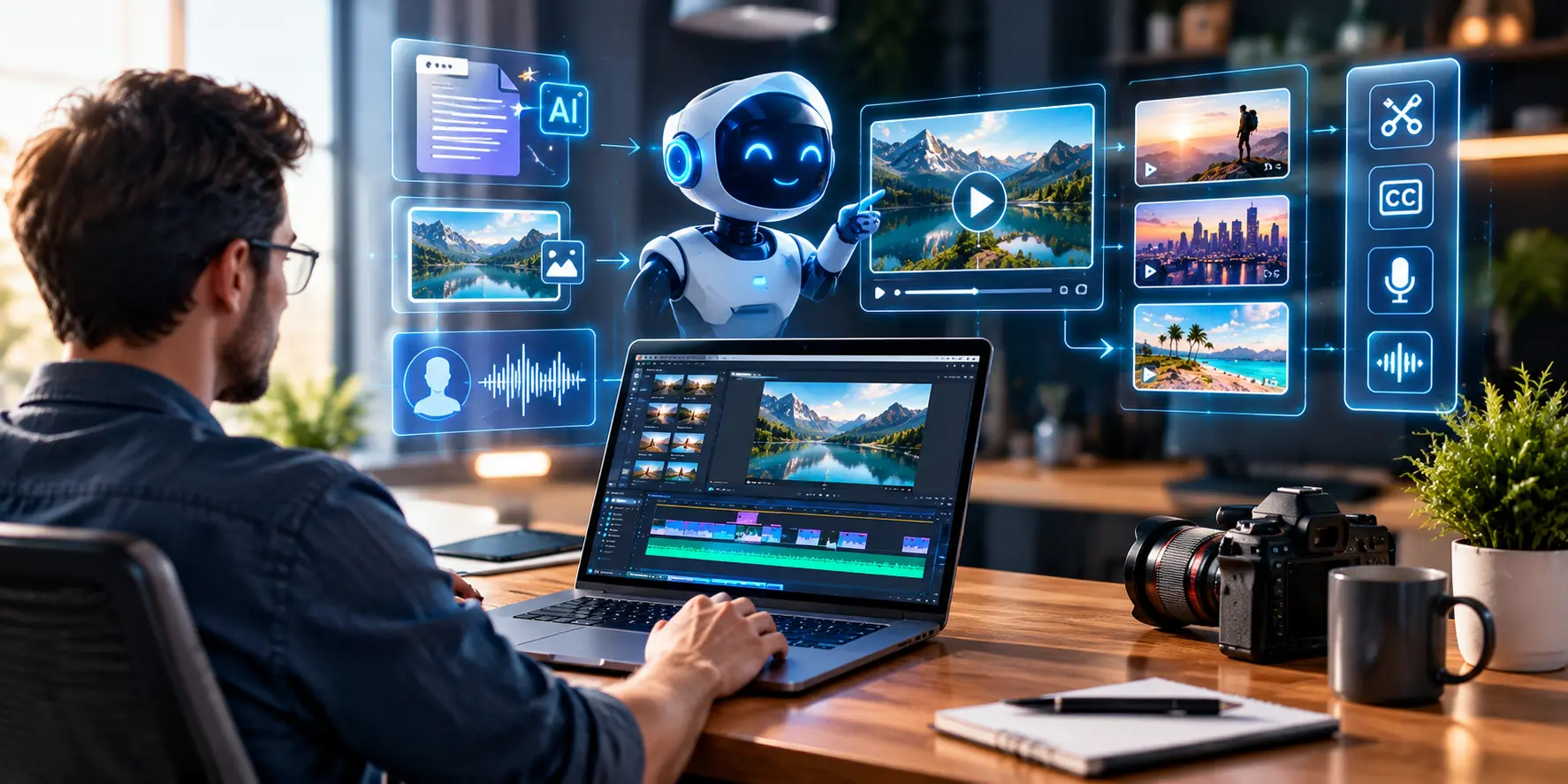
AI video production can involve several different technologies working together.
1. Idea and Script Development
The first step is developing the concept.
AI can help transform a basic idea into a structured video concept and create scripts based on the intended audience, platform, and objective.
For example, a business might start with:
“Create a promotional video explaining our website development service.”
AI can help develop this into a structured sequence containing an introduction, key benefits, visual suggestions, narration, and closing message.
2. AI-Generated Visuals
One of the most significant developments in AI video production is the ability to generate visual content from descriptions.
A written concept can be transformed into visual scenes.
For example:
Input:
“A modern business team working in a futuristic digital office.”
AI-powered creative systems can generate a visual scene based on that description.
This can be particularly useful for concepts that would otherwise require expensive locations, sets, or production arrangements.
3. AI Voiceovers
Voiceover production is another area where AI can assist.
AI voice technology can generate narration from written scripts using different languages, accents, tones, and speaking styles.
This allows businesses to create narrated videos without necessarily recording every line manually.
However, businesses should still carefully review AI-generated voices to ensure that the tone feels natural and matches their brand.
4. AI Animation
AI can also assist in creating animated content.
Static images, illustrations, products, and concepts can be transformed into motion-based visuals.
This can help businesses create:
- Explainer videos
- Product demonstrations
- Educational content
- Social media videos
- Animated advertisements
- Presentation visuals
Animation can make complex information easier to understand and more visually engaging.
AI Video Production for Marketing
Marketing is one of the areas where AI video production can have a major impact.
Businesses can create different types of marketing videos for different stages of the customer journey.
Awareness Videos
Short videos can introduce a business, service, product, or idea to potential customers.
Educational Videos
Businesses can explain complicated topics through simple visual storytelling.
Product Videos
Products can be demonstrated through professionally structured visual content.
Promotional Videos
AI-assisted production can help create promotional campaigns for websites and social platforms.
Social Media Videos
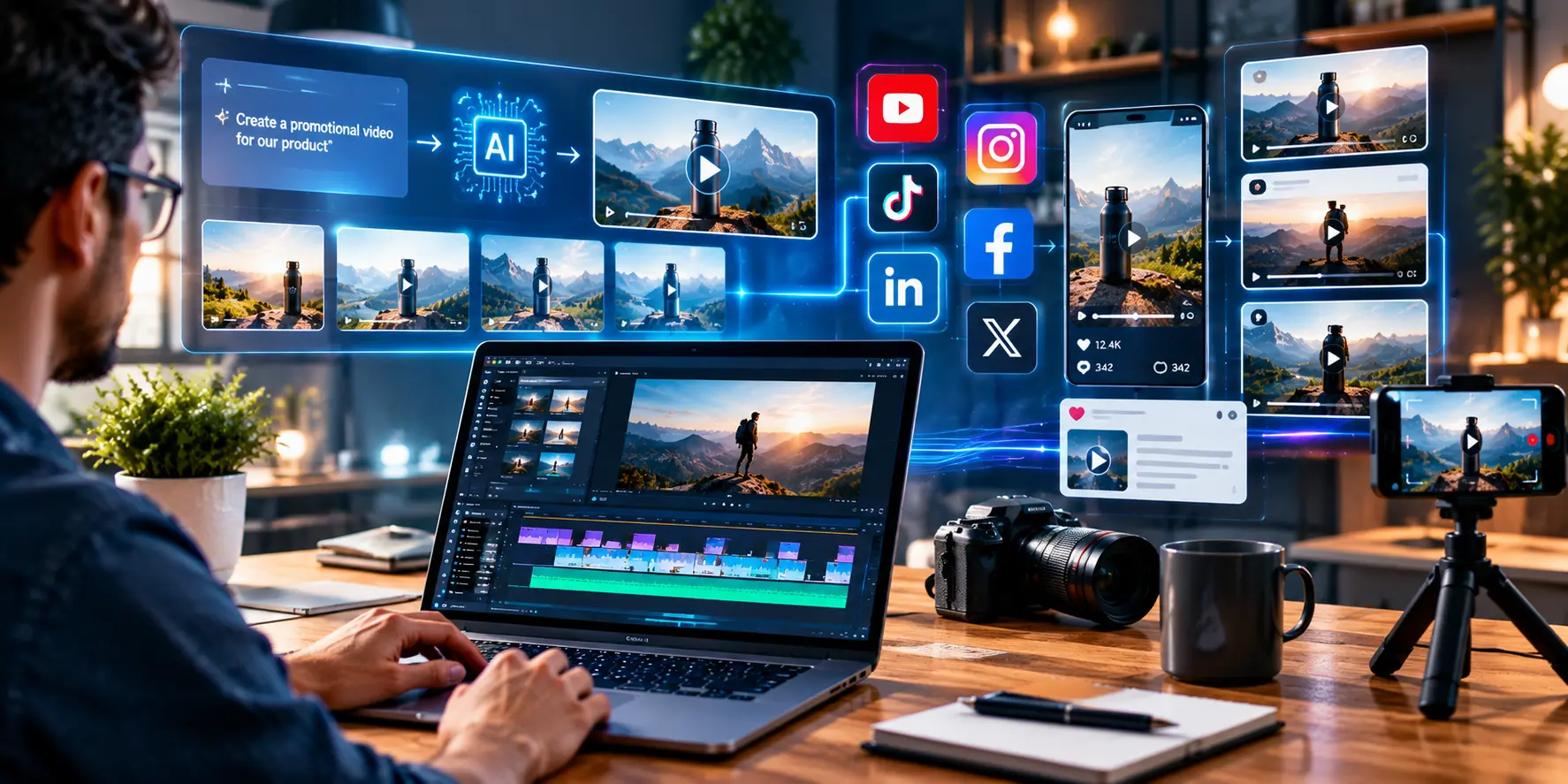
One long video can be transformed into several shorter pieces of content suitable for different platforms.
This allows businesses to get more value from a single content idea.
AI Video Production for Social Media
Social media has created a constant demand for fresh video content.
Businesses may need different formats for different platforms, including:
- Short vertical videos
- Landscape videos
- Square videos
- Promotional clips
- Educational videos
- Behind-the-scenes content
- Product demonstrations
AI can help adapt content into different formats and variations.
For example, a business could create one longer promotional video and then develop several short clips from the same core idea.
This creates a more efficient content repurposing workflow.
Benefits of AI Video Production
1. Faster Production
AI can automate several repetitive tasks, reducing the time required to move from an idea to a finished video.
Instead of starting every task from scratch, creators can use AI to generate initial concepts, scripts, visuals, and editing suggestions.
2. More Content Opportunities
Businesses can experiment with more video ideas without creating an entirely new production workflow for every concept.
This makes it easier to maintain a consistent content strategy.
3. Cost Efficiency
Traditional production may require cameras, locations, lighting, actors, editors, voice artists, and other resources.
AI can reduce the need for some of these resources, depending on the type of video being produced.
However, professional human direction and creative oversight remain important for high-quality results.
4. Easy Content Personalization
AI can help create different versions of content for different audiences.
For example, the same campaign can potentially be adapted by:
- Language
- Audience
- Platform
- Video length
- Messaging
- Visual style
This creates opportunities for more targeted communication.
5. Faster Content Testing
Businesses can test different video concepts, openings, messages, and formats.
This can help identify which types of content attract more attention and engagement.
AI Does Not Replace Creativity
One important point should not be overlooked.
AI can generate content, but creativity still determines whether the content is meaningful.
A technically impressive video may still fail if it has:
- A weak concept
- Poor storytelling
- Unclear messaging
- Inconsistent branding
- No understanding of the audience
- A weak call to action
The strongest AI-assisted videos combine technology with human creativity, strategy, storytelling, and quality control.
Think of AI as a production partner rather than the entire production team.
The Role of Human Creativity in AI Video Production
Human involvement remains important throughout the process.
A creative professional can determine:
What should the video communicate?
Who should watch it?
What emotion should it create?
What should the audience remember?
What action should the viewer take?
AI can help execute many parts of the production process, but these strategic decisions require understanding, creativity, and context.
Challenges of AI Video Production
Although AI video production offers many advantages, businesses should also understand its limitations.
Maintaining Brand Consistency
AI-generated visuals may not always follow brand guidelines perfectly.
Businesses need to maintain consistent:
- Logos
- Colors
- Typography
- Visual style
- Messaging
- Tone of voice
Quality Control
AI-generated content can sometimes contain mistakes or inconsistencies.
Every video should be reviewed before publishing.
Originality
Using generic AI-generated content can make a brand look similar to countless others.
Strong concepts and customized creative direction are essential.
Human Connection
Not every video should feel completely automated.
Authentic storytelling, real experiences, and human perspectives can make content more relatable.
How Businesses Can Use AI Video Production Effectively
A successful AI video strategy should begin with the objective, not the technology.
Before creating a video, ask:
- What is the purpose of this video?
- Who is the target audience?
- What problem are we addressing?
- What should the viewer learn?
- What action should the viewer take?
- Where will the video be published?
- How does the video reflect the brand?
Once these questions are answered, AI can be used to support the production process.
A Simple AI Video Production Workflow
A practical workflow can look like this:
Step 1 — Define the Goal
Determine what the video needs to achieve.
Step 2 — Develop the Concept
Create the central idea and message.
Step 3 — Write the Script
Structure the narration and visual sequence.
Step 4 — Plan the Scenes
Determine what viewers should see in each section.
Step 5 — Generate or Collect Visuals
Create AI-assisted visuals or combine them with real footage.
Step 6 — Add Voice and Sound
Add narration, music, sound effects, or other audio elements.
Step 7 — Edit the Video
Arrange scenes, transitions, graphics, captions, and branding.
Step 8 — Review and Refine
Check accuracy, quality, branding, and messaging.
Step 9 — Optimize for the Platform
Prepare the appropriate resolution, dimensions, duration, and format.
Step 10 — Publish and Analyze
Measure performance and use the results to improve future videos.
The Future of AI Video Production
AI video technology is developing rapidly.
The future is likely to involve increasingly integrated production workflows where businesses can move from an initial concept to a complete multimedia campaign with much less manual work.
AI may increasingly assist with:
- Video generation
- Storyboarding
- Character creation
- Animation
- Voice production
- Editing
- Localization
- Personalization
- Content repurposing
- Performance analysis
But technology alone will not determine the success of a video.
The brands that benefit most will be the ones that combine AI efficiency with strong creative direction and clear communication.
Final Thoughts
AI video production is changing how businesses approach visual content.
It can make video creation faster, more flexible, and more accessible while opening new possibilities for marketing, education, advertising, and communication.
But the real value of AI is not simply producing more videos.
It is about turning ideas into meaningful visual experiences more efficiently.
When artificial intelligence is combined with human creativity, strategic thinking, storytelling, and strong branding, businesses can create video content that not only looks impressive but also communicates a clear message and supports real business goals.
The future of video production is not simply AI-generated. It is AI-assisted, creatively directed, and strategically produced.
For a digital-focused business like Digital Murugan, AI video production can become an important part of creating engaging digital experiences, promotional campaigns, brand stories, and content strategies for modern audiences.
 Previous Post
 Next Post