
How Digital Business Cards Help Small Businesses Grow
Introduction
Growing a small business requires more than offering excellent products or services. Business owners also need to build strong relationships, create a professional image, and make it easy for potential customers to get in touch. In today’s digital world, the way businesses share their contact information can influence how customers perceive their brand.
Traditional paper business cards have been used for decades, but digital business cards offer a modern, flexible, and convenient alternative. They allow business owners to share their professional details, website links, social media profiles, and other important information through a digital format.
For small businesses looking to improve networking, strengthen their brand identity, and connect with more customers, digital business cards can be a valuable addition to their marketing strategy.
In this article, we will explore how digital business cards help small businesses grow and why they are becoming an increasingly useful tool for modern entrepreneurs.
What Is a Digital Business Card?
A digital business card is an electronic version of a traditional business card. It presents important professional information in a shareable digital format that people can access using a smartphone, tablet, or computer.
Depending on the platform, a digital business card can include:
Business name and logo
Owner’s name and professional designation
Phone number and email address
Website link
Social media profiles
Business location and directions
Product or service information
WhatsApp contact links
Portfolio links, appointment booking, or inquiry forms
Digital business cards can be shared through QR codes, links, messaging applications, email, and compatible contact-sharing features. This makes it easier for potential customers to find business information without relying entirely on printed materials.
1. Create a Professional First Impression
First impressions matter when introducing a business to potential customers, partners, or clients. A well-designed digital business card helps small businesses present their information in an organized and professional way.
Instead of handing someone a basic paper card, business owners can share a digital profile that reflects their brand identity and provides several useful contact options in one place.
For example, a freelance designer can showcase a portfolio, a consultant can link to a booking page, and a local retailer can direct customers to an online store.
A professional digital presence helps customers understand what a business offers and how to connect with it.
2. Make Networking Faster and Easier
Networking is important for small business growth. Entrepreneurs often meet potential customers at exhibitions, business meetings, conferences, community events, and everyday interactions.
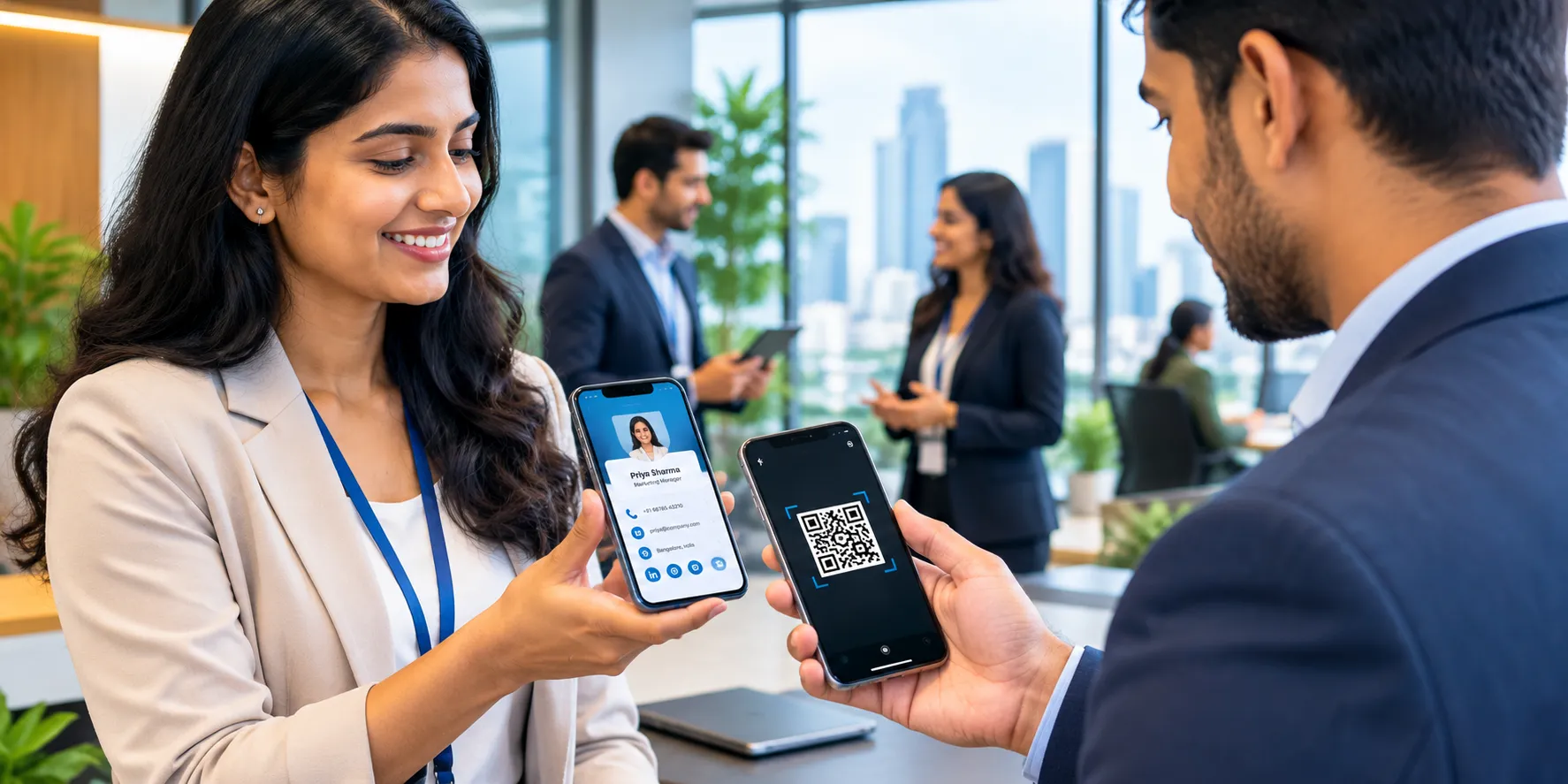
Digital business cards make sharing contact details more convenient. Instead of carrying stacks of printed cards, business owners can share a link or display a QR code for others to scan.
Recipients can then access the available information on their devices, making it easier to revisit the business’s details later.
This convenience can be particularly helpful for freelancers, sales professionals, startup founders, consultants, and service providers who regularly meet new people.
By reducing friction in the contact-sharing process, digital business cards help businesses make networking more efficient.
3. Reduce Printing and Replacement Costs
Small businesses often need to manage their budgets carefully. Printing traditional business cards may appear inexpensive initially, but costs can accumulate when contact information changes or cards need to be reordered.
A digital business card can reduce dependence on repeated printing. Business owners can share their details electronically and update information through platforms that support editable profiles.
For example, if a company changes its phone number, website, or office address, it may be able to update its digital card without printing an entirely new batch of cards.
The actual savings depend on the platform, subscription fees, and how frequently a business prints traditional cards. Nevertheless, reducing unnecessary printing can help businesses manage resources more efficiently.
4. Strengthen Brand Identity
A recognizable brand helps customers remember a business. Consistent colors, visual elements, messaging, and contact information contribute to a professional brand identity.
Digital business cards provide an additional opportunity to maintain this consistency. Businesses can use their brand colors, logo, typography, and other design elements to create a profile that aligns with their website and marketing materials.
When employees, sales representatives, and business owners use consistently branded digital cards, customers receive a more unified experience.
For small businesses competing in crowded markets, maintaining a consistent brand presentation can support recognition and help build trust over time.
5. Make It Easier for Customers to Contact You
A potential customer may be interested in a business but decide not to reach out if finding the correct contact details is difficult.
Digital business cards can simplify this process by bringing essential information together in one accessible location.
Depending on the features offered, customers may be able to:
Call the business directly.
Send an email with one tap.
Open a WhatsApp conversation.
Visit the company’s website.
View social media profiles.
Find the business location.
Explore services or request an appointment.
For example, a local electrician could share a digital card containing a phone number, service-area details, and a WhatsApp contact link.
Making the next step clear and convenient can help turn an introduction into a genuine business inquiry.
6. Support Better Marketing Opportunities
Digital business cards can complement other marketing activities by connecting people to a business’s online resources.
Instead of sharing contact information alone, business owners can guide interested customers toward product pages, service descriptions, portfolios, booking forms, or promotional landing pages.
A photographer might link to a portfolio, while a fitness instructor could include a class-booking page. A small retailer could direct customers to its product catalog.
These links create additional opportunities for people to learn about a business after the initial introduction.
Digital business cards do not replace a complete marketing strategy, but they can serve as a useful connection between in-person networking and online engagement.
7. Update Business Information When Needed
Business information can change as a company grows. A business might introduce new services, change its operating hours, move to another location, or launch a new website.
With an editable digital business card, these changes can often be made without replacing printed materials.
This is especially useful for growing businesses that regularly update their services or contact details.
However, businesses should choose a platform that allows them to edit their information easily and understand whether the card’s shared link remains the same after an update.
Keeping information accurate helps prevent confusion and ensures customers can reach the right person or department.
8. Help Teams Share Consistent Contact Information
Small businesses with multiple employees need a consistent way to represent their brand. If every team member shares different formats or outdated information, the customer experience can become inconsistent.
A business can introduce digital business cards for its employees, sales representatives, customer support staff, or management team.
Depending on the platform, each employee may have an individual card that follows the company’s branding guidelines.
For example, a real estate agency could provide agents with digital cards containing their names, contact details, property listings, and company website.
This approach helps teams share relevant information while maintaining a consistent professional identity.
Businesses considering team-wide adoption should also review administrative controls, employee access, privacy settings, and the process for updating information when staff roles change.
9. Support More Environmentally Conscious Business Practices
Traditional business cards use paper and printing resources. Digital alternatives can reduce the need for some printed cards, particularly for businesses that frequently attend networking events or update their contact details.
Choosing digital sharing where practical may help reduce paper consumption and avoid disposing of outdated cards.
However, the environmental impact depends on the complete lifecycle of the technology and the amount of printing actually avoided. Digital business cards should therefore be viewed as one possible step toward more resource-conscious business practices rather than a guarantee of zero environmental impact.
10. Improve Follow-Up After Networking
Making a connection is only the beginning of a business relationship. Following up at the right time is often essential for turning an introduction into a potential sale or partnership.
Digital business cards can make follow-up easier by giving recipients a convenient place to find contact details, websites, and other relevant links.
For example, after meeting a potential client, a marketing consultant can share a digital card containing a service overview and appointment-booking link.
The recipient can revisit the information later without searching through a collection of paper cards.
For better results, business owners should combine digital contact sharing with thoughtful follow-up messages, relevant offers, and genuine relationship-building.
How to Choose the Right Digital Business Card for Your Small Business
Not all digital business card platforms offer the same features. Before choosing a solution, consider what your business needs today and how those needs may change as the company grows.
Here are some important factors to evaluate:
1. Customization: Choose a platform that lets you present your brand consistently with appropriate design options.
2. Easy sharing: Look for convenient sharing methods, such as QR codes and shareable links.
3. Mobile-friendly design: Make sure your digital card is easy to read and navigate on smartphones.
4. Useful integrations: Consider whether you need links to WhatsApp, social media, booking systems, websites, or other business tools.
5. Simple updates: Check how easily you can update contact details and service information.
6. Privacy and security: Review how the platform handles personal information, contact data, and any analytics it collects.
7. Pricing: Compare free and paid features, subscription costs, and any additional charges for team management.
8. Team management: If you have employees, check whether the platform supports consistent branding and centralized administration.
The right solution should make contact sharing easier without adding unnecessary complexity to your business operations.
Best Practices for Using Digital Business Cards
To get the most value from a digital business card, small businesses should follow a few practical guidelines.
Keep information accurate: Review your phone number, email address, website, and other details regularly.
Use a clear design: Make the card easy to read and avoid overwhelming visitors with unnecessary information.
Include a clear next step: Guide customers toward calling, booking an appointment, viewing a portfolio, or visiting your website.
Use consistent branding: Match the card’s appearance to your website and other marketing materials.
Test every link: Check that buttons and contact details work correctly on mobile devices.
Respect privacy: Share only the information you intend to make public and review the platform’s privacy settings.
Follow up professionally: Use new connections to build genuine business relationships instead of sending irrelevant promotional messages.
Keep a backup option: Printed cards may still be useful when someone has limited internet access or prefers a physical card.
These simple practices can help businesses create a more useful and reliable networking experience.
Are Digital Business Cards Suitable for Every Small Business?
Digital business cards can be useful for many types of businesses, including consultants, freelancers, retailers, real estate agents, service providers, startup founders, and local entrepreneurs.
They are especially helpful when professionals frequently meet new contacts or need to share multiple links and resources.
However, traditional printed cards can still be valuable in certain situations. Some customers prefer physical cards, and not every networking environment offers reliable internet access.
For this reason, businesses do not necessarily need to eliminate printed cards completely. A combination of digital and traditional options can provide flexibility while allowing customers to choose their preferred way to save contact information.
The best approach depends on your audience, industry, budget, and networking habits.
Conclusion
Digital business cards offer small businesses a convenient way to present their brand, share contact information, improve networking, and connect customers with relevant online resources.
From reducing repeated printing to making follow-ups easier, they can support several everyday business activities. They also give entrepreneurs more flexibility when updating information and maintaining consistent branding across their teams.
However, a digital business card alone will not guarantee more customers or higher sales. Its value depends on how effectively a business uses it as part of a broader strategy that includes good service, professional communication, and consistent marketing.
For small businesses looking to modernize their networking approach, adopting a well-designed digital business card can be a practical step toward creating stronger connections in an increasingly digital world.
Ready to Modernize the Way You Connect?
At Digital Murugan, we believe that smart digital solutions can help businesses present themselves professionally and make meaningful connections with customers.
Whether you are a freelancer, startup founder, local business owner, or growing company, a digital business card can help you share your professional identity in a convenient and modern way.
Take the next step toward smarter networking. Explore digital business card solutions, choose the features that fit your needs, and make it easier for customers to connect with your business.
Visit Digital Murugan to explore more digital solutions, practical business insights, and technology tips that support your online growth.
 Previous Post