
How Professional Graphic Design Can Strengthen Your Brand and Business
In a digital-first world, people often form an impression of a business before they read a single sentence. A logo, social media post, website banner, advertisement, presentation, or product image can communicate professionalism, personality, and credibility within seconds.
This is where graphic design plays an important role.
Professional graphic design is not simply about making something look attractive. It is about using visual elements strategically to communicate a message, create consistency, strengthen brand recognition, and make information easier to understand.
For businesses operating across digital and physical channels, good design can become an important part of the overall brand experience.
What Is Graphic Design?
Graphic design is the process of combining visual elements such as typography, imagery, colors, shapes, layouts, and illustrations to communicate information or ideas effectively.
Graphic design can be used for many different purposes, including:
- Brand identities
- Logos
- Social media graphics
- Website visuals
- Advertisements
- Brochures
- Presentations
- Packaging
- Business cards
- Marketing materials
- Infographics
- Digital campaigns
- Product visuals
The objective is not simply to decorate a piece of content. Effective design helps the audience understand what they are seeing and what action they may want to take next.
Why Graphic Design Matters for a Brand
A brand communicates through many touchpoints.
Customers may see a business on Google, social media, a website, an advertisement, an email, packaging, or printed material. When these visual experiences are consistent, the brand becomes easier to recognize.
Professional graphic design can help a business:
- Create a stronger visual identity
- Communicate more clearly
- Build brand recognition
- Present information professionally
- Improve audience engagement
- Create consistency across marketing channels
- Strengthen customer perception
A strong visual identity can make even a simple message feel more organized and memorable.
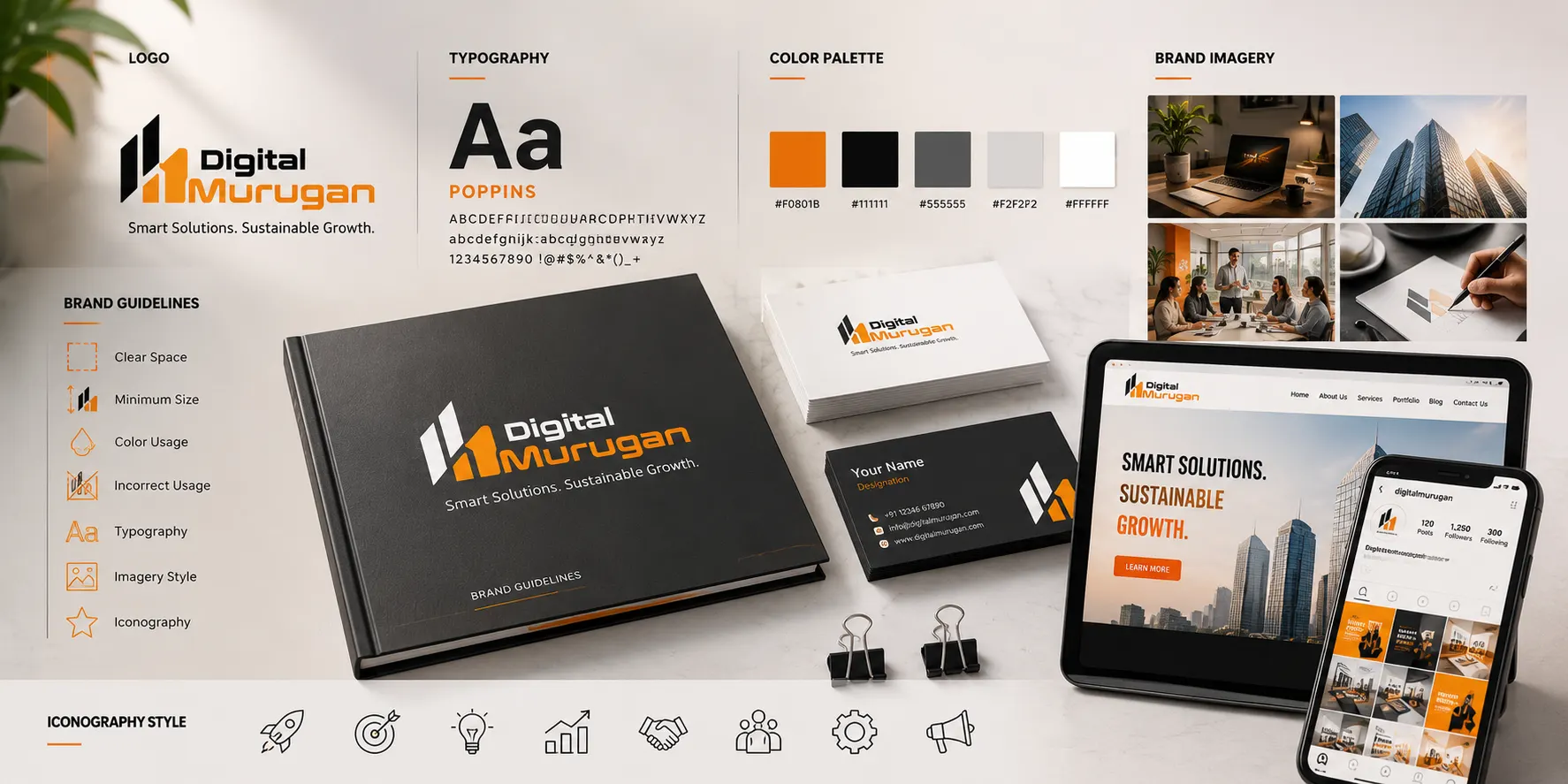
1. Building a Consistent Visual Identity
Consistency is one of the most important principles of effective brand design.
A business should ideally maintain consistent visual elements across its communication channels, including:
- Logo usage
- Brand colors
- Typography
- Image style
- Graphic elements
- Layout principles
- Iconography
- Photography style
When these elements work together, customers can more easily recognize content as belonging to the same brand.
For example, a customer might encounter a company first through Instagram and later visit its website. If the colors, typography, imagery, and overall visual style are consistent, the customer experiences a connected brand rather than two unrelated designs.
2. Graphic Design and Customer Trust
People naturally make judgments based on visual presentation.
A poorly aligned layout, inconsistent typography, low-quality images, or overcrowded design can make a business appear less professional.
On the other hand, thoughtful design can communicate:
- Attention to detail
- Reliability
- Professionalism
- Organization
- Confidence
- Brand maturity
Design cannot replace a good product or service, but it can influence how customers perceive the business before they experience it.
3. Making Complex Information Easier to Understand
Graphic design is also a communication tool.
Some information can be difficult to understand when presented only as paragraphs of text. Visual elements can organize that information into a format that is easier to scan and understand.
For example, an infographic can transform a long explanation into:
Problem → Process → Solution → Result
Similarly, icons, diagrams, charts, illustrations, and visual hierarchy can help audiences identify important information quickly.
Good design does not necessarily add more information. Instead, it helps people understand existing information more effectively.
4. Graphic Design Across Digital Platforms
Modern businesses communicate across many digital channels.
A single campaign may require different visual assets for:
- Websites
- YouTube
- Email marketing
- Online advertisements
- Mobile applications
- Presentations
Each platform has different dimensions, user behavior, and content requirements.
Professional graphic design helps adapt the same brand message to different formats while maintaining visual consistency.
The design should feel native to each platform without losing the identity of the brand.
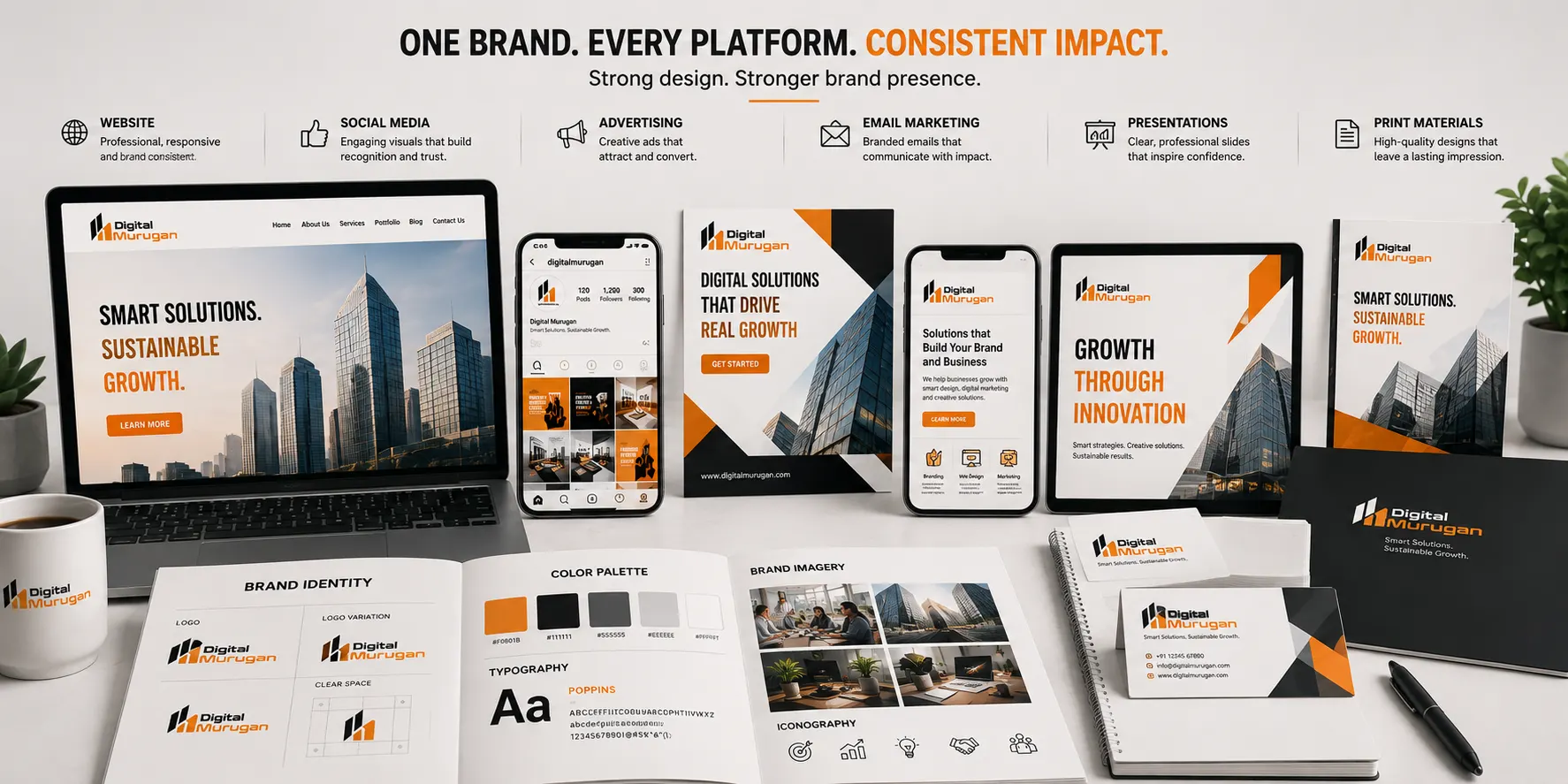
5. The Role of Design in Social Media Marketing
Social media is highly visual.
Users scroll through large amounts of content, which means businesses often have only a brief opportunity to capture attention.
Strong social media design can help communicate a message quickly through:
- Clear headlines
- Strong visual hierarchy
- Relevant imagery
- Consistent branding
- Appropriate typography
- Balanced layouts
- Recognizable design elements
However, attention alone is not enough.
The visual should also support the message. A beautiful graphic that does not clearly communicate what the post is about may create attention without creating understanding.
6. Graphic Design for Websites and E-commerce
Graphic design plays an important role in website experiences as well.
Website visitors need to understand:
- Who the business is
- What it offers
- Where to find information
- What makes the business different
- What action they should take
Visual hierarchy helps guide visitors through the page.
For e-commerce websites, design becomes even more important because customers interact with product images, banners, category graphics, promotional visuals, icons, buttons, and product information throughout the buying journey.
A well-designed interface can make navigation feel easier and help customers find relevant information more efficiently.
7. Designing for Marketing Materials
Graphic design is not limited to digital media.
Businesses may still require professionally designed:
- Brochures
- Flyers
- Business cards
- Catalogues
- Packaging
- Posters
- Company profiles
- Presentation decks
- Event materials
- Signage
These materials become physical representations of the brand.
Consistency between digital and printed materials can create a stronger overall identity and make the business feel more established.
8. Good Design Improves Communication
One of the biggest benefits of graphic design is improved communication.
A strong design answers important questions quickly:
What is this?
Why does it matter?
Who is it for?
What should I do next?
Visual hierarchy helps establish the order in which information should be processed.
For example, a promotional graphic might use:
Main headline
↓
Supporting message
↓
Key benefit
↓
Call to action
This structure allows viewers to understand the core message without having to study every element.
9. Common Graphic Design Mistakes to Avoid
Not every attractive design is effective.
Several common mistakes can reduce the impact of business graphics.
Too Much Information
Trying to fit every detail into one graphic can make it difficult to read.
Inconsistent Branding
Using different colors, fonts, and visual styles across platforms can weaken brand recognition.
Poor Typography
Too many fonts, inappropriate font choices, or weak contrast can make content difficult to understand.
Low-Quality Images
Pixelated or poorly selected images can reduce perceived quality.
Weak Visual Hierarchy
When every element appears equally important, viewers may struggle to understand where to look first.
Designing Without the Audience in Mind
A design should reflect the needs and expectations of its intended audience rather than simply following personal preferences.
10. Professional Design vs. DIY Design
Design tools have become increasingly accessible. Templates and online design platforms allow almost anyone to create basic graphics.
That can be useful for simple, everyday content.
However, professional graphic design becomes particularly valuable when a business needs:
- A distinctive visual identity
- Brand consistency
- Complex marketing campaigns
- Professional presentations
- Packaging design
- High-quality advertising creatives
- Custom illustrations
- Advanced layouts
- Multiple design formats
- Long-term brand systems
The difference is often not simply the software being used. It is the strategic thinking behind the design.
11. How to Build an Effective Graphic Design Strategy
Businesses can approach graphic design more strategically by establishing a clear visual system.
Start by defining:
Brand Personality
Decide how the brand should feel.
For example:
- Professional
- Modern
- Friendly
- Premium
- Innovative
- Minimal
- Energetic
Visual Guidelines
Establish rules for:
- Colors
- Typography
- Logo usage
- Photography
- Icons
- Illustrations
- Layouts
Content Templates
Create reusable templates for recurring content such as social media posts, advertisements, presentations, and announcements.
Platform Requirements
Prepare appropriate formats for different channels instead of simply resizing the same design everywhere.
Quality Standards
Establish basic standards for image quality, spacing, typography, alignment, and branding.
This creates a repeatable design system rather than starting from zero every time a new graphic is required.
12. The Growing Role of AI in Graphic Design
Artificial intelligence is changing how designers approach creative work.
AI-powered tools can help with:
- Idea generation
- Concept exploration
- Image creation
- Background removal
- Image enhancement
- Layout experimentation
- Content variations
- Creative research
- Workflow automation
However, AI does not eliminate the importance of design thinking.
A successful visual still requires decisions about audience, communication, composition, brand identity, hierarchy, usability, and context.
The future of graphic design is likely to involve a combination of human creativity, strategic thinking, design expertise, and AI-assisted workflows.
How Professional Graphic Design Supports Business Growth
Graphic design should not be viewed as an isolated creative activity.
It supports multiple areas of a business by helping create a consistent visual experience across marketing, communication, sales, and customer interactions.
A stronger visual system can help a business:
- Communicate its value more clearly
- Create recognizable marketing materials
- Present products and services professionally
- Improve content consistency
- Strengthen brand recall
- Make complex information easier to understand
- Create better digital experiences
The goal is not to make every design complicated or visually impressive.
The goal is to make every visual useful, clear, consistent, and aligned with the brand.
Conclusion
Professional graphic design is much more than creating attractive visuals.
It is a strategic communication tool that can help businesses express their identity, communicate ideas, build recognition, and create a consistent experience across digital and physical channels.
From logos and social media graphics to websites, advertisements, packaging, and presentations, every visual interaction contributes to how a brand is perceived.
As technology continues to evolve and AI becomes increasingly integrated into creative workflows, the importance of strong design thinking will remain.
Businesses that treat graphic design as part of their broader brand and communication strategy can create visual experiences that are not only attractive, but also meaningful and effective.
Frequently Asked Questions
What is graphic design used for in business?
Graphic design is used to create visual communication for branding, marketing, websites, social media, advertising, packaging, presentations, print materials, and many other business applications.
Why is professional graphic design important?
Professional graphic design can help a business communicate more clearly, maintain visual consistency, strengthen brand recognition, and present its products or services more professionally.
Can graphic design improve brand recognition?
Yes. Consistent use of logos, colors, typography, imagery, and other visual elements can make a brand easier for audiences to recognize across different platforms.
Is graphic design important for social media?
Yes. Social media is highly visual, and well-designed content can help businesses communicate messages quickly while maintaining a consistent brand identity.
Can AI replace graphic designers?
AI can automate and accelerate many creative tasks, but effective design still requires human judgment, strategy, creativity, communication, and understanding of brand and audience requirements.
What makes a good graphic design?
Good graphic design should be clear, purposeful, visually balanced, easy to understand, consistent with the brand, and appropriate for its intended audience and platform.
 Previous Post
 Next Post