
7 Reasons Your Business Website Needs an Upgrade in 2026
Your website is often one of the first places potential customers go to learn about your business.
But having a website is no longer enough.
Customer expectations have changed. People expect websites to load quickly, work smoothly on mobile devices, provide clear information, and make it easy to take the next step.
If your website was designed several years ago and hasn’t been properly reviewed since, it may be creating problems without you realizing it.
Here are 7 signs that your business website may need an upgrade in 2026.
1. Your Website Looks Outdated
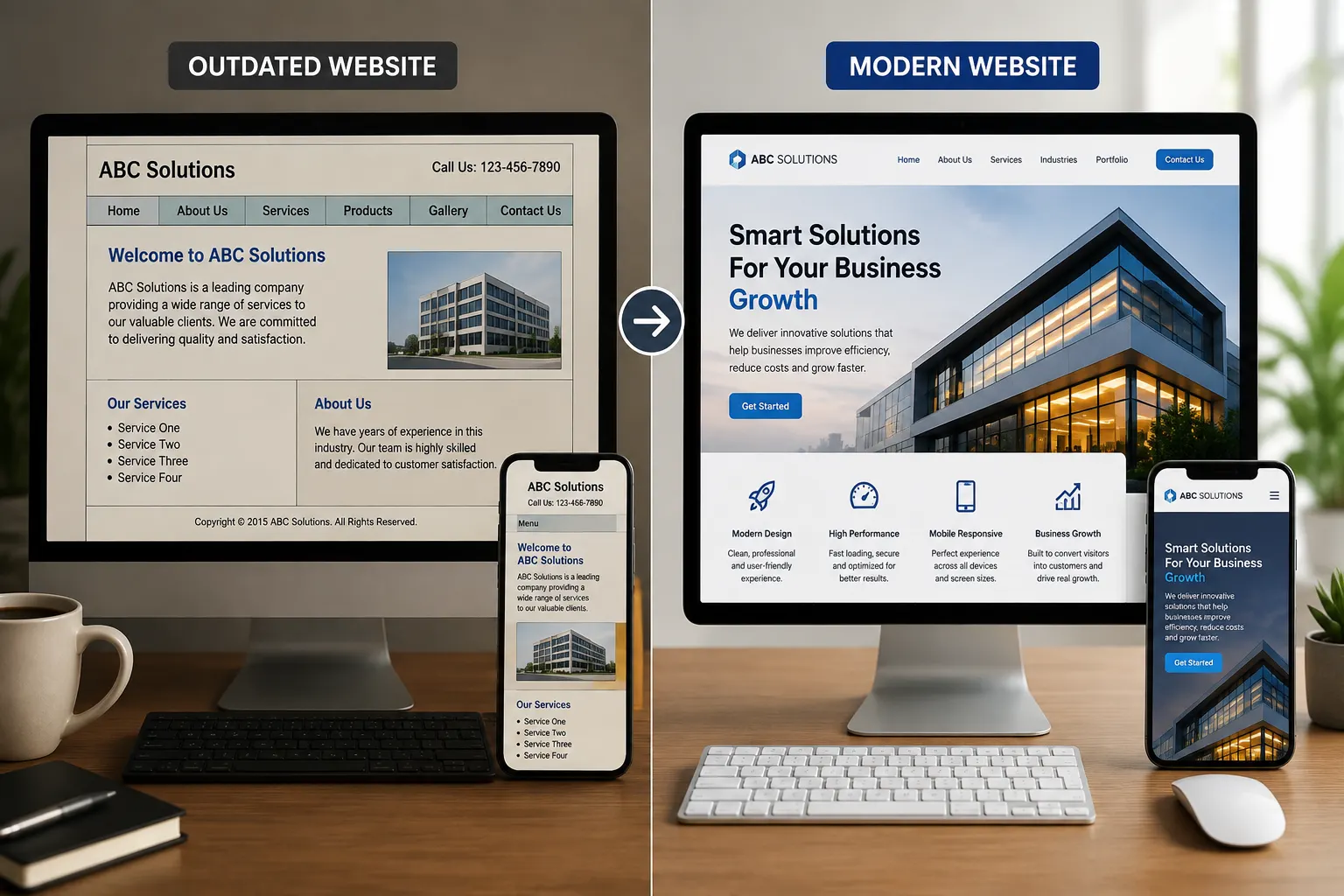
Design trends change, but this is not simply about making a website look fashionable.
An outdated website can make visitors question whether the business itself is active, reliable, or keeping up with current expectations.
Common signs include:
- Old-fashioned layouts
- Too much text with little visual structure
- Poor-quality images
- Inconsistent fonts and colours
- Cluttered navigation
- Outdated graphics
- Large blocks of information without clear sections
A modern website should make important information easy to understand at a glance.
What to Improve
Review your:
- Homepage
- Navigation
- Typography
- Images
- Colour palette
- Page layouts
- Calls to action
- Overall visual consistency
The goal isn’t to add more design elements.
The goal is to create a clearer and more useful experience for visitors.
2. Your Website Doesn't Work Well on Mobile
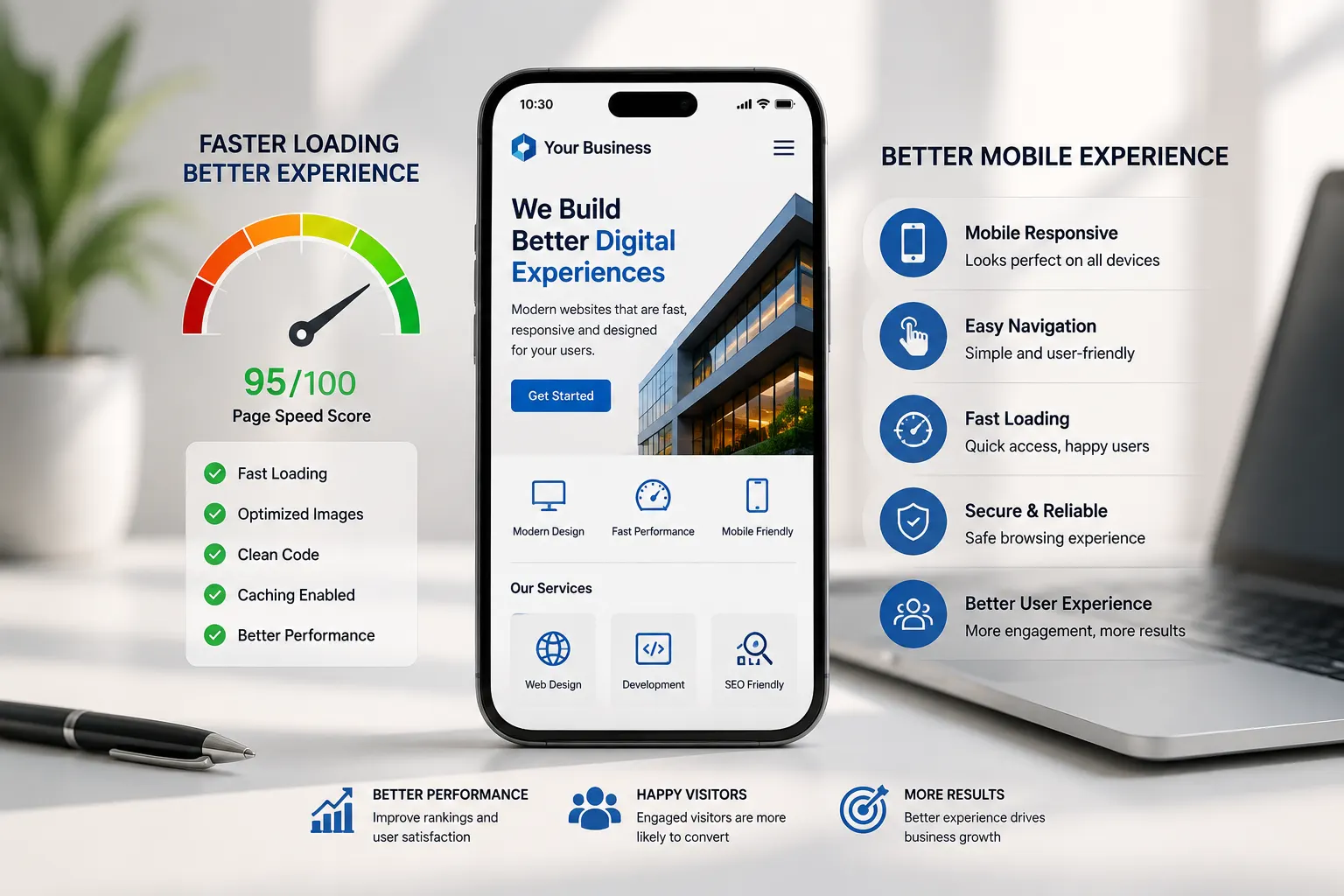
A large percentage of internet activity happens on smartphones.
That means your website needs to work just as well on a smaller screen as it does on a desktop.
A mobile visitor shouldn’t have to:
- Zoom in to read text
- Scroll sideways
- Struggle to click buttons
- Search through oversized menus
- Wait for large images to load
- Fill out difficult forms
What a Good Mobile Experience Looks Like
A mobile-friendly website should provide:
- Readable typography
- Simple navigation
- Responsive layouts
- Properly sized buttons
- Optimized images
- Easy-to-use forms
- Fast-loading pages
Don’t simply check whether your website “opens” on a phone.
Actually use it like a customer would.
Try finding your services, reading an article, opening your contact page, and submitting an enquiry.
You may discover problems that aren’t obvious from a desktop computer.
3. Your Website Is Too Slow
Website speed affects the overall user experience.
Visitors don’t want to wait several seconds for a page to become usable, especially when they are browsing from a mobile device or slower connection.
A slow website can be caused by many factors, including:
- Oversized images
- Poor hosting performance
- Unnecessary plugins
- Unoptimized code
- Too many scripts
- Heavy themes
- Poor caching configuration
- Third-party tools loading unnecessarily
What You Can Do
Start with the basics:
Optimize images.
Use appropriately sized images and modern formats such as WebP where suitable.
Review plugins.
Remove plugins that are unnecessary or no longer being used.
Improve caching.
Proper caching can reduce the amount of work required every time a visitor loads a page.
Check your hosting.
Your hosting environment can affect website performance, particularly as your website grows.
Speed optimization isn’t about chasing a perfect score.
The real goal is to create a website that feels fast, responsive, and easy to use.
4. Visitors Can't Easily Find What They Need
A beautiful website can still fail if visitors cannot find information quickly.
Imagine a potential customer visiting your website and asking:
What does this company offer?
How can they help me?
Where can I find pricing or service information?
How do I contact them?
If those answers aren’t easy to find, the visitor may simply leave.
Review Your Navigation
Your main navigation should help visitors quickly discover important sections such as:
- About
- Services
- Products
- Portfolio
- Blog
- Contact
The exact structure depends on the business, but the principle remains the same:
Make important information easy to find.
Good website navigation reduces friction and helps visitors explore your business naturally.
5. Your Website Isn't Built for Search
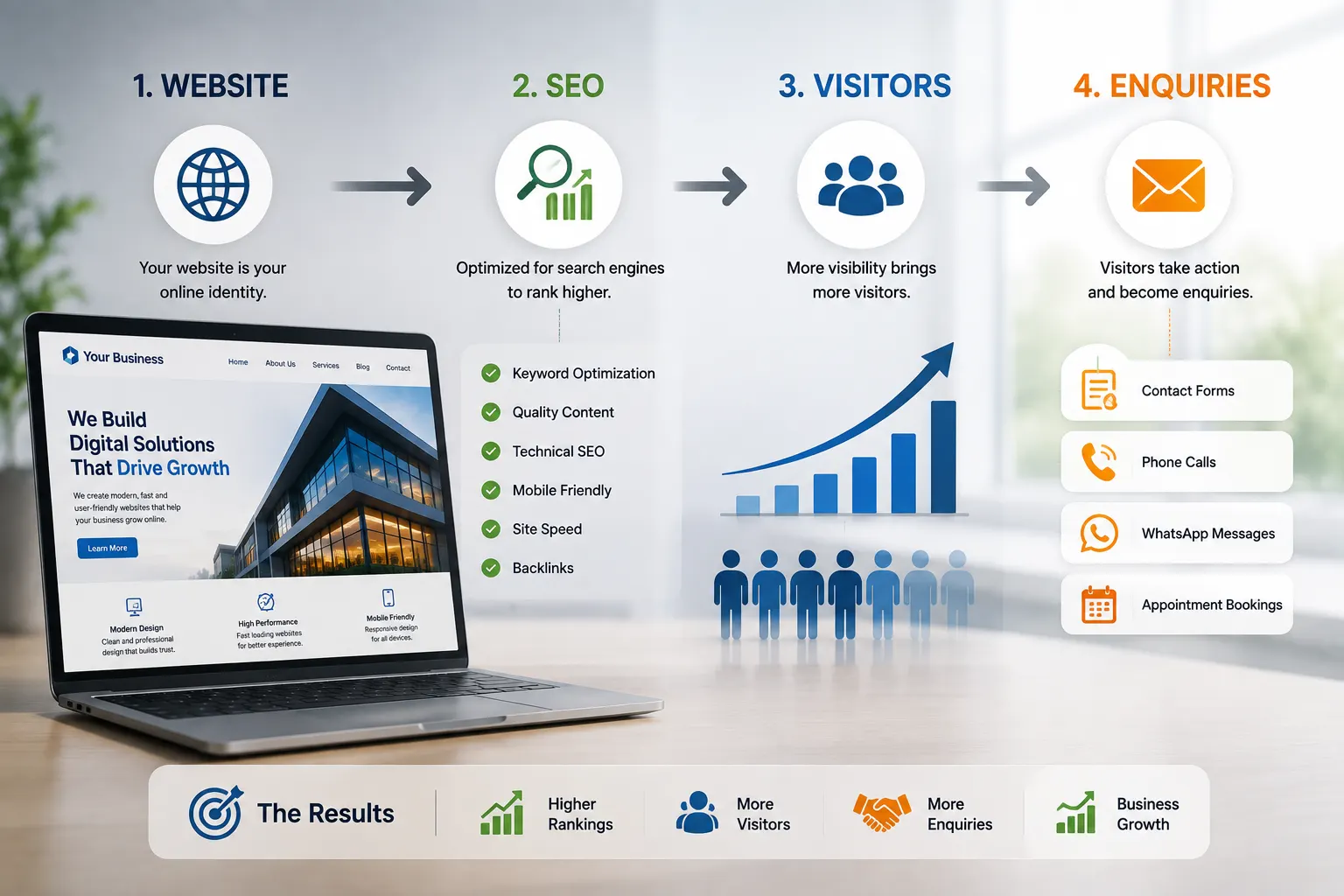
A website can look fantastic and still struggle to attract visitors from search engines.
Search engine optimization should be considered as part of website development rather than something added at the very end.
Important areas include:
- Page titles
- Meta descriptions
- Headings
- URLs
- Internal linking
- Image optimization
- Mobile usability
- Page performance
- Useful content
- Structured website architecture
Think Beyond Keywords
Modern SEO isn’t simply about placing the same keyword repeatedly on a page.
Your website should answer the questions your target audience is actually searching for.
For example, instead of creating a generic page called:
“Our Services”
you might create useful, clearly structured service pages that explain:
- What the service is
- Who needs it
- What problems it solves
- What the process looks like
- What customers should consider
- Frequently asked questions
Useful content gives search engines something meaningful to understand and users something valuable to read.
6. Your Website Doesn't Generate Enough Enquiries
A website doesn’t necessarily need to sell products directly to generate business value.
For many companies, the primary goal is to generate:
- Enquiries
- Calls
- Form submissions
- Consultation requests
- WhatsApp conversations
- Appointment requests
- Product enquiries
If your website receives visitors but very few people take the next step, it’s worth examining the user journey.
Ask Yourself
Can visitors easily understand what they should do next?
Are your contact details easy to find?
Are enquiry forms simple?
Are important service pages easy to access?
Is there enough information to help visitors make an informed decision?
Sometimes a website doesn’t need a complete redesign.
Small improvements to navigation, content structure, page speed, forms, and user experience can make a meaningful difference.
7. Your Website Is Difficult to Manage or Update
A business website shouldn’t become a burden every time you need to make a small change.
If updating a phone number, adding a new service, publishing an article, or changing an image requires technical assistance every time, your website may not be using an efficient content management system.
A modern business website should make routine updates reasonably manageable.
Depending on the business, this could include:
- Updating page content
- Publishing blog articles
- Adding images
- Updating services
- Managing products
- Editing contact information
- Publishing announcements
A manageable website makes it easier for a business to keep its online presence current.
How to Know If Your Website Really Needs an Upgrade
You don’t necessarily need a complete redesign just because your website is a few years old.
Instead, conduct a simple website audit.
Ask these questions:
Design
Does the website still look professional and consistent with your brand?
Mobile
Is everything easy to read and use on a smartphone?
Speed
Do important pages load quickly?
Navigation
Can visitors find important information without confusion?
SEO
Can search engines easily understand your website and its content?
Content
Does the information accurately represent your current business?
Conversion
Can visitors easily contact you or take the next relevant step?
Management
Can your team update basic information without unnecessary difficulty?
If several answers are no, it may be time to consider an upgrade.
What a Modern Business Website Should Deliver
A modern business website isn’t simply about attractive visuals.
It should bring together:
Design + Performance + Mobile Experience + SEO + Content + Usability
When these elements work together, your website becomes more than an online brochure.
It becomes a digital business asset.
It can help people discover your business, understand your services, research their options, and decide what to do next.
Final Thoughts
Your website doesn’t need to follow every new design trend.
It needs to remain useful, fast, accessible, secure, easy to navigate, and aligned with your business goals.
If your website is difficult to use, slow on mobile devices, outdated visually, difficult to update, or attracting visitors without generating meaningful engagement, it’s worth reviewing what can be improved.
Sometimes that means a complete redesign.
Sometimes it means making a series of focused improvements.
The important thing is to regularly evaluate your website from the perspective of the people who actually use it:
Your customers.
 Next Post

Nice information