Digital Business Cards: The Smarter Way to Share Your Professional Identity
A business card is often the first thing people receive after meeting you professionally. Traditionally, business cards have been printed on paper and exchanged during meetings, events, and networking opportunities. But as businesses become more digital, the way professionals share their contact information is changing too.
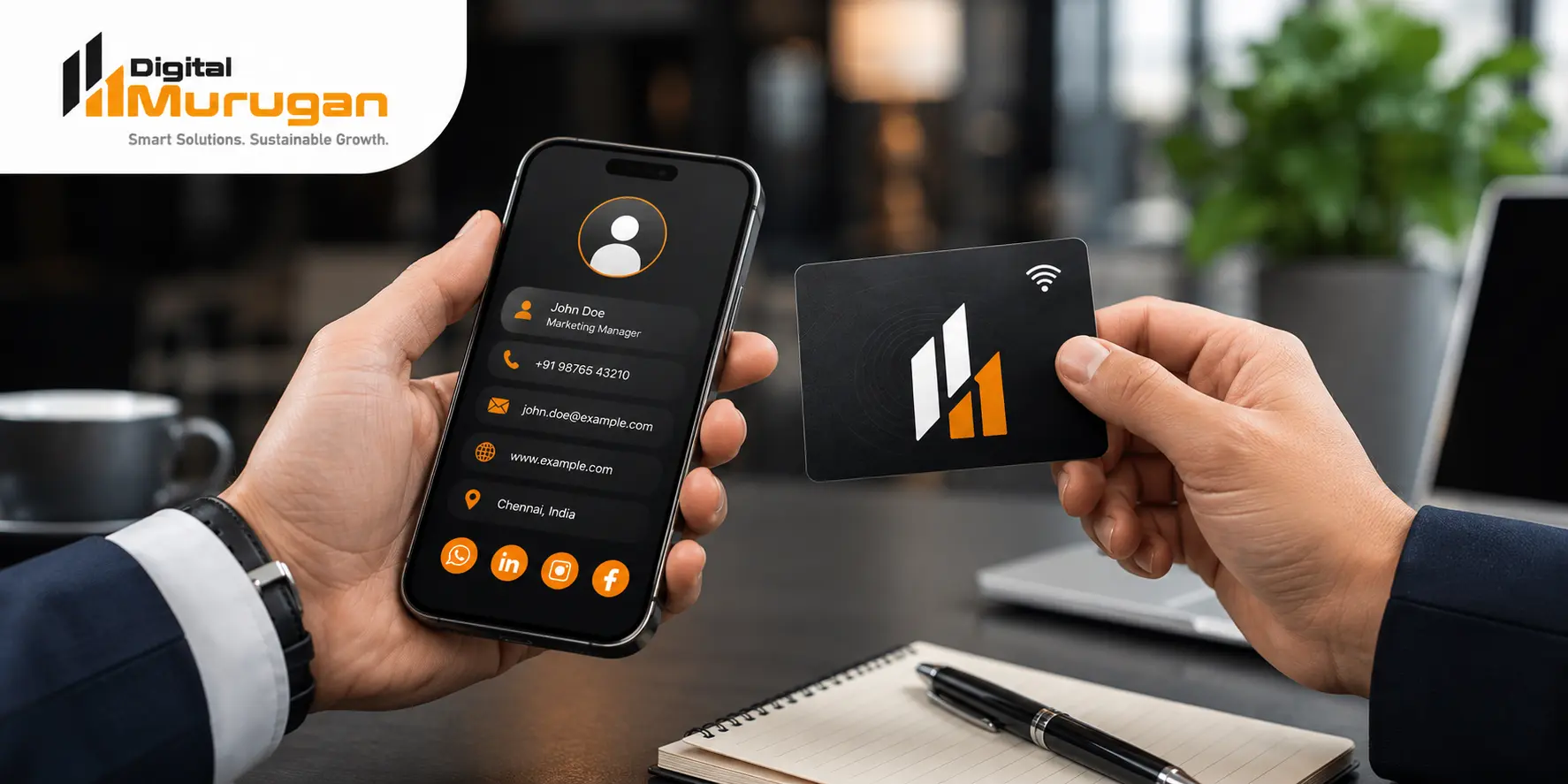
Digital business cards offer a modern way to share your professional identity, contact details, social profiles, website, and business information through a single digital profile.
Instead of carrying a stack of printed cards, you can share your digital business card instantly using a smartphone, QR code, NFC, messaging app, email, or a simple link.
What Is a Digital Business Card?
A digital business card is an online version of a traditional business card. It allows you to create a professional digital profile containing important information about you or your business.
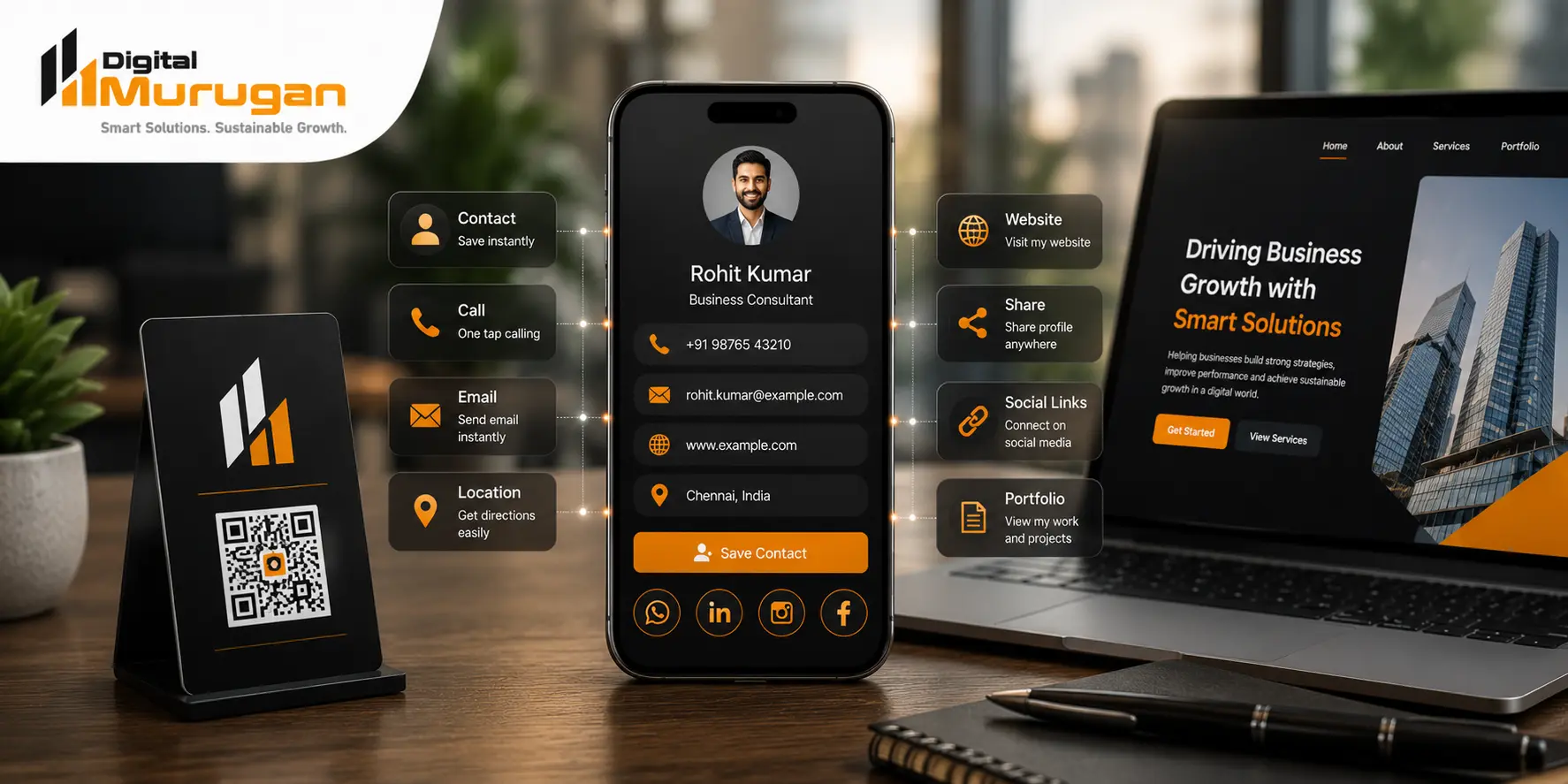
Depending on the platform, a digital card can include:
- Name and professional designation
- Business name and logo
- Phone number
- Email address
- Website
- Social media profiles
- Business location
- WhatsApp or messaging options
- Portfolio or service information
- Product or company information
- QR code
- Contact-saving option
Rather than handing someone a physical card, you simply share your digital card with them. They can open it on their smartphone and access your information whenever they need it.
Why Are Digital Business Cards Becoming Important?
Networking has changed significantly. People now communicate through smartphones, social platforms, websites, email, and messaging applications.
This creates a need for a business card that works naturally within the digital environment.
A digital business card makes it easier to move from a face-to-face introduction to a digital connection. Someone you meet at an event can scan your QR code, open your profile, save your contact information, visit your website, and connect with your social profiles.
Everything can be available from one place.
1. Share Your Details Instantly
One of the biggest advantages of a digital business card is convenience.
You don’t need to search through your bag for printed cards. You can simply share your card through a link, QR code, NFC, email, or messaging platform.
This makes exchanging information much faster during meetings, conferences, networking events, and customer interactions.
2. Keep Your Information Updated
Printed business cards have one major limitation: once they are printed, the information cannot easily be changed.
If your phone number, email address, website, job title, or business location changes, old printed cards may still be circulating.
With a digital business card, information can be updated on the digital profile. People accessing the card can see the latest details without requiring you to print a new batch of cards.
3. Put More Information in One Place
A traditional business card has limited space.
A digital business card can provide much more information without making the design crowded.
For example, your profile can connect visitors to:
Your Business → Website → Services → Portfolio → Social Media → Contact
This creates a simple digital journey from your introduction to your online presence.
4. Strengthen Your Professional Image
The way you share your contact information can influence how people perceive your brand.
A professionally designed digital business card can help create a modern and organized impression.
For businesses, it can also provide a consistent way for employees, sales teams, consultants, and professionals to present the company’s identity.
Your logo, colors, typography, website, and contact information can work together to create a stronger brand experience.
5. Make Networking Easier
Networking is about building relationships, not simply exchanging contact details.
A digital business card can make the first step easier.
Imagine meeting a potential customer at an event. Instead of giving them a paper card that could eventually be misplaced, you can share your digital card immediately.
They can then explore your website, services, portfolio, or social profiles whenever they have time.
This turns a simple introduction into an opportunity for further engagement.
6. Use QR Codes for Quick Sharing
QR codes have become a convenient way to connect physical environments with digital information.
A QR code connected to your digital business card can be placed on:
- Printed marketing materials
- Posters
- Brochures
- Product packaging
- Office displays
- Presentation slides
- Event materials
- Email signatures
Someone can scan the code using their smartphone and access your digital profile.
This creates a bridge between offline networking and online engagement.
7. Reduce Dependence on Paper
Digital business cards can also reduce the need to repeatedly print and distribute paper cards.
For professionals who attend many meetings or networking events, this can be particularly convenient.
Instead of carrying hundreds of cards, you can keep one digital profile and share it whenever required.
The goal isn’t simply to replace paper. It’s to make professional information easier to access, update, and share.
8. Connect Your Business Card to Your Digital Presence
Your business card should not exist separately from your online presence.
A strong digital business card can act as a gateway to your broader digital ecosystem.
For example:
Digital Business Card
↓
Company Website
↓
Services & Portfolio
↓
Social Media
↓
Contact / Enquiry
This creates a smoother experience for potential customers and business contacts.
9. Useful for Different Types of Professionals
Digital business cards aren’t limited to one industry.
They can be useful for:
- Business owners
- Entrepreneurs
- Sales professionals
- Consultants
- Freelancers
- Real estate professionals
- Designers
- Marketing professionals
- Service providers
- Corporate teams
- Event professionals
- Students and job seekers
Anyone who regularly shares professional contact information can benefit from having a digital profile that is easy to access.
10. Make Your First Impression More Interactive
A traditional business card mainly provides information.
A digital business card can encourage interaction.
Instead of only displaying a phone number and email address, it can guide someone toward your website, portfolio, social media profiles, location, or other relevant resources.
That makes the introduction more than an exchange of contact details.
It becomes the beginning of a digital interaction.
Digital Business Cards vs. Traditional Business Cards
Both formats have their place, but they work differently.
| Feature | Traditional Business Card | Digital Business Card |
|---|---|---|
| Sharing | Physical exchange | Link, QR, NFC, email, messaging |
| Updates | Requires reprinting | Can be updated digitally |
| Information | Limited space | Can include multiple digital links |
| Website Integration | Usually requires manual typing | Direct link |
| Social Profiles | Limited | Can connect directly |
| Storage | Physical | Digital |
| Networking | Traditional | Interactive and connected |
The best option may depend on the situation. Some professionals may even use both, combining the familiarity of printed cards with the convenience of a digital business card.
How to Create an Effective Digital Business Card
Creating a digital business card is more than simply putting contact information on a webpage.
The card should be designed around the person who will view it.
Keep the Information Clear
Start with the most important information:
Name → Profession → Business → Contact → Website
Avoid filling the profile with unnecessary information.
Use Consistent Branding
Your digital card should match your overall brand identity.
Use consistent:
- Logo
- Colors
- Typography
- Photography
- Brand messaging
This helps people recognize your business across different digital platforms.
Add Useful Links
Only include links that provide value.
Your website, portfolio, social profiles, location, or enquiry page can make the card much more useful.
Make It Mobile-Friendly
Most people will access a digital business card from a smartphone.
The design should therefore be easy to read and navigate on smaller screens.
Buttons should be clear, information should be organized, and important contact options should be easy to find.
The Future of Professional Networking Is Digital
Business networking is becoming increasingly connected to digital experiences.
A conversation at a meeting can quickly lead to a website visit. A QR code at an event can lead to a digital profile. A digital profile can lead to a social media connection or customer enquiry.
This means a business card can now be more than a piece of contact information.
It can become a digital gateway to your professional identity.
For professionals and businesses looking to create a stronger online presence, adopting digital tools such as digital business cards can be a simple step toward a more connected networking experience.
Final Thoughts
Digital business cards provide a convenient and modern way to share professional information.
They make it easier to update details, connect websites and social profiles, share information instantly, and create a smoother transition between real-world networking and digital communication.
A business card may only take a few seconds to exchange, but the experience that follows can create a lasting impression.
The modern business card isn’t just something you hand to someone. It’s something that connects them to your digital world.
 Previous Post
 Next Post