
Turning Online Exploration Into Physical Visits
Today, customers often explore a business online before deciding whether to visit it in person. They may check photographs, read reviews, look at the location, explore the website, or search for information on Google. This means the decision to visit a physical location can begin long before the customer walks through the door.
This is where a Google 360 Virtual Tour can make a meaningful difference.
Instead of showing customers a few static photographs, a 360° virtual tour allows them to explore a location from different angles and understand the environment before arriving. It creates an interactive experience that can help turn online curiosity into real-world visits.
The Journey From Online Discovery to Physical Visit
A customer journey can be surprisingly simple:
Search → Explore → Build Confidence → Decide → Visit
A business may already appear in search results, but visibility alone does not always convince someone to visit.
Customers often want answers to questions such as:
- What does the place actually look like?
- Is the environment suitable for me?
- What facilities are available?
- Is the location professional and welcoming?
- What can I expect when I arrive?
A well-created 360° virtual tour can help answer many of these questions before the customer makes the journey.
Why Online Exploration Matters
People increasingly use digital platforms as their first point of interaction with a business.
For example, someone looking for a gym may want to see the workout area before joining. Parents considering a school may want to explore the campus. A hotel guest may want to understand the property before making a booking.
Traditional photographs can provide useful information, but they only show selected viewpoints.
A 360° experience gives customers a greater sense of the actual environment.
They can move through the virtual experience, look around, and explore different areas at their own pace.
That difference can make the online experience feel much closer to an actual visit.
A Virtual Tour Can Build Confidence
One of the biggest barriers between online interest and a physical visit is uncertainty.
When customers cannot clearly understand what they will find at a location, they may postpone their decision or choose another option.
A virtual tour can reduce that uncertainty by allowing customers to preview the environment.
For example, a hotel can showcase its lobby, rooms, dining areas, and other important spaces. A hospital can help visitors understand its reception and key facilities. A school can provide an overview of classrooms, activity areas, and campus spaces.
The customer gets a better understanding of the environment before arriving.
That familiarity can make the decision to visit feel easier.
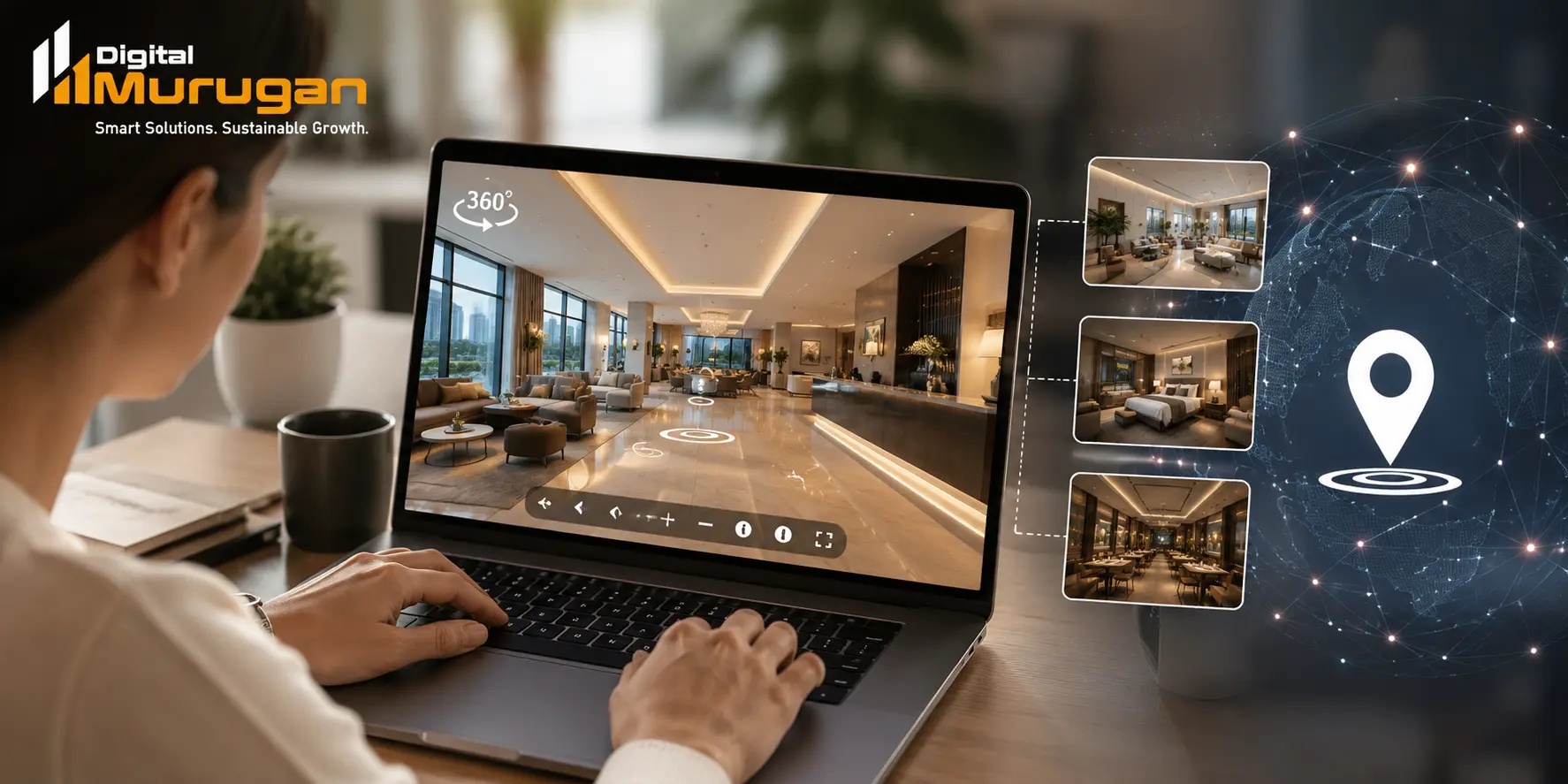
A 360° virtual tour creates an interactive environment where users can look around and discover details for themselves.
This changes the experience from passive viewing to active exploration.
Instead of simply scrolling through a collection of images, customers can spend more time understanding the space and developing a stronger impression of the business.
That engagement can become an important step between discovering a business online and visiting it physically.
How Different Businesses Can Benefit
A 360° virtual tour is not limited to one industry. Any business with a physical environment that customers care about can potentially benefit from giving people a way to explore that environment online.
Schools
For parents and prospective students, the physical environment of a school can be an important part of the decision-making process.
A virtual tour can showcase:
- Classrooms
- Reception areas
- Libraries
- Laboratories
- Activity spaces
- Sports facilities
- Common areas
Instead of relying only on descriptions, prospective families can get a visual understanding of the campus.
Hospitals
Visiting a hospital can sometimes be unfamiliar or stressful, especially for new patients and visitors.
A virtual tour can introduce important areas of the facility and help people understand the environment before they arrive.
Showing reception areas, waiting spaces, departments, and other appropriate facilities can make the location feel more familiar.
Hotels
For hotels, the environment is part of the product.
Guests want to know what the property looks and feels like before choosing where to stay.
A virtual tour can help showcase:
- Entrance areas
- Lobby
- Rooms
- Restaurants
- Event spaces
- Recreational areas
- Other guest facilities
This can give potential guests a more complete impression than a few carefully selected photographs.
Gyms
People joining a gym often want to know what equipment, space, and atmosphere they can expect.
A 360° tour can allow prospective members to explore the facility before visiting.
They can get a better understanding of the layout and environment, which can make their first physical visit feel more comfortable.
Theaters
For theaters and entertainment venues, visitors may want to understand the venue before attending.
A virtual experience can showcase entrances, common areas, seating-related views where appropriate, and other important parts of the venue.
This gives visitors an opportunity to become familiar with the location before their actual visit.
Shopping Malls
Shopping malls are large physical environments with multiple areas to discover.
A virtual tour can help customers become familiar with entrances, common spaces, selected stores, food areas, and other relevant locations.
It can create an additional digital pathway for discovering the physical destination
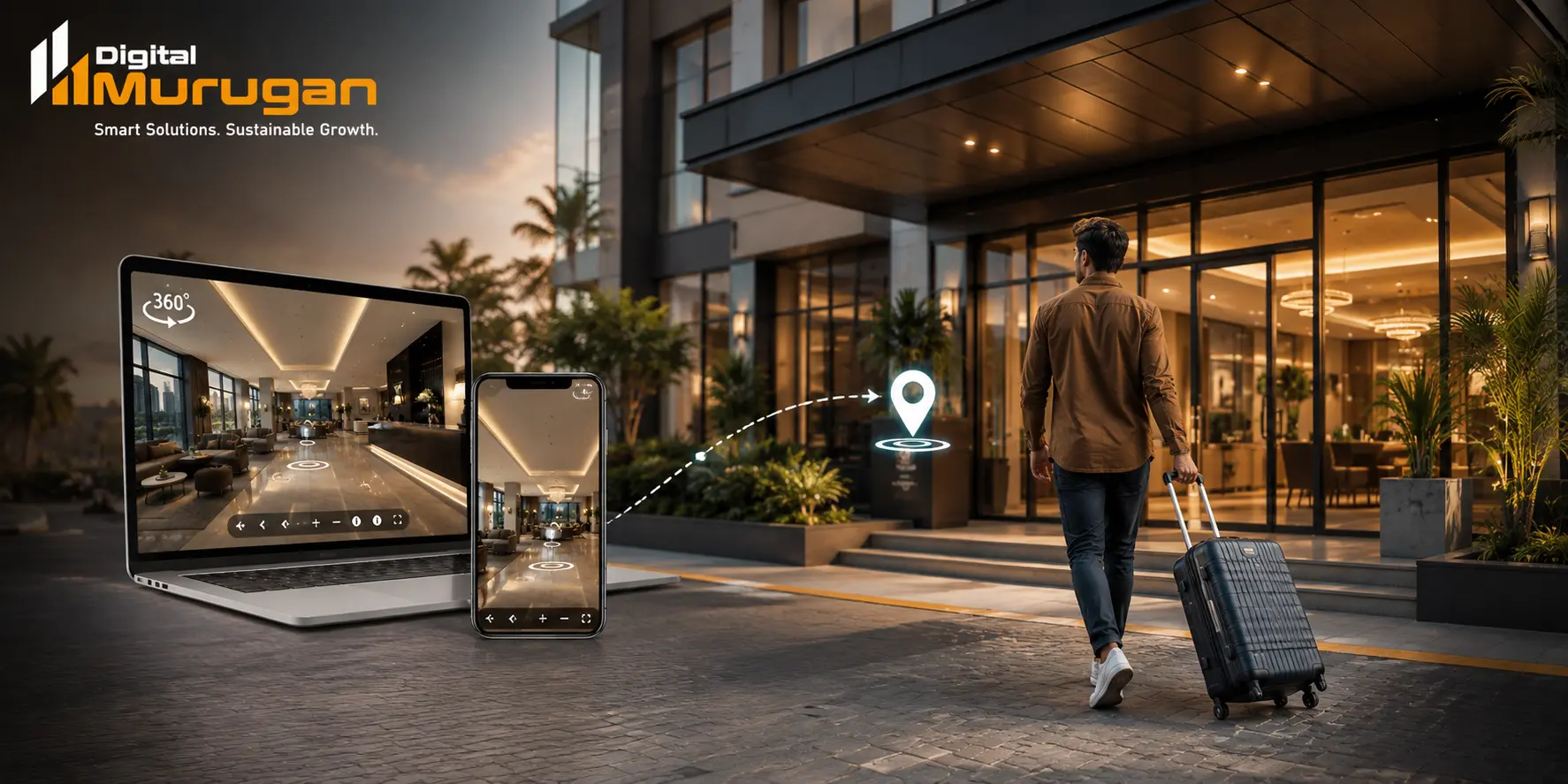
Google 360 Can Strengthen Your Digital Presence
A physical location doesn’t have to exist separately from your online presence.
With a Google 360 Virtual Tour, businesses can create a stronger connection between the digital world and the physical environment.
Someone searching for a business online can move from discovering its listing to exploring its location virtually.
This creates a more connected customer journey.
Online presence → Virtual exploration → Increased familiarity → Physical visit
The goal isn’t simply to show customers more images.
The goal is to make the physical location easier to understand before they arrive.
The Importance of a High-Quality Virtual Tour
Not every virtual tour creates the same impression.
Image quality, lighting, camera positioning, navigation, presentation, and overall coverage can influence how customers perceive the business.
A professional virtual tour should represent the location accurately while making the experience easy and enjoyable to explore.
The objective is to showcase the real environment in a way that feels professional, informative, and inviting.
Poor-quality visuals can have the opposite effect and may weaken the impression of the business.
Turning Curiosity Into Action
A customer may discover a business online simply because they are curious.
But curiosity alone doesn’t guarantee a visit.
The customer needs enough confidence to take the next step.
A virtual tour can become one part of that decision-making process.
When customers can explore the environment before visiting, they can develop a clearer idea of what awaits them.
That can make the transition from online exploration to physical presence feel more natural.
A Virtual Tour Is More Than a Digital Showcase
It’s easy to think of a virtual tour as another form of photography.
But its real value comes from the experience it creates.
A photograph says:
“Here is what this place looks like.”
A virtual tour can communicate:
“Explore this place for yourself.”
That difference can make the digital experience more engaging.
For businesses that depend on people physically entering their location, creating this connection can be particularly valuable.
Make Your Physical Location Discoverable Online
Your physical location is part of your brand.
The environment, facilities, layout, atmosphere, and presentation can all influence how customers perceive your business.
A Google 360 Virtual Tour gives you an opportunity to bring that physical experience into the digital journey.
Instead of asking customers to imagine what your location looks like, you can give them an opportunity to explore it.
And when online exploration becomes easier, the step toward an actual visit can become easier too.
Conclusion
The customer journey doesn’t necessarily begin at your front door.
It can begin with a Google search, continue through your online presence, and lead to a decision about whether your physical location is worth visiting.
A Google 360 Virtual Tour can help bridge that gap.
By allowing customers to explore a real environment before they arrive, businesses can provide greater familiarity, encourage engagement, and create a stronger connection between their digital presence and physical location.
Whether it is a school, hospital, hotel, gym, theater, shopping mall, or another physical destination, the opportunity is the same:
Let people explore your business online today so they can feel more confident about visiting tomorrow.
 Previous Post
 Next Post