Key Benefits of Digital Business Cards
In a fast-moving digital world, businesses are constantly looking for smarter and more convenient ways to connect with customers, clients, and professional contacts. Traditional paper business cards have been used for decades, but digital business cards are becoming a practical alternative for modern networking.
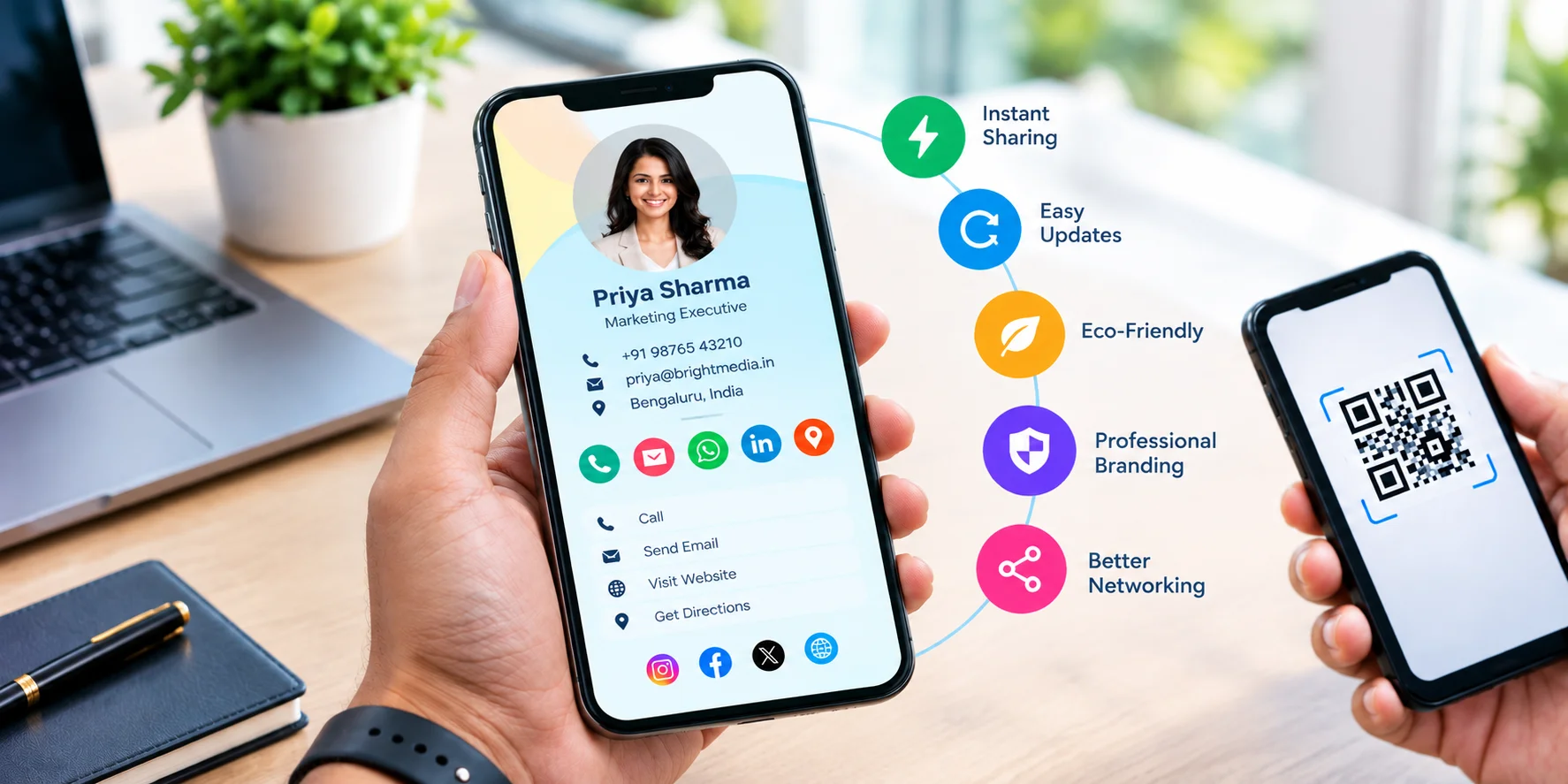
A digital business card allows professionals and businesses to share their contact information through a smartphone, QR code, link, or other digital methods. Instead of carrying a stack of printed cards, users can share their details instantly and update them whenever necessary.
For businesses looking to create a more convenient and modern networking experience, digital business cards offer several important benefits.
What Is a Digital Business Card?
A digital business card is an online version of a traditional business card. It can contain important professional information such as a person’s name, job title, company name, phone number, email address, website, social media profiles, business location, and other relevant details.
Unlike a printed card, a digital card can be accessed from a smartphone or other internet-connected device. A user can share it through a link, QR code, messaging platform, email, or other digital channels.
This makes digital business cards useful for professionals, entrepreneurs, sales teams, freelancers, and businesses that regularly interact with customers and clients.
1. Easy and Instant Sharing
One of the biggest benefits of digital business cards is how quickly they can be shared.
Instead of searching for a physical card and handing it to someone, a professional can simply share a digital card using a link or QR code. This can make exchanging contact information much easier during meetings, events, conferences, and everyday business interactions.
A recipient can open the card on their smartphone and access the available contact details immediately.
2. No Need for Physical Printing
Traditional business cards require printing, paper, ink, and regular reordering. Digital business cards remove the need for most of these physical materials.
Businesses can create one digital card and continue sharing it with multiple contacts without printing hundreds of copies. This can make networking more convenient while reducing the need to maintain physical card supplies.
3. Easy to Update
Business information can change over time. Phone numbers, email addresses, job titles, websites, and social media profiles may all need to be updated.
With a traditional business card, outdated information can make existing cards less useful. A digital business card can be updated without needing to print a completely new batch.
This helps ensure that people accessing the card can find the latest available information.
4. Environmentally Friendly Networking
Reducing unnecessary paper usage is another advantage of digital business cards.
Every physical business card requires materials and printing resources. Digital cards provide an alternative way to exchange professional information without depending on a new printed card for every interaction.
For businesses that are working toward more sustainable digital practices, this can be an important consideration.
5. Professional Brand Presentation
A business card is often one of the first ways a professional introduces their brand. Digital business cards provide more space for businesses to present useful information and maintain a consistent digital identity.
Depending on the platform, a digital card can include a company logo, professional profile, website, social media links, contact information, and other relevant business details.
This creates an opportunity to provide more information than a small physical card can normally accommodate.
6. Convenient for Networking
Digital business cards can be especially useful at conferences, meetings, exhibitions, seminars, and networking events.
Professionals can share their details quickly without carrying a large collection of printed cards. Recipients can access the information from their phones and save the details for future communication.
This can make the process of exchanging contact information simpler and more efficient.
7. Easy Access to Multiple Contact Channels
A traditional business card generally has limited space. A digital business card can connect users to several communication channels from one location.
For example, a digital card can provide links to:
- Phone numbers
- Email addresses
- Business websites
- Social media profiles
- Business locations
- Online portfolios
- Messaging platforms
Having these options together makes it easier for customers and professional contacts to choose their preferred way of getting in touch.
8. Better Integration With Digital Marketing
Digital business cards can work alongside a company’s wider digital marketing strategy.
A card can direct visitors to a website, social media page, online portfolio, product page, or other digital destination. This creates another pathway through which potential customers can discover a business online.
Instead of simply displaying contact information, a digital business card can become a starting point for further online interaction.
9. Potential for Engagement Tracking
Some digital business card platforms provide analytics or tracking features. Depending on the service being used, businesses may be able to understand how often their card is viewed or how users interact with available links.
These insights can help businesses understand whether their digital contact information is being accessed and which links may be receiving attention.
Analytics availability and features vary between digital business card providers, so businesses should choose a platform based on their specific requirements.
10. Convenient for Remote and Hybrid Work
Modern businesses often operate across offices, cities, and countries. Remote and hybrid work have also made digital communication an important part of professional networking.
Digital business cards fit naturally into these environments because they can be shared without requiring an in-person meeting. A professional can send their card through email, messaging applications, video meetings, or social platforms.
This makes it easier to maintain professional connections regardless of physical location.
11. Cost-Effective for Growing Businesses
Businesses that frequently update employee information or regularly attend networking events may spend money repeatedly printing business cards.
A digital business card can reduce the need for repeated printing and reordering. This can be particularly useful for teams where contact information changes frequently or where many employees need individual business profiles.
The overall cost will depend on the digital card platform and features selected, but businesses can avoid many of the recurring printing requirements associated with traditional cards.
12. A Modern Networking Experience
Customer expectations are changing as more business activities move online. Digital business cards provide a modern way to exchange professional information while connecting traditional networking with digital communication.
A simple QR code or link can take someone from a face-to-face introduction directly to a complete online profile.
This combination of convenience, accessibility, and digital connectivity makes digital business cards a useful tool for modern professionals.
Digital Business Cards for Modern Businesses
Digital business cards are more than just digital replacements for printed cards. They can provide businesses with a flexible way to share contact information, present their brand, connect with online platforms, and maintain updated professional details.
From entrepreneurs and freelancers to established companies and sales teams, different types of professionals can use digital business cards to make networking easier.
As businesses continue to adopt digital tools, having a convenient digital identity can become an important part of professional communication.
Conclusion
Digital business cards offer several practical benefits, including easy sharing, simple updates, reduced printing requirements, convenient access to contact information, and stronger connections with digital platforms.
They can help professionals create a more streamlined networking experience while giving businesses another way to present their brand online.
For organizations looking to modernize how they exchange professional information, digital business cards can be a simple and useful step toward a more connected digital presence.
 Previous Post
 Next Post