
Why Professional Logo Design Matters for Your Business
Why Professional Logo Design Matters for Your Business
A logo is often the first visual element people notice when they come across a business. Whether it appears on a website, social media profile, business card, product packaging, or advertisement, a well-designed logo helps people recognize and remember a brand.
For small businesses and growing companies, logo design is more than simply creating an attractive symbol. A professional logo communicates the personality of a business, creates a consistent visual identity, and helps establish credibility with customers.
But why does logo design matter so much, and what makes a logo effective?
What Is a Logo?
A logo is a visual representation of a business, organization, product, or brand. It can include a symbol, wordmark, typography, colors, or a combination of these elements.
A good logo should help people identify a business quickly. It does not need to explain everything about the company. Instead, it should provide a memorable visual identity that can be used consistently across different marketing channels.
For example, a logo may appear on a company’s website, social media pages, invoices, packaging, uniforms, presentations, advertisements, and promotional materials.
Why Is Professional Logo Design Important?
1. A Logo Creates a Strong First Impression
Customers often form an initial opinion about a business based on its visual presentation.
A professionally designed logo can make a business appear more organized, established, and trustworthy. On the other hand, an outdated or poorly designed logo may make even a good business look less professional.
This is particularly important for small businesses that are competing with established brands.
A strong logo gives a business an opportunity to make a positive first impression before a customer even reads the company’s message.
2. It Helps Customers Recognize Your Brand
Brand recognition develops when customers repeatedly see consistent visual elements associated with a business.
A memorable logo can become one of those important elements.
When the same logo appears across a website, social media accounts, packaging, advertisements, and other communication materials, customers begin to associate that visual identity with the business.
Over time, this consistency can make the brand easier to recognize.
3. A Logo Communicates Your Brand Personality
Every business has a different personality.
A technology company may want to communicate innovation and modern thinking. A luxury brand may prefer a sophisticated visual identity, while a children’s business may use a more playful design.
Logo design can help communicate these characteristics through:
- Typography
- Color selection
- Shapes
- Symbols
- Layout
- Overall visual style
The goal is not to include every detail about a business in the logo. Instead, the design should reflect the overall character of the brand.
4. Professional Logo Design Builds Credibility
Customers naturally look for signs that a business is reliable and professional.
A thoughtfully designed logo can contribute to that perception.
Imagine visiting two websites offering similar services. One has a clean, professional identity with consistent branding, while the other uses random fonts, inconsistent colors, and a low-quality logo.
The first business is likely to create greater confidence.
Logo design alone cannot guarantee customer trust, but it can support the professional image that a business wants to establish.
5. It Creates Consistency Across Marketing Materials
A business rarely communicates with customers through only one channel.
Today, a brand may use a website, Instagram, Facebook, LinkedIn, YouTube, email marketing, printed brochures, business cards, packaging, signage, and advertisements.
A professionally designed logo provides a central visual element that can be used across these platforms.
When combined with consistent brand colors, typography, imagery, and design guidelines, the logo helps create a unified brand identity.
What Makes a Good Logo Design?
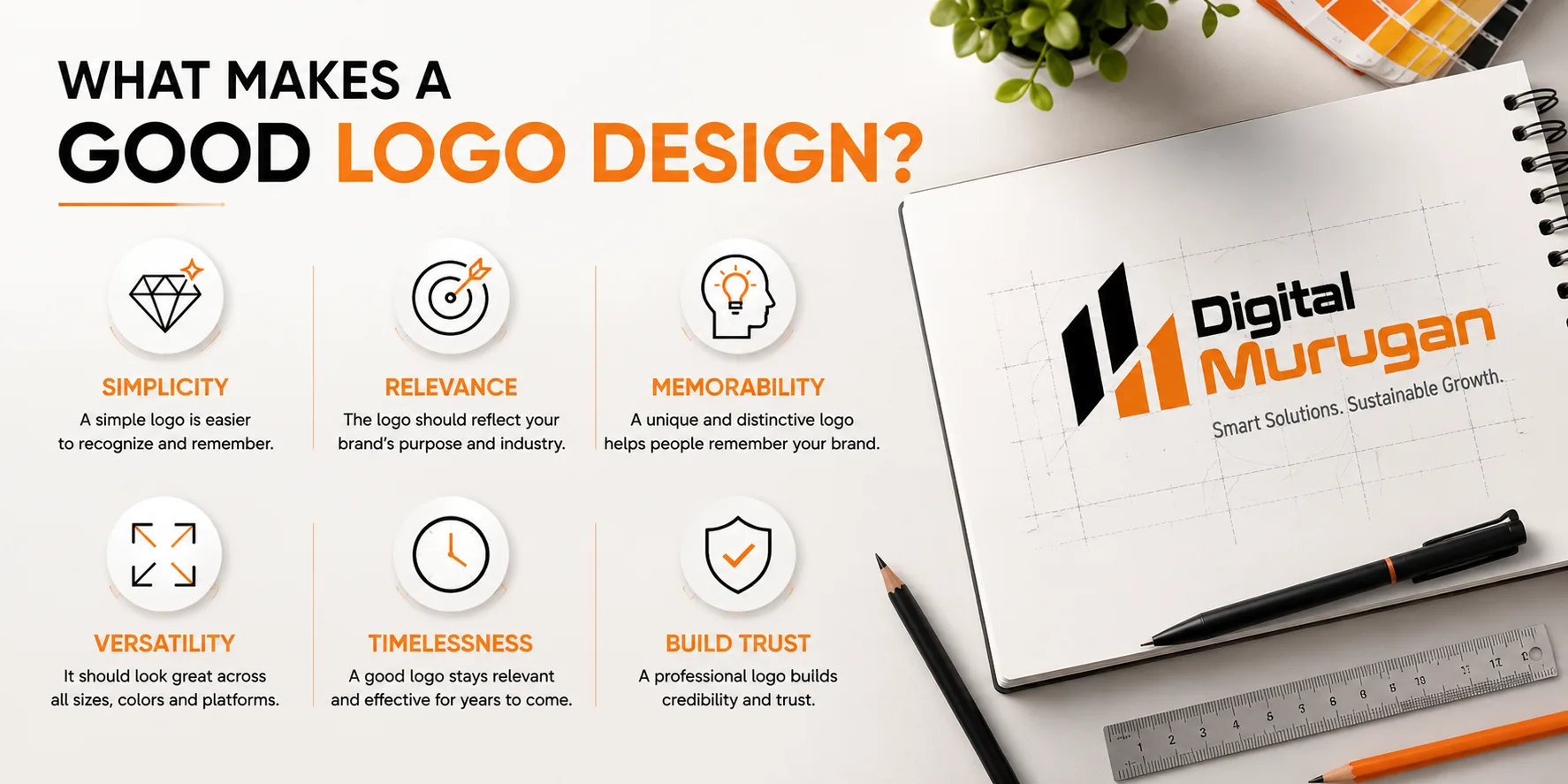
Creating a professional logo is not simply about making something visually attractive. An effective logo should work in different situations and remain recognizable over time.
Simplicity
A simple logo is generally easier to recognize and remember.
Overly complicated designs can become difficult to reproduce and may lose their impact when displayed at smaller sizes.
Memorability
A good logo should have distinctive characteristics that help people remember it.
Unique typography, shapes, symbols, or combinations of visual elements can help a brand stand apart from competitors.
Relevance
The design should be appropriate for the business and its target audience.
A logo for a financial services company, for example, may require a very different visual approach from a logo for a children’s entertainment brand.
Versatility
A logo should work across different applications.
It may need to appear on a large signboard as well as a small social media profile image. It may also be used on websites, printed documents, packaging, uniforms, advertisements, and promotional materials.
A good logo should maintain its clarity and recognition across these different formats.
Timelessness
Trends can be useful for inspiration, but a business should not necessarily redesign its logo every time a design trend changes.
A strong logo should have enough longevity to remain relevant as the business grows.
Logo Design vs. Brand Identity
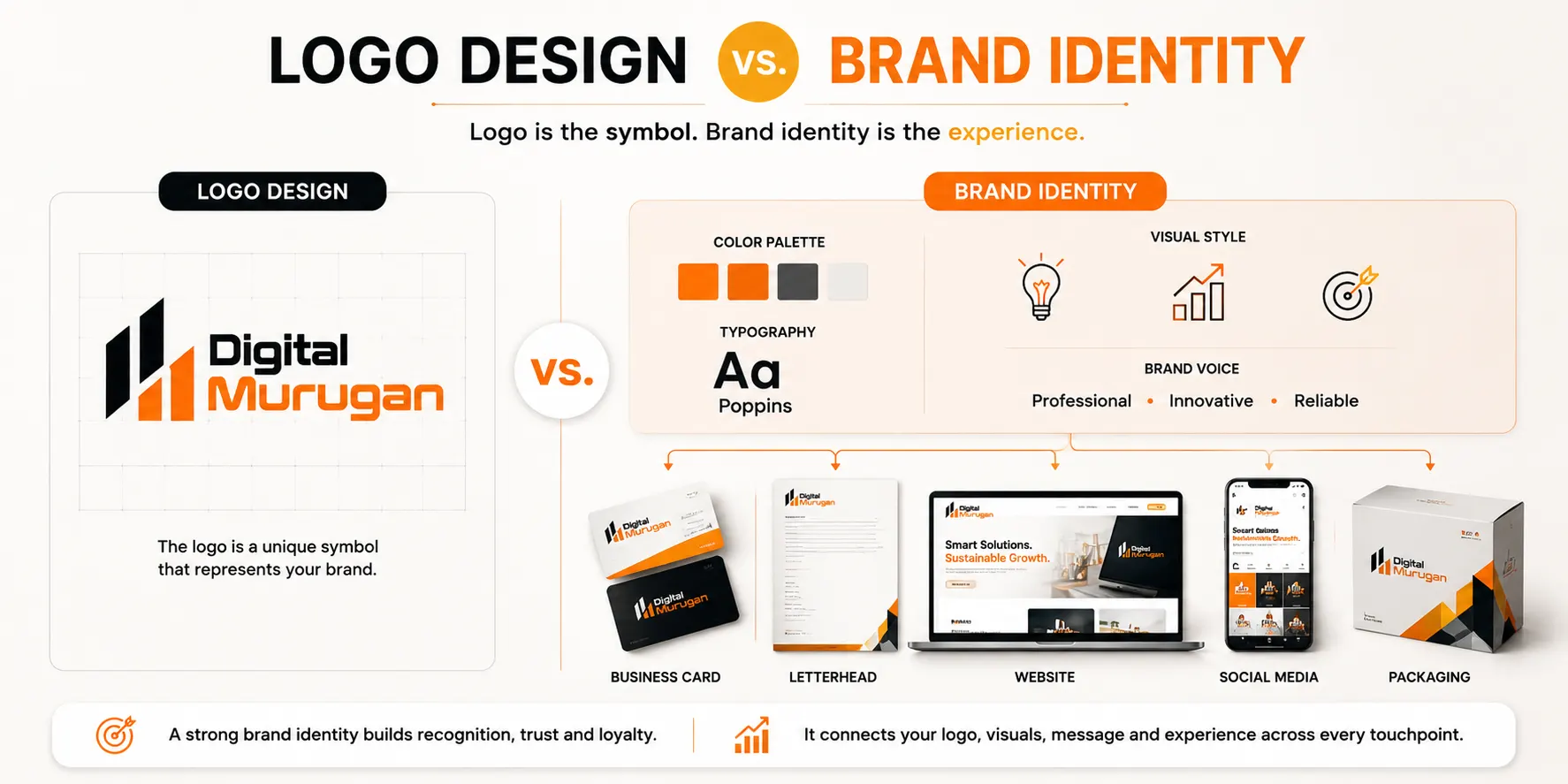
Logo design and brand identity are related, but they are not the same thing.
A logo is one component of a brand identity.
A complete brand identity may include:
- Logo
- Brand colors
- Typography
- Photography style
- Graphic elements
- Iconography
- Marketing templates
- Packaging design
- Social media design
- Brand guidelines
Think of the logo as one important piece of the larger visual system.
A professionally designed logo becomes even more effective when it is supported by a consistent brand identity.
Common Logo Design Mistakes to Avoid
Businesses sometimes make the mistake of treating logo design as a quick task rather than an important branding decision.
Some common mistakes include:
Using Too Many Design Elements
Adding too many symbols, colors, fonts, or effects can make a logo confusing.
Copying Competitors
A logo should help a business establish its own identity rather than look like another company.
Following Every Design Trend
A trendy logo may look modern today but quickly become outdated.
Using Low-Quality Graphics
A logo should be created in professional formats so that it can be used for both digital and print applications without losing quality.
Designing Without Considering Where the Logo Will Be Used
A logo that looks good on a large screen may not work well as a small social media icon.
Designing with different applications in mind is essential.
Should a Small Business Invest in Professional Logo Design?
For a new or growing business, a logo may seem like a small part of the overall marketing budget. However, the logo can remain part of the business identity for years.
A professional logo can provide a foundation for future branding and marketing activities.
Instead of creating a different visual style for every platform, a business can build a consistent identity around its logo and supporting brand elements.
This can make marketing materials more recognizable and help create a more professional presence.
How the Logo Design Process Works
A professional logo design process usually begins with understanding the business.
The designer may consider:
- What the business does
- Who the target audience is
- What makes the business different
- Competitors in the industry
- Brand personality
- Where the logo will be used
The designer can then develop concepts based on these requirements.
After reviewing and refining the selected direction, the final logo is normally prepared in suitable formats for digital and print use.
This process helps ensure that the logo is not only attractive but also practical for real-world business applications.
Build a Brand That People Can Remember
A logo may be a small visual element, but its role in branding can be significant. It can help create a first impression, improve brand recognition, support credibility, and provide consistency across different marketing channels.
For businesses that are building their identity from the ground up, professional logo design can be an important first step toward creating a stronger and more recognizable brand.
The most effective logo is not necessarily the most complicated or visually impressive one. It is the one that represents the business clearly, works across different applications, and remains memorable to the people the brand wants to reach.
A strong logo gives your business a recognizable face. A consistent brand identity gives that face a lasting presence.
 Previous Post
 Next Post